

IFOY Audit
Finalists undergo the three-stage IFOY Audit as part of the IFOY Audit, which takes place during the TEST CAMP INTRALOGISTICS. This consists of the scientific IFOY Innovation Check, the IFOY Test and the jury test.
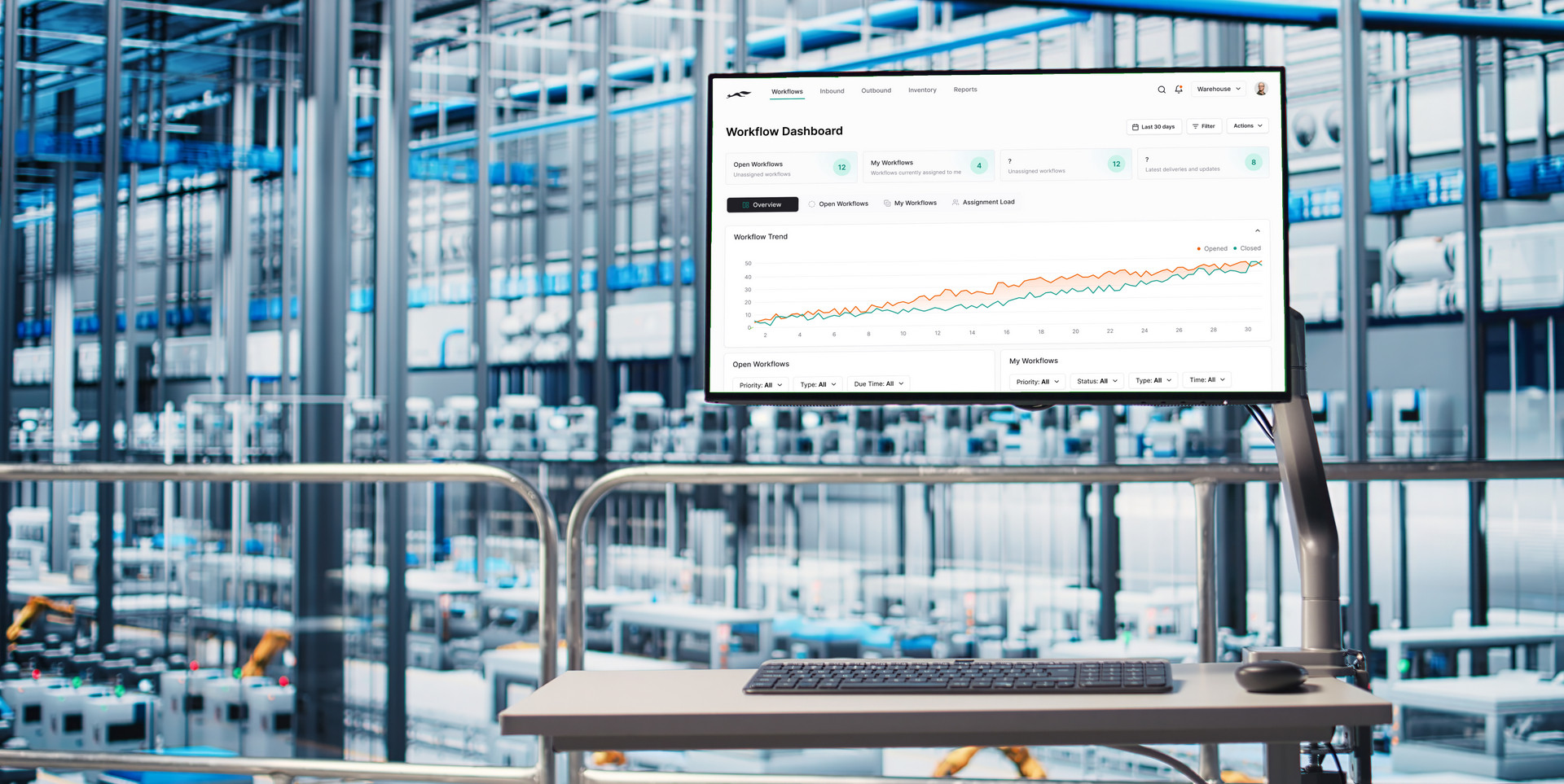
Pyck is an open source toolkit for warehousing software that enables logisitics-driven companies to design, adapt, and extend their logistics processes independently. Its innovative approach replaces rigid WMS systems step by step, increasing flexibility, reducing costs, and allowing rapid adaptation of innovative technologies such as AI or new robotic automation systems.


Product name and company
Pyck Open Source Toolkit for Warehousing Software – Pyck
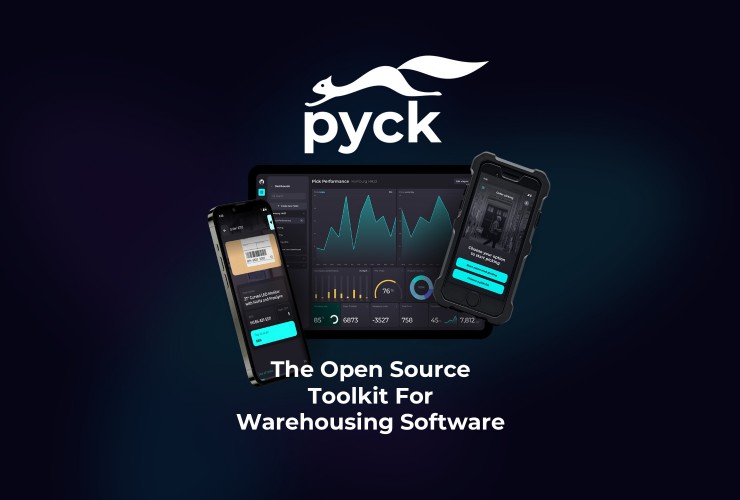
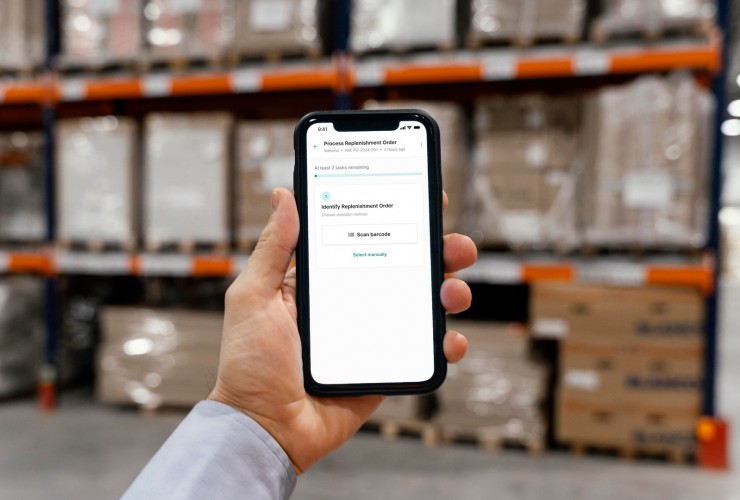
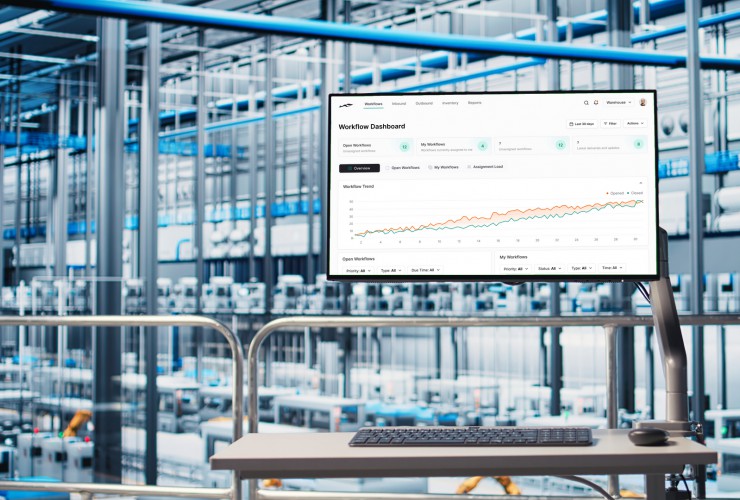
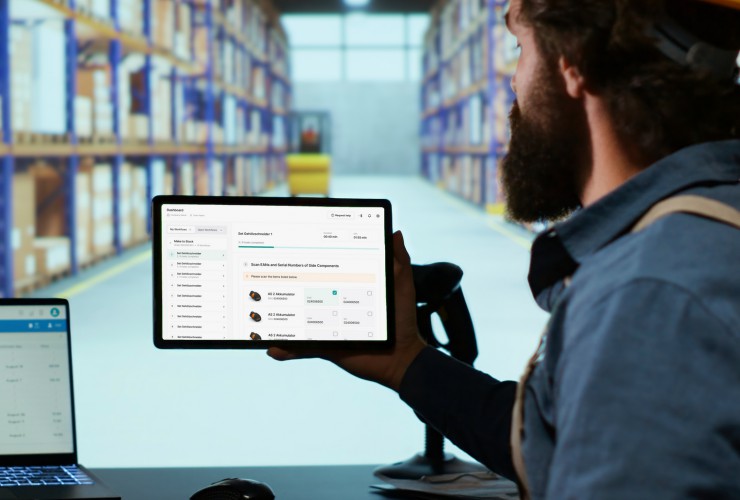
Pyck is an open source toolkit for warehousing software that enables logistics-driven companies to design, adapt, and extend their processes independently. It gradually replaces rigid WMS systems, boosting flexibility, reducing costs, and accelerating adoption of AI and robotic automation.
The toolkit consists of three core components:
The core innovation of Pyck lies in its toolkit-based approach that leverages AI to design warehouse processes and automatically derive software from them. Unlike conventional WMS solutions, Pyck is not a cumbersome monolithic system dictating workflows. Instead, it empowers logistics experts to independently build, adapt, and extend processes, datasets, and user interfaces – without relying on the vendor or specialized software developers.
With the upcoming open source release, Pyck ensures transparency, minimizes vendor lock-in, and gives companies full control over their warehouse software.
Once users experience Pyck, they will have no reason to return to a traditional monolithic WMS.
The logistics industry faces increasing pressure to innovate while keeping costs under control, adapting to global supply chain shifts, safeguarding against cyberattacks, becoming more sustainable, and addressing labor shortages.
Yet many companies remain tied to rigid, expensive WMS solutions that slow down adaptation and hinder operational excellence. Another monolithic WMS cannot solve this problem, because every warehouse is unique, shaped by sector, product range, location, layout, operating model, and sales channels.
Pyck offers a way out. Unlike the hundreds of standardized WMS systems on the market, Pyck does not impose one-size-fits-all and leave customers struggling with the daily challenges of logistics. Instead, it provides a flexible, AI-driven toolkit that enables businesses to design and adapt warehouse processes to their specific needs.
Customers expect software that fits their business, not software that dictates how they must work.
Pyck gives customers independence from proprietary vendors, full control over their warehouse IT and data, and the flexibility to adapt and extend processes at any time. The main benefits are:
The open-source framework for warehousing software from Pyck consists of three main components: an API-first core, an AI process assistant, and prebuilt apps and user interfaces. The core provides a stable and high-performance data infrastructure for warehouse management systems (WMS). It uses modern database technologies that are flexibly extendable and customizable via a JSON interface, as well as GraphQL APIs for high-performance access (maximum latency 48 ms at 10 million orders per day) for external apps and UIs.
Through its API-first design, the core enables any application from different vendors to access the data layer freely and in a fully customer-specific way. The AI process assistant supports the entire implementation: first by automatically analyzing all requirement documents and generating management summaries and project descriptions, including the detection of requirement conflicts. Subsequently, a logistics expert can design various warehouse processes graphically using ISO-standard BPMN, which are then converted into functional code by the AI assistant in a very short time.
Currently, manual validation of the more than 90 percent correct output by an experienced programmer is still recommended. The system complies with relevant regulations such as the AI Act, Cybersecurity Act, and GDPR. In a live demo, the described functionalities were impressively demonstrated: a deployable process was created within minutes and visually presented using UI templates.
Pyck’s solution is the world’s first and only open-source Warehouse Management Software (WMS) framework with fully native AI-assisted programming integration. Modern paradigms such as the API-first core enable fully vendor-agnostic solutions by design for the first time. Users gain maximum flexibility and individuality in designing their WMS solution with regard to custom processes, data structures, and user interfaces.
The main customer benefit compared to current WMS solutions lies in extreme flexibility: a highly customized, continuously adaptable WMS and any additional functions can be implemented independently of vendors and via different suppliers. By using AI assistants and practical templates for UIs, apps, and dashboards, implementation and adaptation costs and timelines can be reduced by up to 70 percent, as demonstrated in pilot projects.
The API-first core with its open interfaces is future-proof and enables flexible integration of robotics, automation, and additional AI solutions.
Market relevance is very high due to the level of innovation compared to existing solutions, also because Pyck is suitable for SMEs, large enterprises, and 3PL providers alike. This is confirmed by strong positive customer feedback and market demand: highly satisfied (pilot) customers, three major full-scale developments, many additional customers in the pipeline, and a long list of inquiries.
Pyck’s commercial open-source business model is particularly noteworthy in this context. Although core parts of the solution are open source, Pyck generates revenue from three services: support, hosting on a national cloud solution, and paid add-ons and tools.
In a market dominated by monolithic WMS solutions that are only time- and cost-intensive to customize, Pyck represents a potentially disruptive game changer for end users. Full control, flexibility, and vendor independence as key characteristics of the solution will enable significantly more efficient and customized warehouse processes, as well as a new principle of agility in the rapid adaptation of these processes for users.
| Functionality / type of implementation | ++ |
| Novelty / Innovation | ++ |
| Customer benefits | ++ |
| Market relevance | ++ |
| ++ very good / + good / Ø balanced / – less / — not available | |
Image/video credits: pyck
Finalists undergo the three-stage IFOY Audit as part of the IFOY Audit, which takes place during the TEST CAMP INTRALOGISTICS. This consists of the scientific IFOY Innovation Check, the IFOY Test and the jury test.
The bylaws set forth the core values and standards of the IFOY AWARD, which guide the organization’s actions. These include, among other things, governing bodies, the election process, evaluation criteria, and the Code of Conduct.
The International Intralogistics and Forklift Truck of the Year has three bodies: Jury, sponsors, and advisory board.