

IFOY Audit
Finalisten durchlaufen im Rahmen des IFOY Audit, das im Rahmen des TEST CAMP INTRALOGISTICS stattfindet, das dreistufige IFOY Audit. Dieses besteht aus dem wissenschaftlichem IFOY Innovation Check, dem IFOY Test und dem Jurytest.
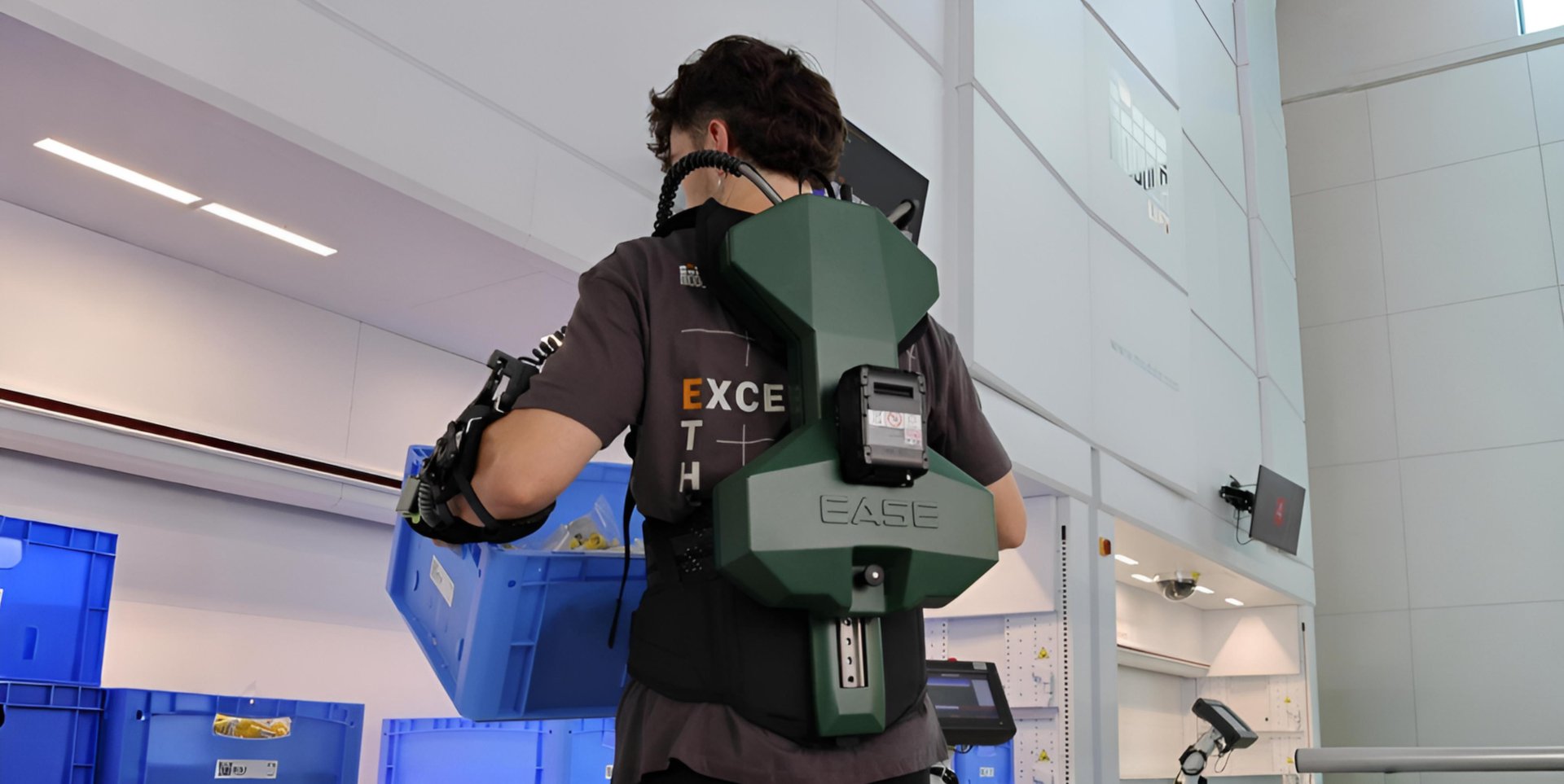
Das LU 20 macht manuelle Arbeitsplätze zukunftssicher: ergonomischer, gesünder, produktiver. Es ist das erste Exoskelett, das Arme und Rücken aktiv unterstützt – und laut Pilotkunden das erste, das Mitarbeitende in der Logistik gerne tragen. Es entlastet beim Heben, Tragen und Absetzen mit bis zu 20 kg, wiegt rund 6 kg, ist in unter einer Minute angelegt und amortisiert sich in unter einem Jahr. Künftig liefert es anonymisierte Prozessdaten für Digitalisierung und Automatisierung. EASE wurde 2025 als Spin-off der TU München gegründet. Ab November 2026 werden die ersten zehn Kunden beliefert.
Produktname und Firma
LU 20 – EASE
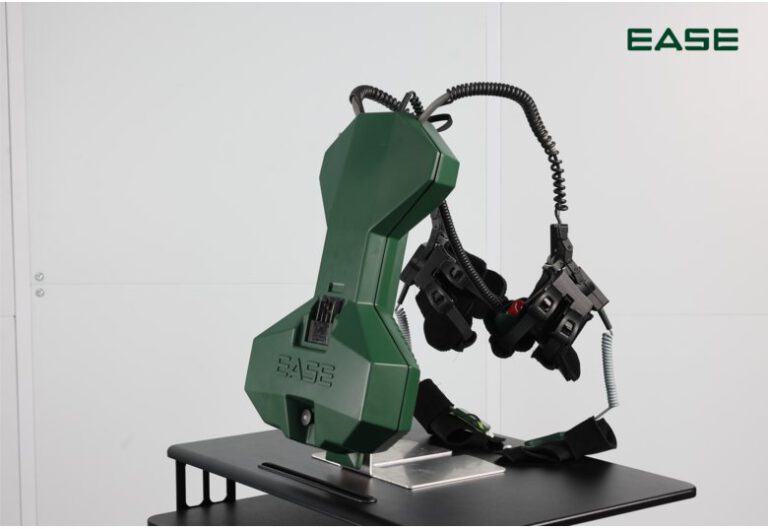
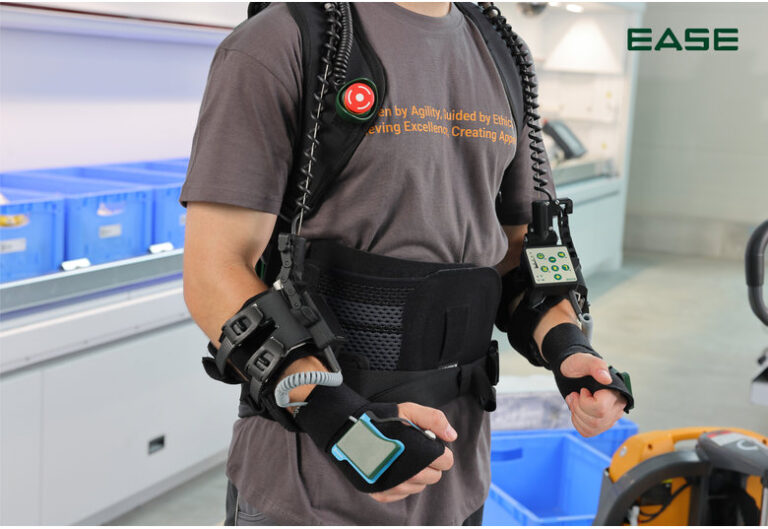
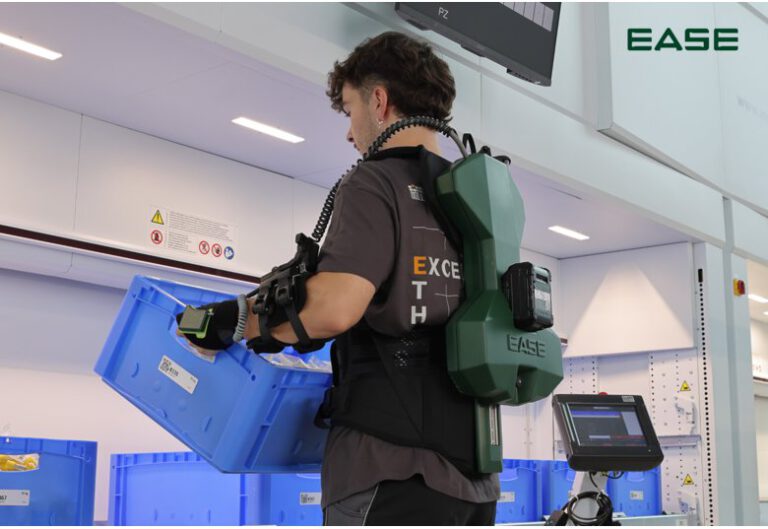
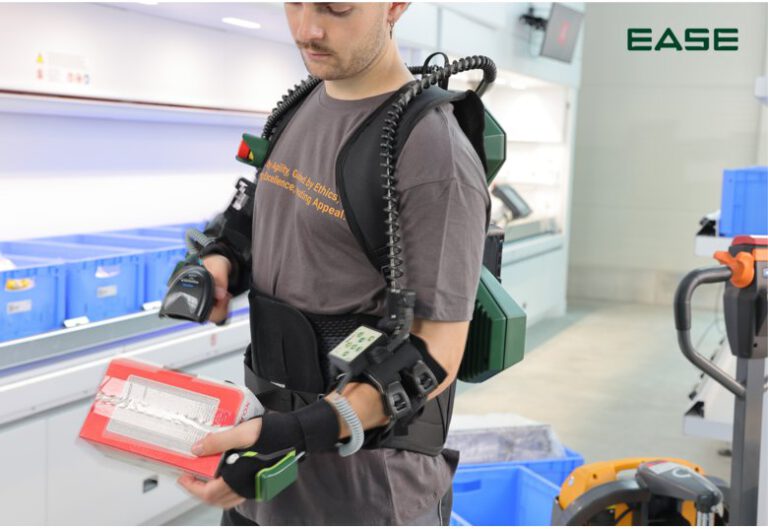
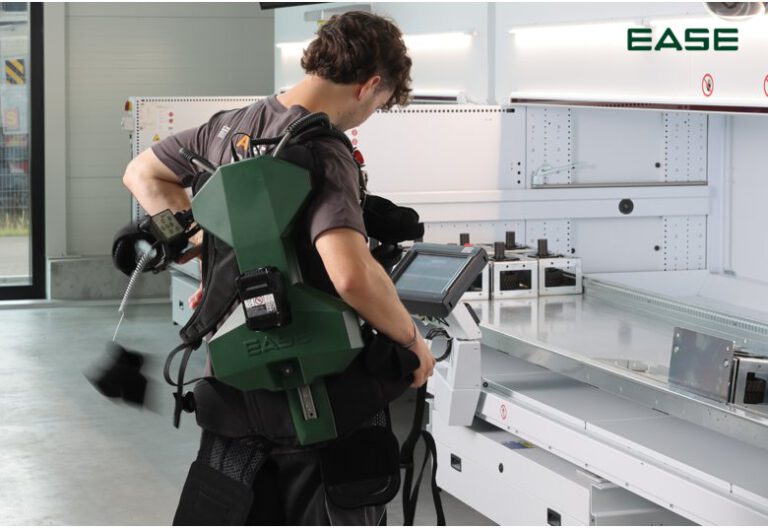
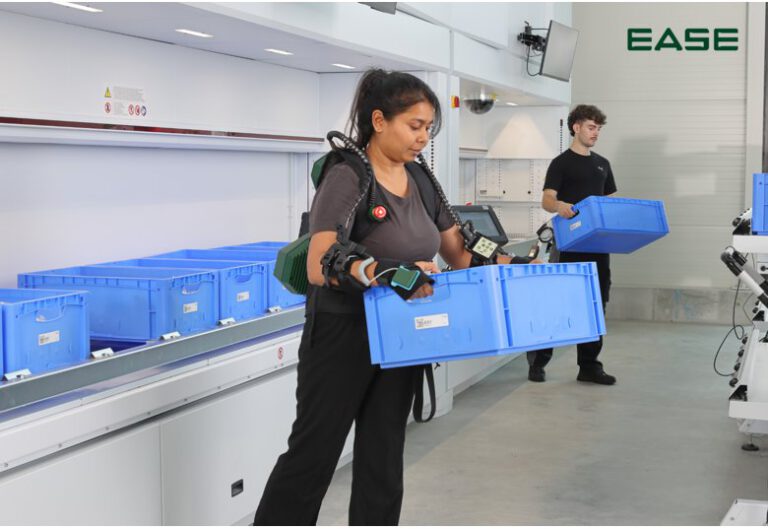
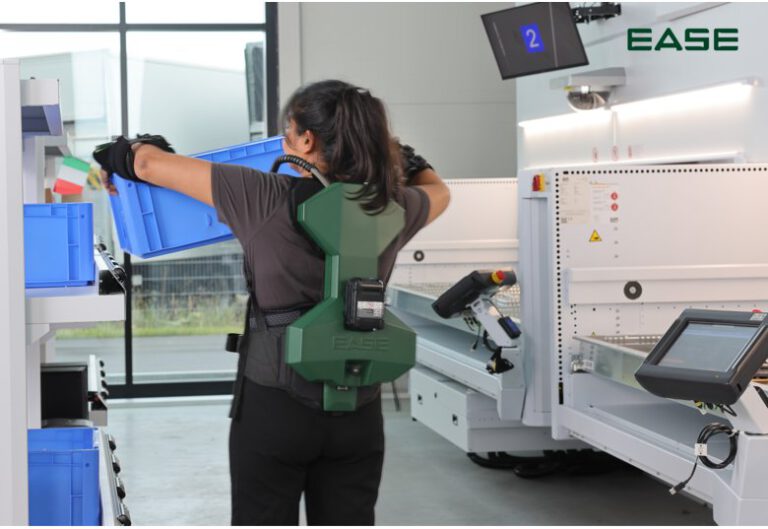
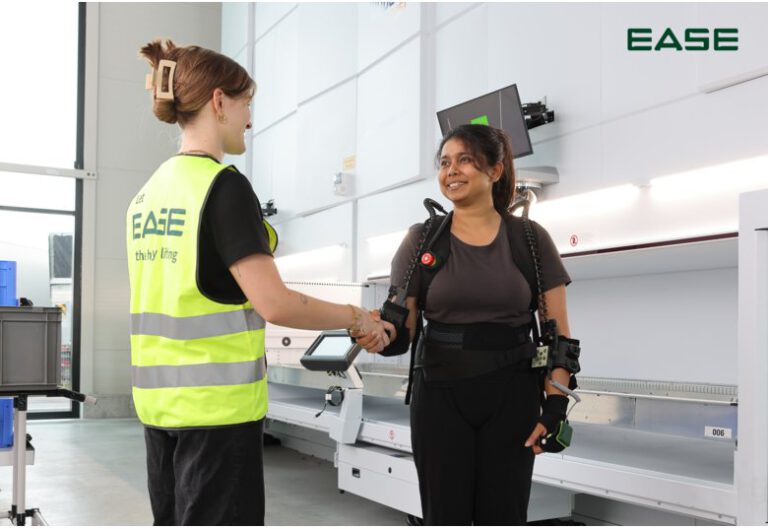
Eine 15-kg-Kiste, mehrere hundert Mal pro Schicht zwischen Knie- und Schulterhöhe gehoben: das ist Alltag an Kommissionier- und Packplätzen, und genau dafür wurde das LU 20 entwickelt. Dort liegt der Krankenstand über 25 Prozent , Ermüdung kostet rund zehn Prozent der Leistung, und acht Prozent der Stellen sind unbesetzt. Das kostet einen Standort bis zu 1 Million Euro im Jahr. Automatisierung rechnet sich selten, weil sich Lastgeometrie, Verpackung und Reihenfolge ständig ändern.
Das LU 20 ist ein aktives Exoskelett für Rücken und Arme. Eine Motoreinheit im Rucksackgehäuse überträgt die Kraft über Seilzüge auf Unterarme und Oberkörper: bis zu 20 kg, 10 kg pro Arm. Kraft und Geschwindigkeit sind am Bedienfeld stufenweise einstellbar. Das System wiegt rund 6 kg, sitzt auf einem mit Deuter entwickelten Tragesystem und ist in unter einer Minute angelegt. Es nutzt Makita-XGT-40V-max-Akkus, die viele Standorte bereits vorrätig haben. Ein Akku hält eine Schicht. Mit dem Wechsel im laufenden Betrieb läuft das Gerät über drei Schichten.
Das LU 20 entstand aus acht Jahren Forschung am Lehrstuhl für Ergonomie der TU München. EASE wurde 2025 gegründet und wird von EXIST-Forschungstransfer, ESA BIC und Business Angels der ersten Finanzierungsrunde getragen. Piloten von bis zu sechs Wochen liefen bei DHL, Loxxess, BMW, Siemens, SFB, Spitzhüttl und Rohde & Schwarz. Laut Pilotkunden ist es das erste Exoskelett, das ihre Teams gern anlegen. Ab November 2026 werden die ersten zehn Kunden beliefert.
Das LU 20 ist das erste aktive Exoskelett, das Arme, Schultern und Rücken gleichzeitig entlastet. Vergleichbare Systeme unterstützen nur die Lendenwirbelsäule. Fünf Merkmale heben es ab:
In der EU heben und tragen täglich rund fünf Millionen Menschen beruflich: in Kommissionierung, Pakethandling, Be- und Entladen, innerbetrieblichem Transport, Maschinenbeschickung und Montage. Es ist einer der größten und am wenigsten digitalisierten Bereiche manueller Arbeit, mit einem jährlichen Marktpotenzial von 36 Milliarden Euro: 5 Mio. Beschäftigte × angenommene 500 € pro Monat für Exoskelett als Service plus 100 € für künftige Datendienste. Automatisierung löst das Problem nur teilweise, weil Lasten und Abläufe zu stark variieren.
Die Nachfrage ist bestätigt: Piloten bei DHL, Loxxess, BMW, Siemens und weiteren Unternehmen, erste Auslieferung an zehn Kunden ab November 2026.
Gekauft wird ein Arbeitsplatz, keine Unternehmenslizenz. Zielkunden sind Betriebe mit 6 bis 50 belastenden Handhabungsplätzen: Logistiker mit 100 bis 600 oder Werke mit 1000 bis 5000 Beschäftigten. Größere Kunden starten mit fünf bis zehn Geräten als Proof of Concept.
Drei Faktoren treiben die Entscheidung:
Bis zu 20 kg werden Armen, Schultern und Rücken abgenommen, 10 kg pro Arm, beim Anheben, Tragen und Absetzen.
Pro Arbeitsplatz rechnet das Modell mit 30 Prozent weniger Krankheitstagen (rund 12.000 Euro vermiedene Kosten) und 10 Prozent weniger Ermüdung (rund 10.000 Euro zurückgewonnene Leistung). Bei 8.990 Euro Kaufpreis amortisiert sich das Gerät deutlich innerhalb eines Jahres und liegt im Freigaberahmen der Standortleitung, meist bis 20.000 Euro.
Ob ein Gerät dauerhaft getragen wird, hängt von Gewicht, Anlegezeit und Bewegungsfreiheit ab. Das LU 20 erfüllt alle drei: rund 6 kg, unter einer Minute, keine Einschränkung bei Nebentätigkeiten. Nach jedem bisherigen Pilotprojekt wollten Mitarbeitende das System dauerhaft behalten und fragen bis heute regelmäßig nach.
Das LU 20 macht belastende Arbeitsplätze alters- und alternsgerecht: Erfahrene Beschäftigte bleiben länger gesund im Beruf, und die Tätigkeiten stehen unabhängig von Alter, Fitness und Geschlecht mehr Menschen offen. Das ist soziale Nachhaltigkeit und vergrößert zugleich den Kreis möglicher Bewerber.
Wechsel-Akkus halten drei Schichten am Laufen. Mit Servicevertrag kommt ein Ersatzgerät in fünf Werktagen in Deutschland, sieben im übrigen EU-Raum.
Die Einführung ist strukturiert: ein Workshop-Tag mit Belegschaft, Management, Arbeitssicherheit, Arbeitsmedizin und Betriebsrat, dann 2,5 Tage vor Ort mit steigender Tragezeit von zwei auf acht Stunden und KPI-Erfassung mit und ohne Gerät.
Quellennachweis für Bilder/Videos: EASE / Sweekrati Sachan / Daniel / Julia Ott
Finalisten durchlaufen im Rahmen des IFOY Audit, das im Rahmen des TEST CAMP INTRALOGISTICS stattfindet, das dreistufige IFOY Audit. Dieses besteht aus dem wissenschaftlichem IFOY Innovation Check, dem IFOY Test und dem Jurytest.
In den Statuten sind die Grundwerte und die Standards des IFOY AWARD festgelegt, nach denen die Organisation handelt. Dazu gehören unter anderem Gremien, Wahlomodus, Bewertungskriterien sowie der Code of Conduct.
Der International Intralogistics and Forklift Truck of the Year verfügt über drei Gremien: Jury, Träger und Fachbeirat.