Mr. Maienschein, what do you expect from an IFOY applicant?
What do you expect from an IFOY applicant?
In addition to fulfilling the formal criteria for the products and systems (purchasable, novelty value, etc.), candidates must be passionate about their product and their systems/services. They must be able to answer all the jurors’ questions satisfactorily.
What else can companies surprise you with as an IFOY jury member?
With products based on the motto “keep it simple and stupid”.
How much has the focus on sustainability changed intralogistics?
Not very much – because intralogistics has always been sustainable. After all, it’s not just about protecting resources and a good public image, but also about financial issues such as TCO and the maintenance costs of economical vehicles.
What are the most important features of a successful intralogistics solution?Someone once said: The intralogistics that you don’t notice is the best. And that is indeed the case: intralogistics processes must run “silently”. And if something goes wrong or is defective, it should be repaired or replaced as quickly as possible, for example via remote maintenance. Topics such as predictive maintenance and predictive analytics play an important role here.
How did you get into intralogistics?
In 2002, we decided to add a vertical to our flagship magazine “MM MaschinenMarkt” that deals exclusively with intralogistics topics.
For you, innovative intralogistics means …
… incorporating the latest technologies, such as virtual reality, augmented reality, mixed reality and artificial intelligence. On the hardware side, it is increasingly about closed material cycles, innovative drives based on lithium-ion or hydrogen, etc.
What makes a product innovative?
It is not necessarily the latest technique or technology that is decisive. Innovative combinations of skills that lead to better, new results also play a role.
What does a solution have to bring to the table to convince you?
It must be rock-solid, easy to understand, easy to operate and inexpensive to maintain.
Where will intralogistics be in ten years’ time?
I’m already retired, but I’m sure that there will always be interesting technical and organizational innovations for the industry. Automation will inexorably make its way, but I’m sure that there will always be points in the company where manual work will be necessary – especially where automation simply doesn’t pay off.
How do you proceed with the evaluation?
My approach is undogmatic. First of all, look at everything, touch it, try it out and then give feedback to colleagues on the expert jury. And then sleep on it for (at least) one night and perhaps do some research – because even trade journalists can’t possibly have the entire intralogistics market in their heads …
Which criteria are particularly important to you?
As already mentioned above: something must be tangible, easy to grasp and learn and not just “nice to have”. Where no added value or savings are achieved, an “innovation” does not deserve its name.
What is your highlight at the IFOY AWARD?
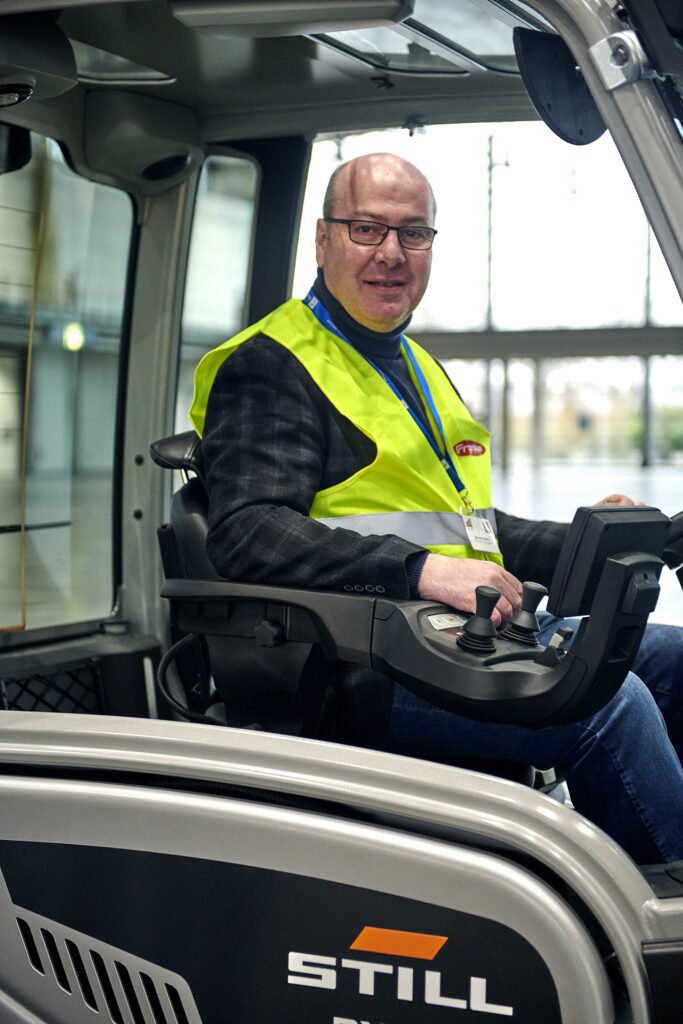
Definitely the testing. I always look forward to doing my rounds on a forklift and pretending to be a “professional”. Of course, it’s not comparable to a real professional who does their rounds day in, day out and can stack with millimeter precision. For me, centimetres are enough … But at least I have a forklift license and know roughly what I’m doing.