

IFOY Audit
Finalists undergo the three-stage IFOY Audit as part of the IFOY Audit, which takes place during the TEST CAMP INTRALOGISTICS. This consists of the scientific IFOY Innovation Check, the IFOY Test and the jury test.
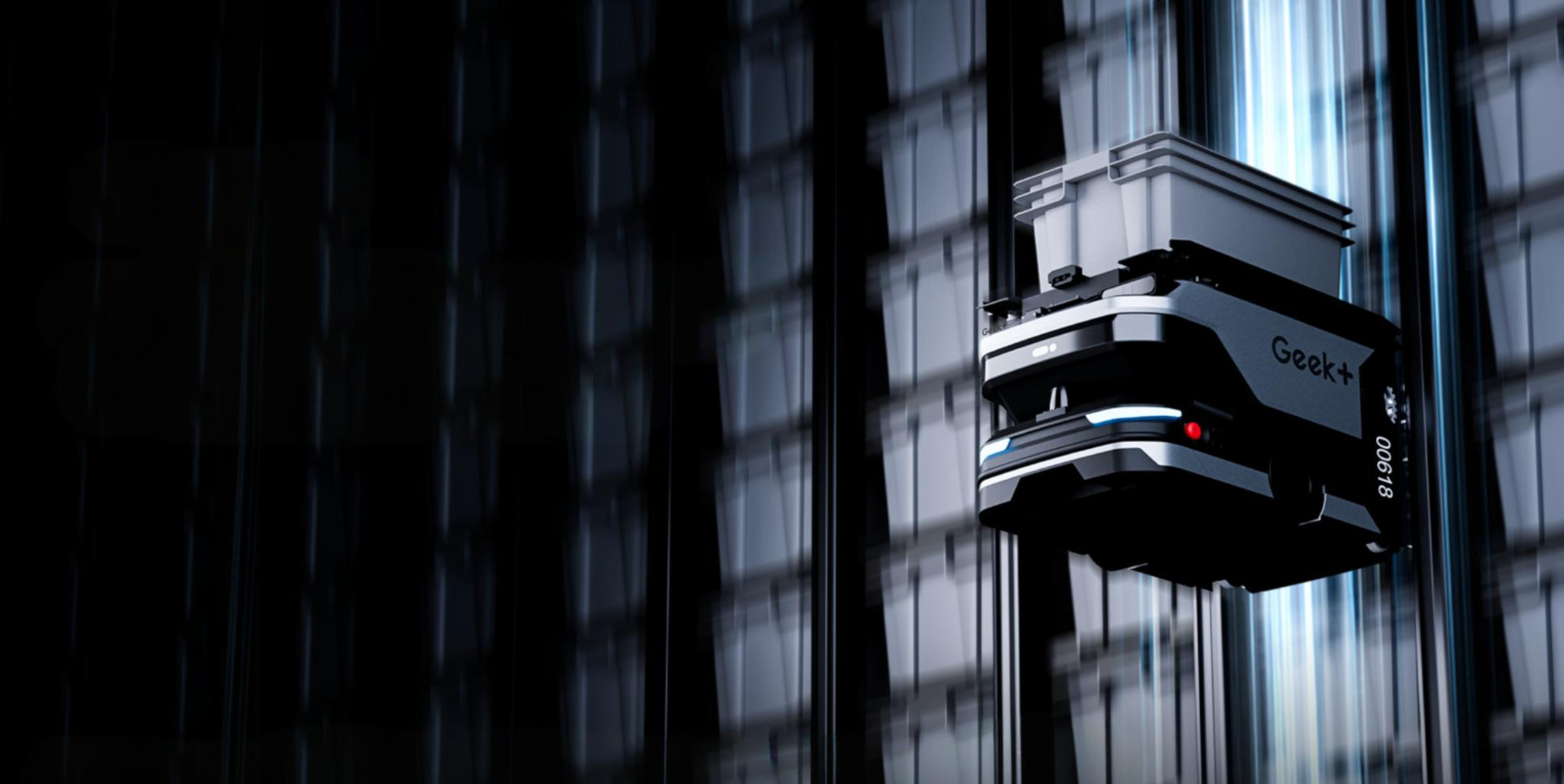
RoboShuttle Hyper (RS Hyper) is a next-generation tote-to-person climbing AMR solution purpose-built for ultra-high-throughput fulfillment. A single mobile robot combines horizontal transport with vertical rack access, while adjacent-column operation, two robots per column and bidirectional double-deep retrieval enable system throughput of up to 6,000 totes per hour per 1,000 m².
Each Max Workstation reaches 800+ totes per hour via dual-point continuous tote-feeding, with conveyor buffers separating robot delivery from picking. Climbing at up to 1.5 m/s with 50% higher concurrency than the industry norm, RS Hyper raises throughput and storage density for e-commerce, fresh-food/cold-chain and micro-fulfillment centers. A column-rail-integrated design, multi-layer fall protection and autonomous tote re-centering support reliable operation at scale.

Product name and company
RoboShuttle Hyper (RS Hyper) – Geekplus
Category
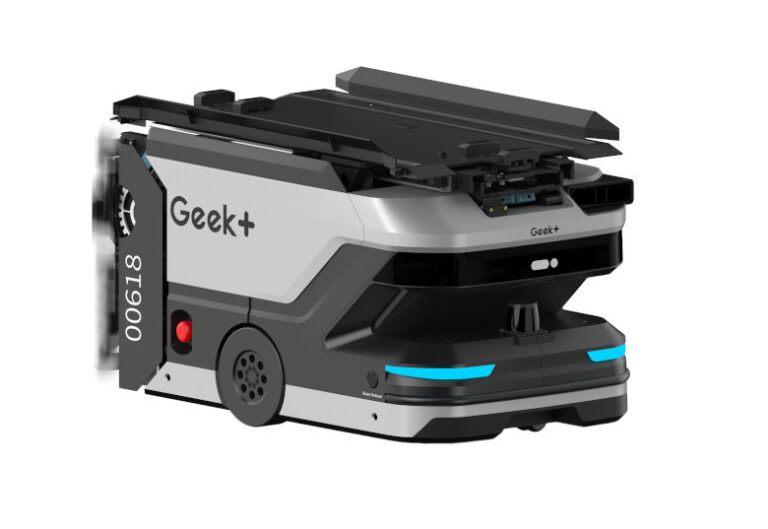
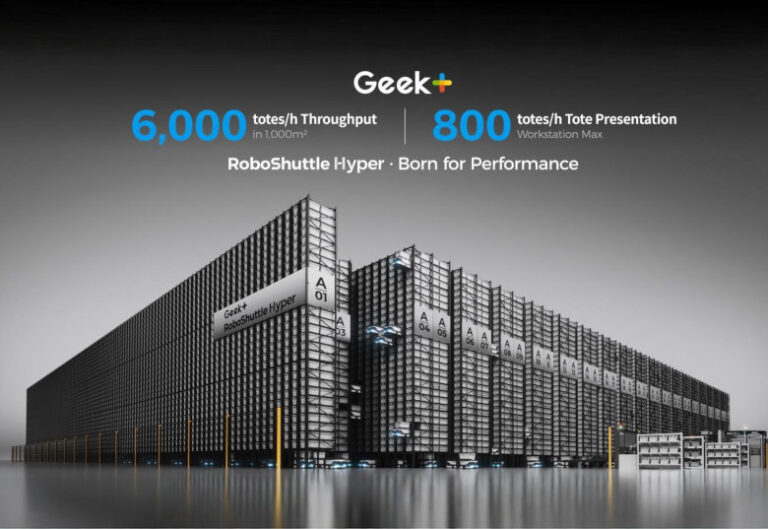
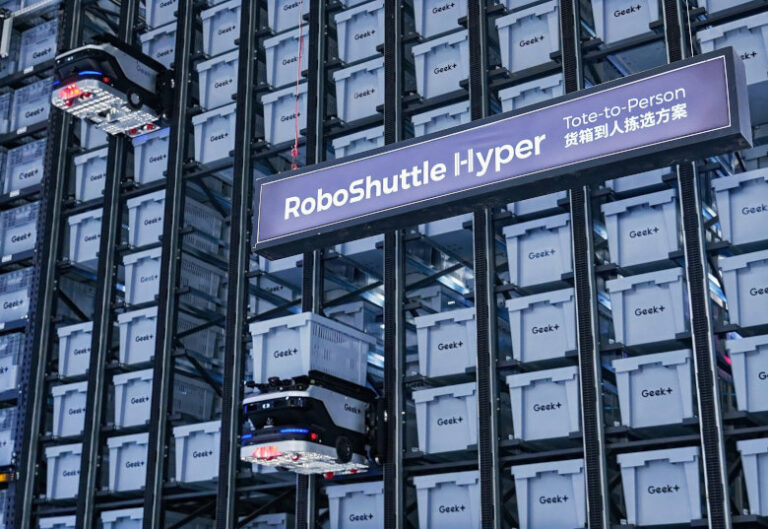
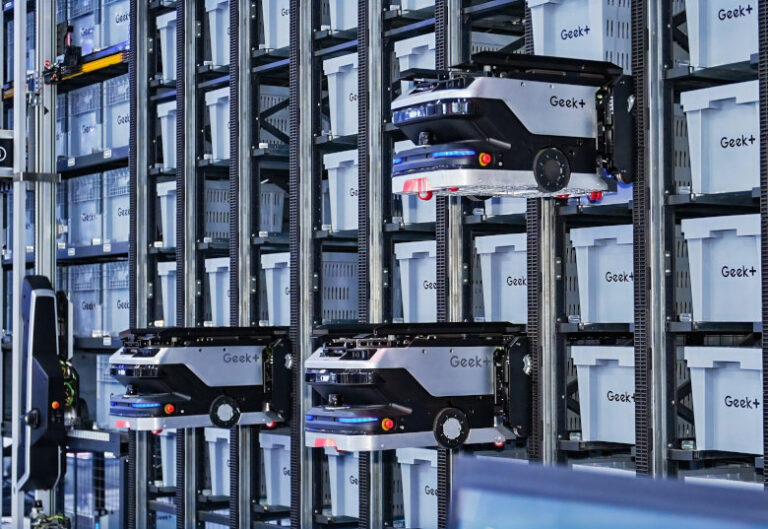
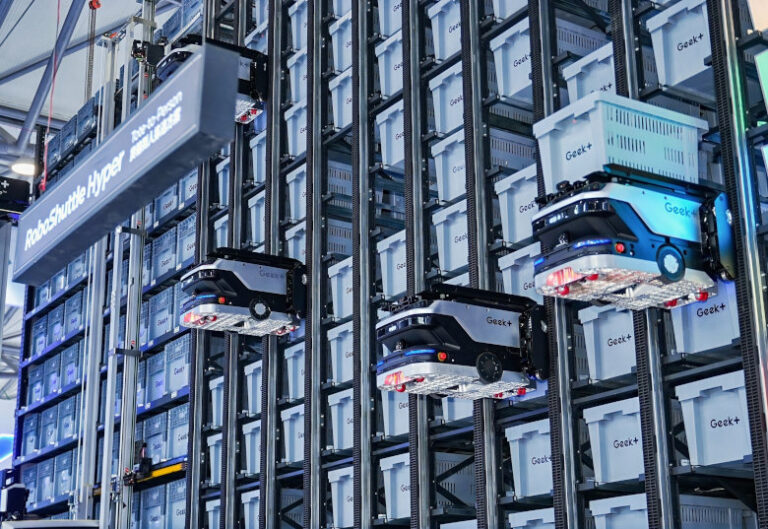
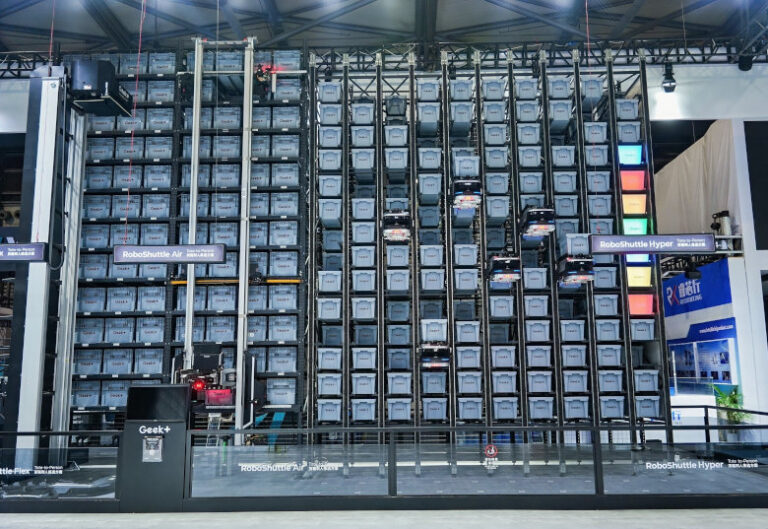
RoboShuttle Hyper (RS Hyper) is a next-generation tote-to-person climbing AMR built for ultra-high-throughput operations such as B2C e-commerce surges, fresh-food/cold-chain fulfillment and micro-fulfillment centers.
Combining horizontal tote transport and vertical rack access in one autonomous mobile robot, RS Hyper delivers up to 6,000 totes/hour per 1,000 m², with the Max Workstation exceeding 800 totes/hour via dual-point continuous feeding and conveyor buffering for at least five totes. Adjacent columns operate concurrently, two robots can work within one column, and two paths run under each double-deep storage rack, while a bidirectional grid beneath the racks supports more than 250 robots per 1,000 m²; double-deep, dual-aisle, bidirectional tote retrieval further raises storage density. Robots travel at up to 4.0 m/s and climb at up to 1.5 m/s with 2.5 m/s² acceleration, accessing double-deep racks up to 15 m high, with a 1:10 charge-to-discharge ratio supporting availability.
The RMS coordinates ground travel, climbing and workstation handovers, with scheduling capacity extending to 5,000 robots, 50,000 m² and 3 million storage locations. A column-rail-integrated structure directs operating loads to the floor, while multi-layer fall protection (≤50 mm fall distance), real-time tote re-centering via sensors and rack stops, and safety solution and safety vest (RoboSafe) compatibility ensure reliability. RS Hyper integrates with Geekplus’ Robot Arm Picking Stations and Gino 1 humanoid general-purpose robot for improved picking efficiency and accuracy.
Single-machine efficiency – Control intelligence
New motion-control algorithms deliver 2.5 m/s² acceleration, 1.5 m/s climbing speed and 1.5-minute retrieval response.
Concurrency – Adjacent-column concurrent climbing, 50%+ gain
Parallel horizontal and vertical climbing allows multiple robots to operate across adjacent columns while locking only 2 rack columns (vs. 4 – 6 industry norm), and two robots can climb within a single column simultaneously — a 50% concurrency gain. Dynamic collision detection allows adjacent-column climbing by locking only the climbing column and its opposite column, and a shared rail in the same column lets two robots work together, reducing queues around concentrated demand.
Path density — Bidirectional high-density grid network, 30%+ above industry
Dual main drive aisles beneath each rack row (instead of one) raise robot path density over 30% above the industry average, cutting congestion and dispatch time. A 410-mm-wide chassis enables two longitudinal lanes beneath each double-deep rack, linked by transverse passages between rack posts.
Hyperscale scheduling – AI-powered RMS
The RMS coordinates travel, climbing and handovers with aisle balancing and task exchange to manage congestion, scheduling up to 5,000 robots across 50,000 m² and 3 million storage locations; its aisle-balancing algorithm sustains extreme throughput, backed by dual safeguards of high availability and robustness.
Task efficiency — Bidirectional dual-side handling
A bidirectional telescopic mechanism reaches both sides of an aisle and transfers totes between them, matching put-away with retrieval in a single climb, while cross-side temporary relocation provides access to inner double-deep positions — reducing repeat climbing and dedicated buffer space. Dual conveyor buffers separate robot delivery from picking: the robot unloads and leaves while the conveyor supplies the Max Workstation.
Stability and reliability – Column-rail integrity and fall protection
An integrated column-rail design transmits operating forces vertically to the floor, eliminating beam-induced rail deformation and alignment drift. Multi-layer fall protection limits tote fall distance to ≤50 mm, lateral guides, rear stops and rearward-tilted storage positions reduce tote movement, and upward sensors detect protruding totes during climbing so the RMS can coordinate autonomous re-centering — enabling sustained high-density operation.
RS Hyper addresses demand for ultra-high throughput within a small warehouse footprint: e-commerce promotions, quick-commerce delivery expectations, labor shortages and faster inventory turnover pressure urban micro-fulfillment centers, consolidation warehouses and fresh-food operations that need dense storage and rapid tote retrieval — because robot speed alone is insufficient once rack access, traffic and workstation handovers become bottlenecks.
The market is moving decisively this way — global mobile robot shipments grew 17.5% and revenue 24.6% in 2025 (Interact Analysis), order-fulfillment robots are projected to reach half of global shipment volume by 2030, and tote-to-person systems are growing especially fast as order surges, SKU complexity, rising labor costs and peak-season demand push operators toward denser, faster automation within fixed footprints, with multiple global vendors launching climbing AMRs in 2025–2026.
RS Hyper answers this shift by combining horizontal transport and vertical tote retrieval in one robot, with adjacent-column access, two robots per column, double-deep storage and buffered workstations addressing these constraints together, and throughput of up to 6,000 totes/hour per 1,000 m² plus a Max Workstation reaching 800 totes/hour targeting rapid order turnaround and peak handling — letting operators scale capacity without expanding floor space, critical for space-constrained micro-fulfillment centers and regional distribution hubs. Shared fleet-management software, compatibility with Robot Arm Picking Stations and Gino 1 humanoid general-purpose robot, and modular robot replacement and fleet-size adjustment support automated picking integration and let operators maintain and adapt capacity as requirements change.
Customers get more throughput and storage density from the same footprint — up to 6,000 totes/hour per 1,000 m², 50,000+ totes of storage density per 1,000 m² and 800+ totes/hour per Max Workstation, with 30%+ higher robot path density and 50% higher concurrency than conventional shuttle systems.
That means faster order turnaround and higher inventory availability for e-commerce, fresh-food and quick-commerce operations, with double-deep racks up to 15 m high putting vertical space to work so peaks are handled without a bigger building. Bidirectional retrieval combines put-away and retrieval in one climb, same-column dual-robot operation and aisle balancing cut waiting around hotspots, and conveyor buffers let robots unload and leave instead of queuing through the picking cycle. Uptime stays high through peak spikes thanks to a 1:10 charge-to-discharge ratio, while floor-directed rail loading, mechanical fall protection, upward tote detection, rack guides, automatic re-centering and RoboSafe compatibility reduce exception handling, manual intervention at height and operational risk, and modular robot replacement and fleet adjustment simplify maintenance and capacity changes.
RS Hyper also plugs into Geekplus’ broader portfolio — Robot Arm Picking Stations and the Gino 1 humanoid general-purpose robot under unified fleet scheduling — offering a route to automated picking that eases labor constraints and lets customers scale or combine solutions as needs evolve. Actual throughput and storage capacity depend on layout, configuration and workload.
Image/video credits:
Finalists undergo the three-stage IFOY Audit as part of the IFOY Audit, which takes place during the TEST CAMP INTRALOGISTICS. This consists of the scientific IFOY Innovation Check, the IFOY Test and the jury test.
The bylaws set forth the core values and standards of the IFOY AWARD, which guide the organization’s actions. These include, among other things, governing bodies, the election process, evaluation criteria, and the Code of Conduct.
The International Intralogistics and Forklift Truck of the Year has three bodies: Jury, sponsors, and advisory board.