

IFOY Audit
Finalists undergo the three-stage IFOY Audit as part of the IFOY Audit, which takes place during the TEST CAMP INTRALOGISTICS. This consists of the scientific IFOY Innovation Check, the IFOY Test and the jury test.
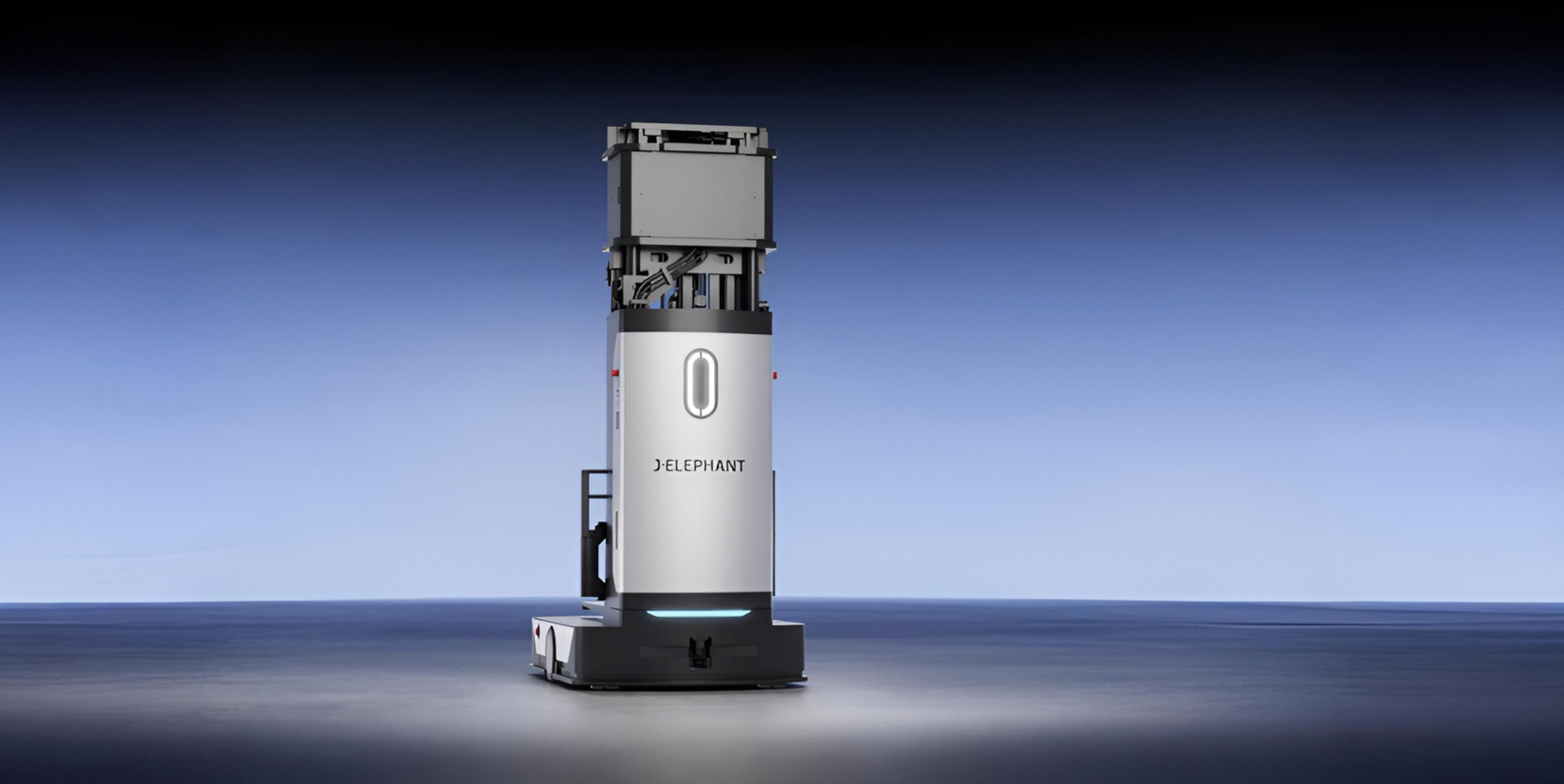
The J-Elephant Fork Robot JE-FK-65 redefines the forklift as a native industrial robot. Its first-principles architecture integrates drive, power, control, perception and safety into a compact differential-drive chassis, keeping forks and payload within the robot envelope. This enables zero-radius turning, narrower aisles and higher storage density without rails or auxiliary infrastructure. Its modular chassis-and-mast platform supports lifts up to 8 m, unifying floor handling, mid-level and high-bay storage. It transforms brownfield warehouses into scalable, high-density robotic systems.

Product name and company
J-Elephant Fork Robot JE-FK-65 – Beijing J-Elephant
Category
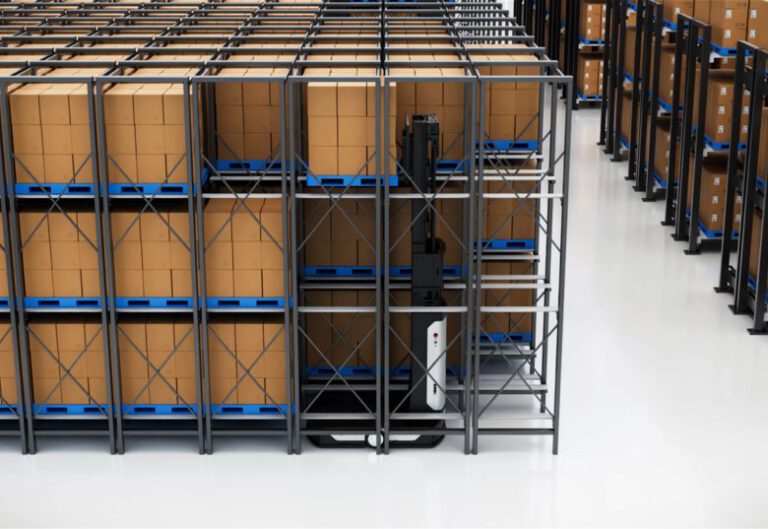
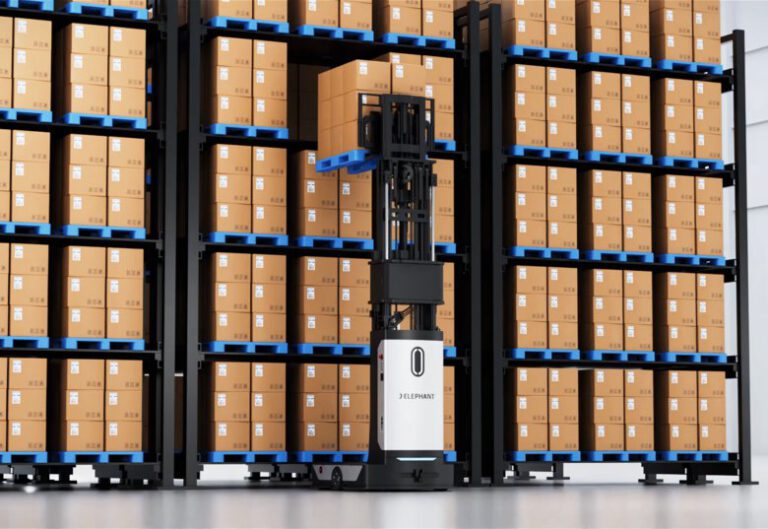
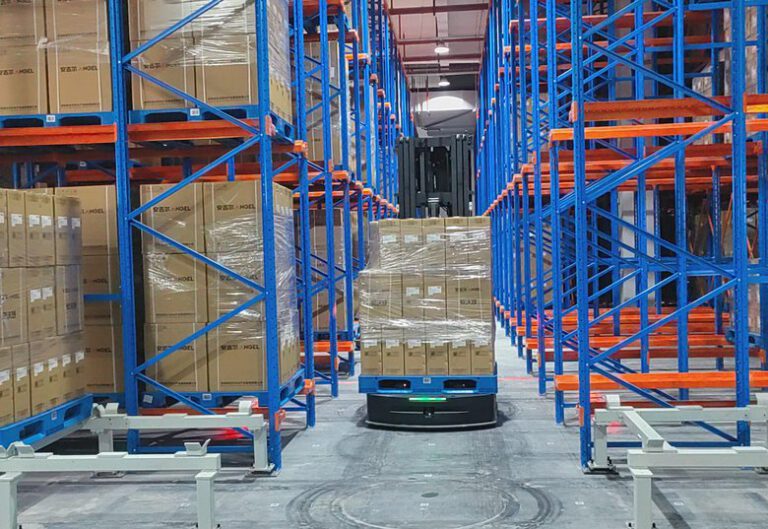
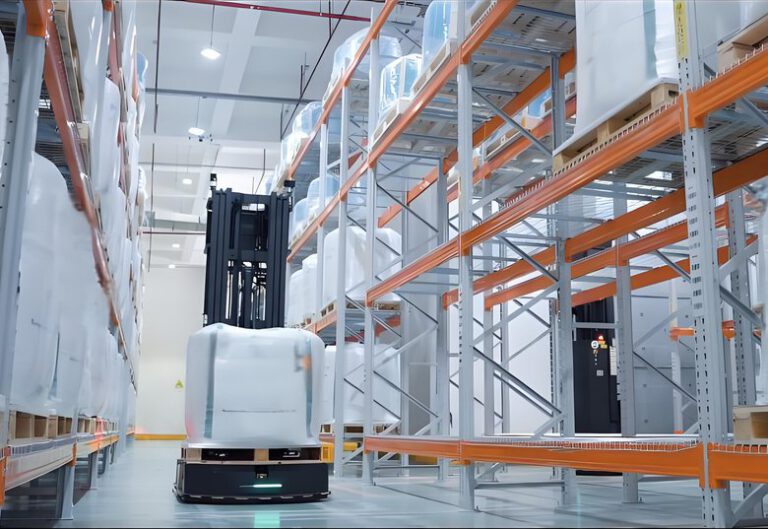
The J-Elephant Fork Robot JE-FK-65, is a native fork robot fundamentally redesigned from first principles, rather than a conventional forklift retrofitted for autonomous. Its standardized robotic chassis integrates drive, power, motion control, perception and standard interfaces in a common base layer, and this base scales vertically into a range of high-reach storage configurations. The result is a modular “Robotic Chassis + Multi-Form Forklift” architecture.
Thanks to its differential drive, the JE-FK-65 keeps the fork footprint entirely within the chassis structure. When loaded, the vehicle, payload and center of motion form a stable isosceles triangle, so the heavy counterweights of a traditional forklift are eliminated altogether. Its turning diameter is no greater than its own length, so it can work high-bay positions in narrower aisles and deliver a substantial gain in warehouse space utilization.
For manufacturing and logistics, the JE-FK-65 introduces a new approach to vertical storage: with no floor rails, conveyors or auxiliary hardware, it handles floor handling, mid-level staging and high-density racking in a single system. It suits brownfield retrofits with selective racks and drive-in racks across food and beverage, pharmaceuticals, electronics, automotive parts, and third-party logistics. The JE-FK-65 already runs reliably at Coca-Cola, SF, and an 8-meter variant is deployed with a global Tier-1 automotive supplier and a multinational chemical group.
The JE-FK-65 is the fundamental redesign of the forklift robot’s architecture, chassis, control according to robotics principles.
The warehouse automation market is forecast to grow from ~USD 30 billion to USD 65+ billion by 2031 (~14% CAGR). Penetration, however, remains low: WITS counts 2.372 million powered industrial trucks sold in 2025, yet Interact Analysis expects only ~3% of forklift shipments to be automated by 2030. The gap between this installed base and actual automation is the JE-FK-65’s opportunity.
The JE-FK-65 fills a genuine gap. Under-ride robots handle floor transport and stacker cranes serve ultra-high-density storage, but flexible pallet handling in mid-to-high narrow aisles has lacked a standardized, scalable solution between legacy forklifts and heavy AS/RS.
Three forces drive this demand:
More than a storage device, the JE-FK-65 is the high-reach core of the “Robotic Chassis + Multi-Form Forklift” platform. As customers, integrators and supply-chain partners adopt it, delivery will shift from project-specific engineering to standardized product families, pre-engineered modules and volume rollout, making the forklift robot a mainstream next-generation category.
For customers, the JE-FK-65 does more than replace manual forklifts: one unified architecture improves how a warehouse uses its space, its systems and its capital.
Image/video credits: Beijing J-Elephant Technology Co., Ltd.
Finalists undergo the three-stage IFOY Audit as part of the IFOY Audit, which takes place during the TEST CAMP INTRALOGISTICS. This consists of the scientific IFOY Innovation Check, the IFOY Test and the jury test.
The bylaws set forth the core values and standards of the IFOY AWARD, which guide the organization’s actions. These include, among other things, governing bodies, the election process, evaluation criteria, and the Code of Conduct.
The International Intralogistics and Forklift Truck of the Year has three bodies: Jury, sponsors, and advisory board.