

IFOY Audit
Finalists undergo the three-stage IFOY Audit as part of the IFOY Audit, which takes place during the TEST CAMP INTRALOGISTICS. This consists of the scientific IFOY Innovation Check, the IFOY Test and the jury test.
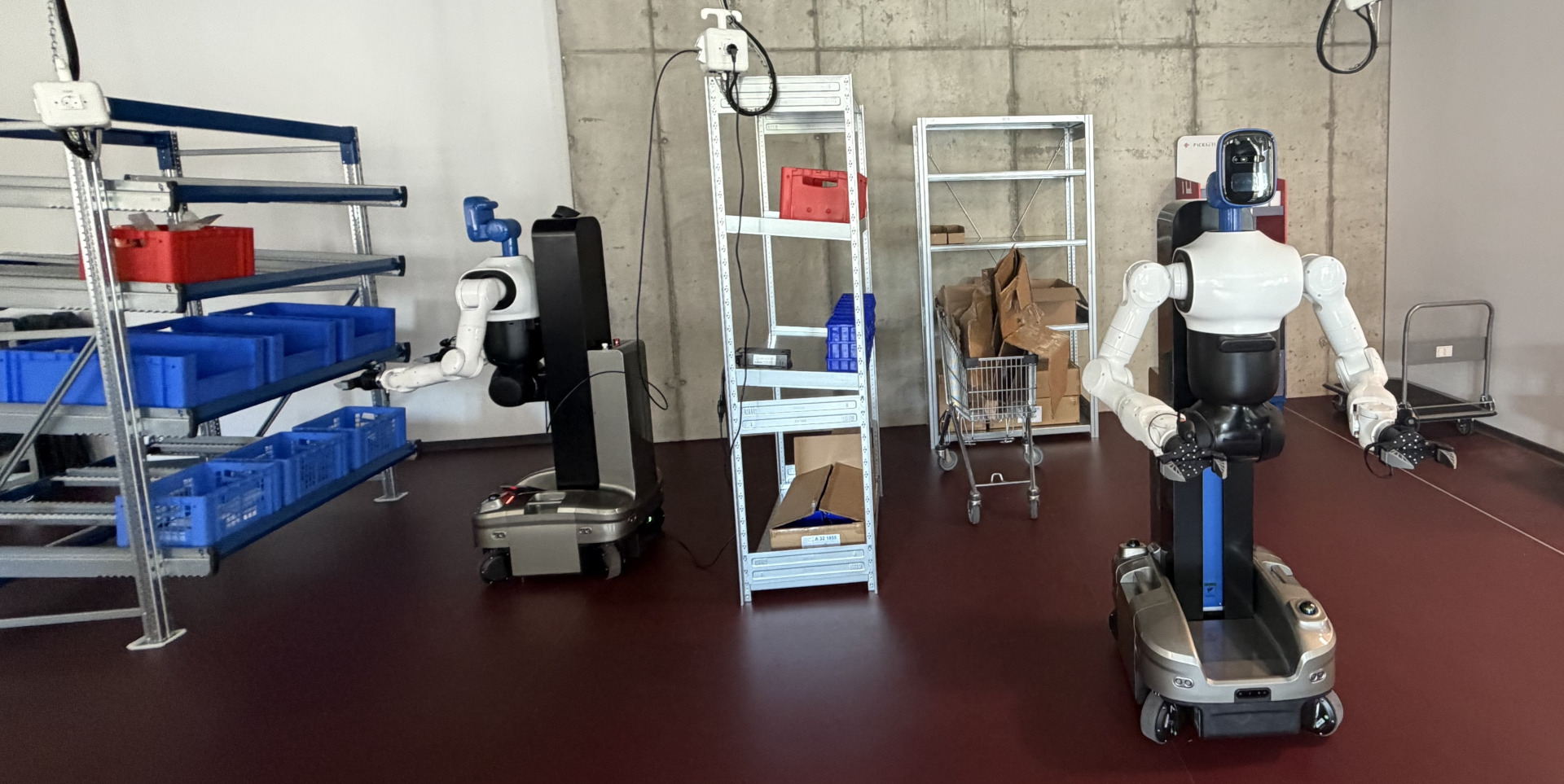
Chaser is developing an AI-powered mobile manipulation system for item-level work in existing warehouses. It combines vision, dual-arm manipulation and a real-to-simulation learning loop to pick mixed SKUs from standard shelves and adapt to new items and layouts with minimal reprogramming. Initial use cases are shelf order picking, replenishment, kitting and repacking—high-mix brownfield tasks that remain difficult to automate with conventional fixed systems.

Product name and company
Chaser Adaptive Picking System – Chaser Robotics
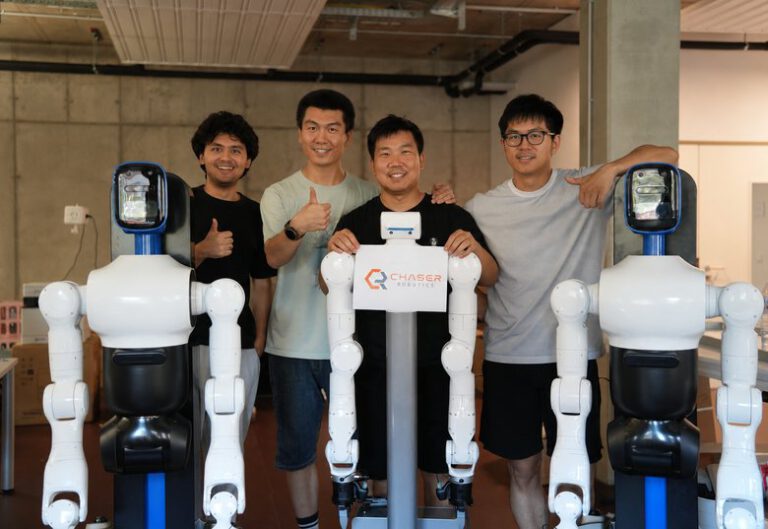
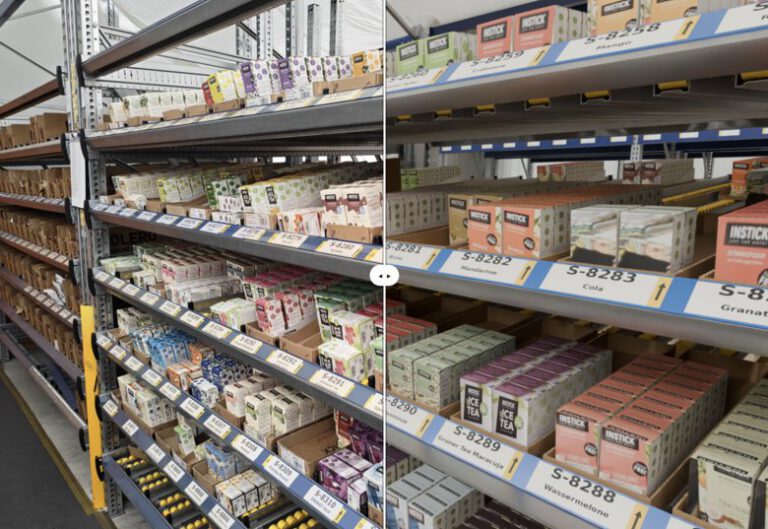
Chaser Robotics develops an AI-powered mobile manipulation system for item-level operations in existing warehouses and production environments. The system combines a mobile dual-arm robot, vision, adaptable end effectors and robot-learning software to handle products directly from standard shelves.
The initial focus is on high-mix, low-to-medium-throughput tasks such as shelf order picking, replenishment, kitting, repacking and other value-added logistics operations. These workflows are difficult to automate with conventional fixed systems because SKUs, packaging, shelf layouts and process requirements change frequently.
Chaser is designed for brownfield deployment: customers can automate item handling without rebuilding the warehouse around the robot. The same robotic platform can be adapted to new items, layouts and tasks through software and simulation rather than task-specific mechanical automation.
The core innovation is Chaser’s real-to-simulation-to-real learning loop for adaptive robotic manipulation. Real warehouse scenes are reconstructed in an aligned simulation environment, where robot behaviors can be trained, tested and evaluated at scale before being transferred back to the physical robot. New real-world observations can then be used to improve the simulated environment and the robot’s behavior.
This approach is designed to reduce the amount of task-specific real-world data collection, manual programming and engineering required when new SKUs, packaging or shelf layouts are introduced. Unlike conventional picking systems optimized for highly structured bins, fixed workstations or narrow object sets, Chaser targets high-mix brownfield shelves. The software layer is combined with mobile bimanual manipulation and adaptable end effectors, enabling one robotic platform to address multiple item-level logistics tasks instead of being engineered around one SKU, fixture or workflow.
Automation in warehouses is already well established at pallet, tote and transport level, but item-level manipulation remains largely manual in high-mix environments. The challenge is especially relevant where products, packaging, shelf layouts and order profiles change frequently.
Chaser targets 3PL and co-packing operations, e-commerce and retail fulfillment, spare-parts logistics, and manufacturing intralogistics. The initial use cases are shelf order picking, replenishment, kitting, repacking and other value-added services.
The market need is driven by labor shortages, rising labor costs and the increasing demand for flexible automation in existing brownfield sites. Chaser addresses this gap by working with standard shelves and existing material flows rather than requiring a dedicated automation cell for each process. This makes the solution relevant for both SMEs and large logistics operators that need flexibility more than maximum throughput.
Chaser enables customers to automate repetitive item-level tasks while preserving their existing warehouse infrastructure and process flexibility. The system is designed to work with standard shelves and changing assortments, reducing the need for dedicated fixtures, custom automation cells or re-engineering whenever the SKU mix changes.
For operators, the main benefits are lower repetitive manual workload, more consistent execution and the ability to automate tasks or shifts that are difficult to staff. Chaser’s simulation-driven adaptation workflow is intended to reduce integration and retasking effort by moving part of the learning, testing and validation away from live operations. Because the same manipulation platform can be reused across picking, replenishment, kitting and repacking, customers can start with one clearly defined workflow and expand automation step by step as performance is validated. This is particularly valuable in brownfield sites where flexibility, deployment effort and adaptability are critical.
Image/video credits:
Finalists undergo the three-stage IFOY Audit as part of the IFOY Audit, which takes place during the TEST CAMP INTRALOGISTICS. This consists of the scientific IFOY Innovation Check, the IFOY Test and the jury test.
The bylaws set forth the core values and standards of the IFOY AWARD, which guide the organization’s actions. These include, among other things, governing bodies, the election process, evaluation criteria, and the Code of Conduct.
The International Intralogistics and Forklift Truck of the Year has three bodies: Jury, sponsors, and advisory board.