

IFOY Audit
Finalists undergo the three-stage IFOY Audit as part of the IFOY Audit, which takes place during the TEST CAMP INTRALOGISTICS. This consists of the scientific IFOY Innovation Check, the IFOY Test and the jury test.
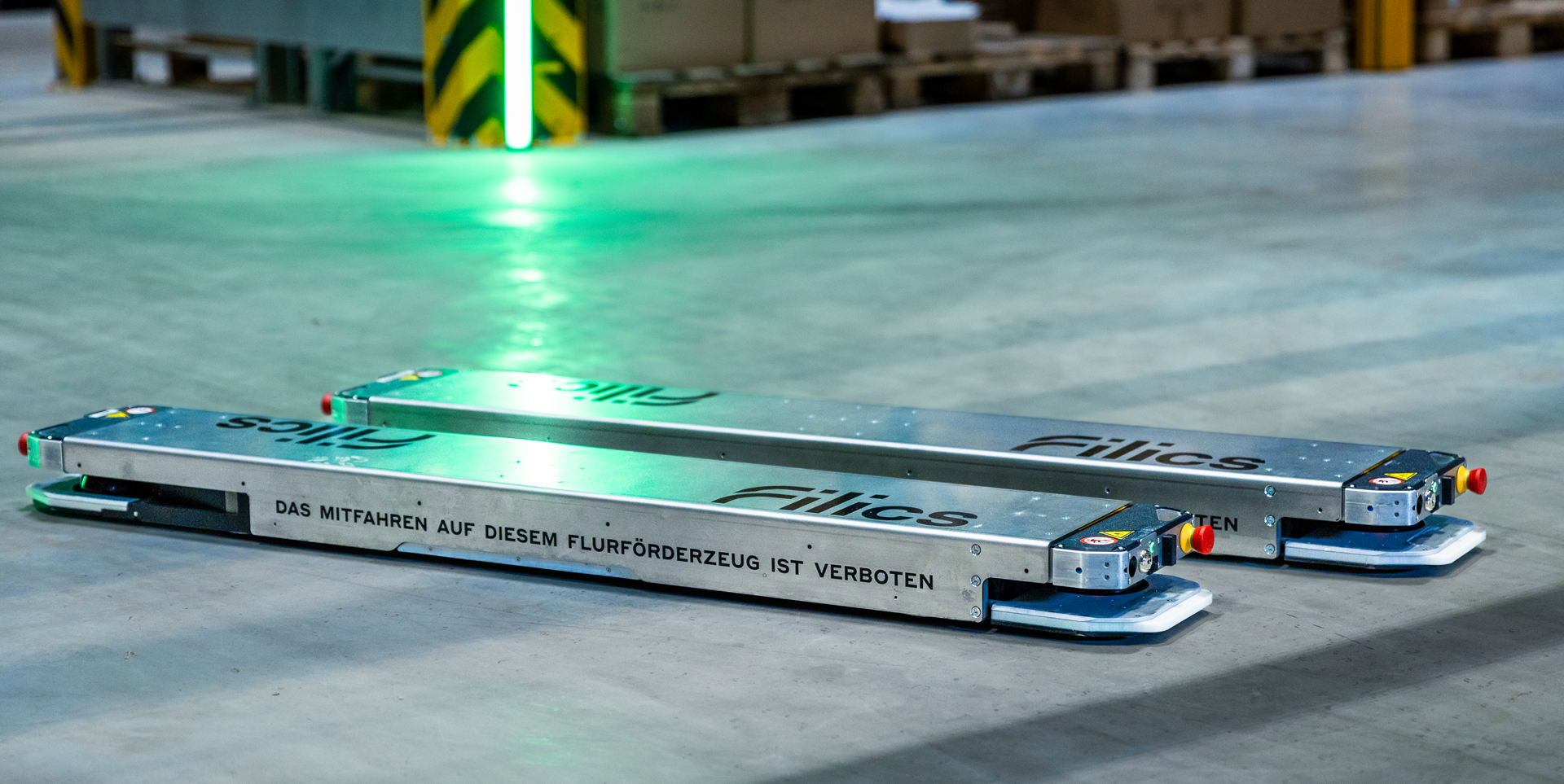
The Filics Unit, a double-skid system made up of two autonomously operating robots that together transport Euro-pallets or Euro-mesh boxes, sets new standards in the field of intralogistics. The compact design of the Filics Unit enables automated pallet movements in narrow environments and introduces new movement and process capabilities that cannot be achieved with manual or other automated logistics equipment.


Product name and company
Filics Unit – filics
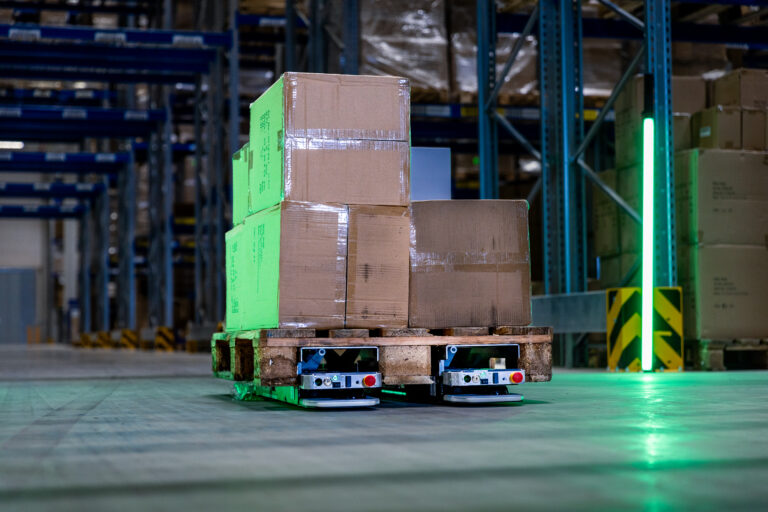
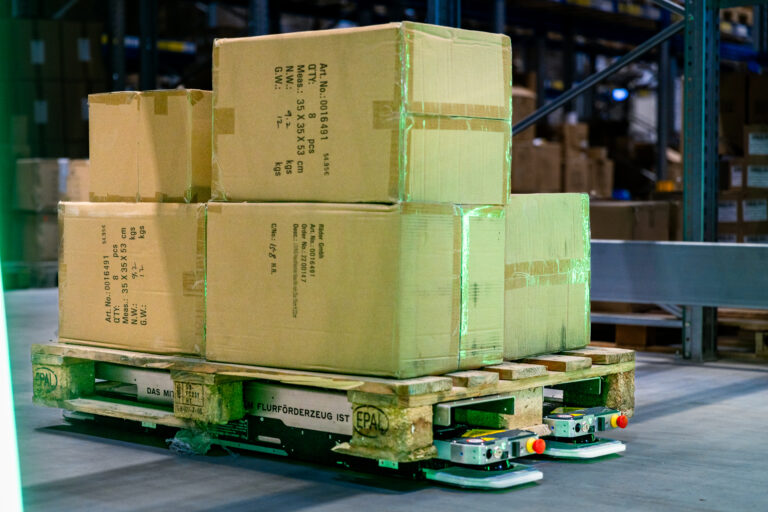
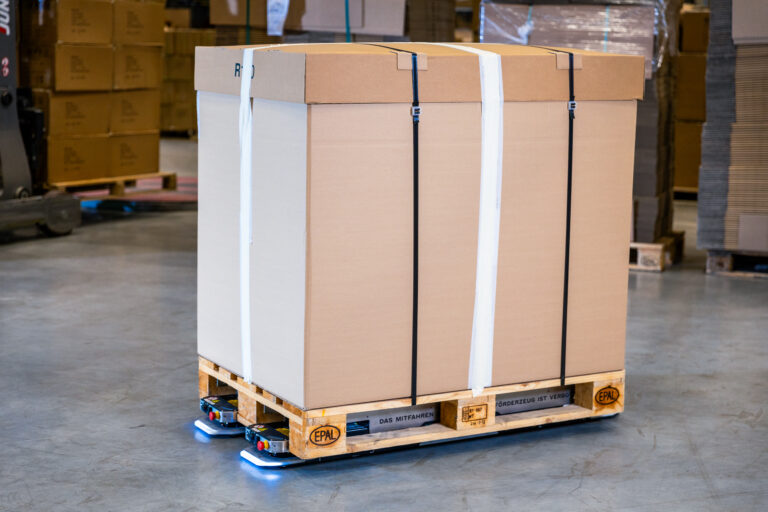
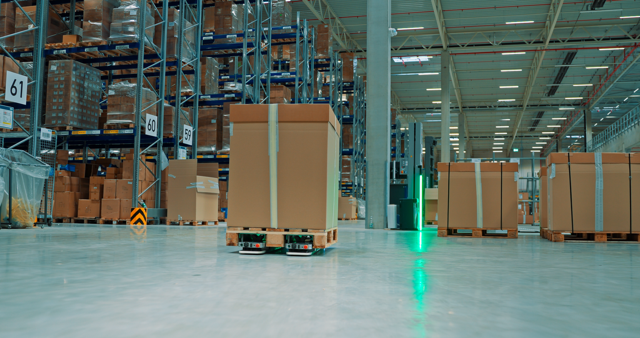

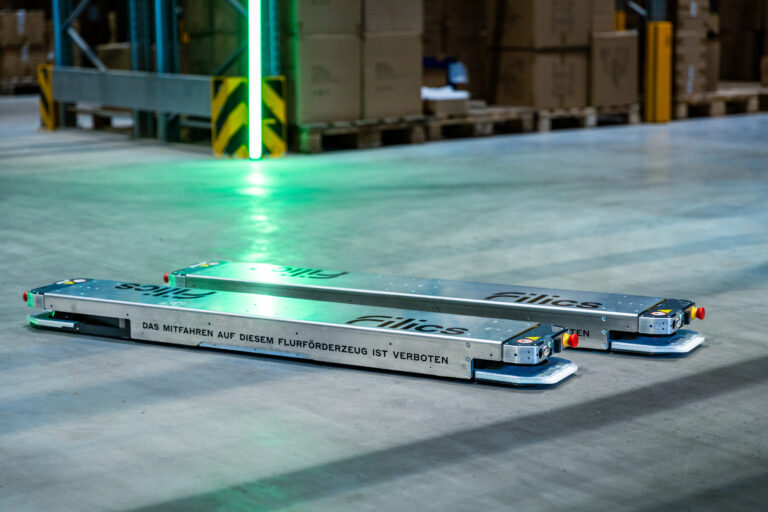
The Filics Unit is a new, compact type of AMR (Autonomous Mobile Robot) for the horizontal movement of Euro-pallets and similar load carriers in the intralogistics sector. It consists of two versatile and modular robots that are wirelessly connected and work together in pairs to transform the flow of goods in warehouses, production sites, and cross-docking hubs. The robots of the Filics Unit are designed to fit precisely into one of the open slots underneath a Euro-pallet, allowing them to “disappear” under the pallet. This compact design reduces the space required for transport, eliminates the need for shunting, and enables the Filics Unit to drive through Euro-pallets – a key unique selling point (USP) of this AMR.
The Filics Unit can automate standard ground-based A-to-B pallet transports within warehouses and production sites and is especially suited for bringing automation to very narrow environments. Beyond simple A-to-B transports, this USP opens up a wide variety of use cases, such as highly condensed ground block storage. In the future, it is also aimed to leverage this USP to enable automated single-motion cross-docking and fully autonomous, parallelized truck loading and unloading within 5 minutes (compared to the current average of 45 to 60 minutes).
The core of the innovation lies in the unique, compact form factor of the Filics Unit described above. While others have attempted to develop double-skid systems, none have successfully reached market entry. Today, there are only two predominant types of AMRs for pallet movement: Underride-AMRs and Fork-AMRs. Underride-AMRs are cost-effective but inflexible, as they can only pick up from and drop off to pre-installed racks. Fork-AMRs can replicate many functions of manual pallet jacks or pallet trucks, offering greater movement flexibility and slight space savings, but they also inherit most of their limitations. They automate without fundamentally improving the flow of goods and are often too costly for large-scale rollouts. Ultimately, both AMR types are limited to relatively simple A-to-B transports. In contrast, the Filics Unit provides logistics operators with a range of new options to automate their pallet movements in intralogistics more effectively.
Another innovative aspect of the Filics Unit is its modular robot design, which allows for low-effort maintenance with submodules that can be easily replaced within minutes. Combined with the compactness of the modules, this opens up new possibilities for efficient servicing via remote support and parcel delivery.
In summary, the design of the Filics Unit sets it apart in the AMR market as a unique, one-of-a-kind solution.
As logistics operators face increasing performance pressure and a continually shrinking pool of logistics workers, automation solutions are becoming highly relevant in the intralogistics market across nearly all sectors and industries that handle physical goods. In 2021, the European AMR market had a volume of 885 million USD and is expected to grow at a CAGR of around 23 %, reaching over 3.7 billion USD by 2028. (statista)
The Filics solution is particularly relevant to this market for three key reasons. First, it enables automation of processes that are not (efficiently) automatable with current solutions, thus broadening the spectrum of ground-based automation. Second, the Filics Unit allows for the automation of process chains that, for example, involve pallet buffers or require pallet sequencing. Currently, it is challenging to integrate Underride- or Fork-AMRs into these processes because manual work is still needed before or after the AMRs’ transport job. In most cases, splitting transport processes into automated and manual sections with handover points adds more time, space, and costs than the AMR solution saves. Finally, the Filics Unit concept has the potential to automate truck loading and unloading processes with unmatched speed and flexibility. This enables Filics to leverage one of the scarcest resources in logistics: truck drivers.
The Filics Unit enables logistics operators with an inclination towards automation to rethink their horizontal pallet processes in the context of automation. With Filics, tight brownfield environments can be automated for the first time, and labor-intensive hand pallet truck processes in similarly confined spaces can be streamlined and automated. The previously mentioned capability of the Filics Unit to automate ground block storage allows for space savings of up to 66 %, while still enabling direct access to each pallet.
The compact double-skid system Filics Unit, which is coupled via Bluetooth, is designed for the horizontal movement of pallets and grid boxes and disappears almost completely beneath the load carrier. As a result, and with the help of the omnidirectional drive system integrated into each skid, maneuvering with load carriers is significantly simplified, as lateral movements are also possible. The system performed reliably in testing, transporting load carriers in confined spaces. The hardware implementation is of high quality, with the lift modules featuring 9 cm of ground clearance and the wheel modules designed for 30,000 operating hours both being proprietary developments by Filics. With a maximum payload of one ton, a speed of 1.6 m/s, and the ability to handle slight inclines of up to 3°, the system achieves work performance comparable to that of a human operator. A CE-certified, safe, collaborative operation at Performance Level d is ensured through safety laser scanners, LED lighting, a Blue Spot, and acoustic signals.
The system offers standard market laser-based navigation functions, primarily with track guidance. The battery life of six hours with a 30-minute charging time should be well-suited for most applications.
Filics offers the only industrially deployable double-skid system on the market. No comparable systems exist. While the basic concept is not new, there were previously no functional or market-ready solutions of this kind. The under-driving and pass-through capabilities of this novel AMR type enable numerous new use cases for load carrier transport in extremely confined spaces capabilities that other automated transport systems, such as under-run AMRs and fork-lifting AMRs, cannot provide.
The system enables space savings of up to 66 percent by increasing storage density in block warehouses while maintaining direct access to each load carrier. This results in cost savings as well as improved time efficiency in transport and sorting processes. The automation of load carrier movements in tight spaces is possible both in brownfield environments and in collaborative operations and can be applied to a wide range of load carrier types.
In terms of pricing, the system is positioned in the mid-market range, with a return on investment (ROI) of two years. It is also available as a Robotics as a Service (RaaS) model, which, in a single-shift operation, corresponds to the cost of an employee and already leads to significant cost savings in two-shift operations.
The Filics Unit enables the automation of many hand pallet truck processes that were previously not (economically) automatable in block and line warehouses, as well as in other confined environments in production and logistics settings. In line warehouses, for example, for perishable goods, the system advances all pallets without the need for a conveyor belt. The market in Europe is valued at nearly four billion euros.
Looking ahead, there is significant potential for additional applications, ranging from single- to multi-runner configurations up to synchronized truck loading in five minutes. During pilot deployments at six well-known mid-sized to large companies, with a total operating period of 100 days, the system demonstrated market readiness, market fit, and high scalability across different logistics processes. The first production installations are currently underway.
This unique double-skid system on the market enables entirely new use cases for load carrier transport in tight spaces through its under-driving and pass-through functions combined with its omnidirectional drive system.
Compared to conventional autonomous transport solutions, it significantly expands the range of automatable warehouse processes and redefines warehouse logistics workflows.
| Functionality / type of implementation | ++ |
| Novelty / Innovation | ++ |
| Customer benefits | ++ |
| Market relevance | ++ |
| ++ very good / + good / Ø balanced / – less / — not available | |
Finalists undergo the three-stage IFOY Audit as part of the IFOY Audit, which takes place during the TEST CAMP INTRALOGISTICS. This consists of the scientific IFOY Innovation Check, the IFOY Test and the jury test.
In den Statuten sind die Grundwerte und die Standards des IFOY AWARD festgelegt, nach denen die Organisation handelt. Dazu gehören unter anderem Gremien, Wahlomodus, Bewertungskriterien sowie der Code of Conduct.
The International Intralogistics and Forklift Truck of the Year has three bodies: Jury, sponsors, and advisory board.