

IFOY Audit
Finalists undergo the three-stage IFOY Audit as part of the IFOY Audit, which takes place during the TEST CAMP INTRALOGISTICS. This consists of the scientific IFOY Innovation Check, the IFOY Test and the jury test.
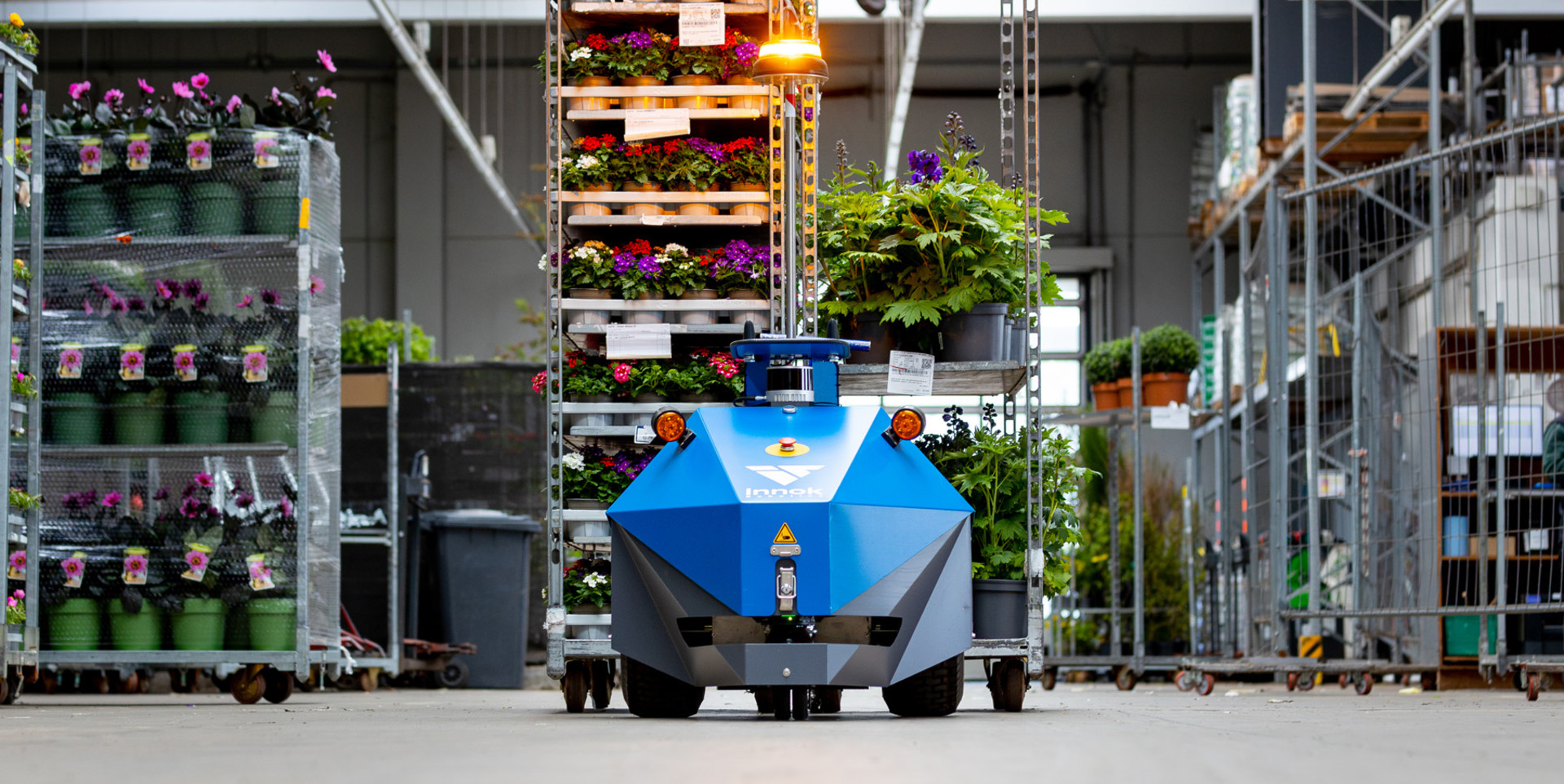
Innok Robotics is an innovation leader and, with the INDUROS transport robot, the first manufacturer of mobile autonomous robots (AMR) that can also be used outdoors and indoors-outdoors combined – completely independent of weather or even poor ground conditions. The operation is nevertheless intuitive and easy to understand.
Product name and company
INDUROS – Innok Robotics
Category
Mobile Robot

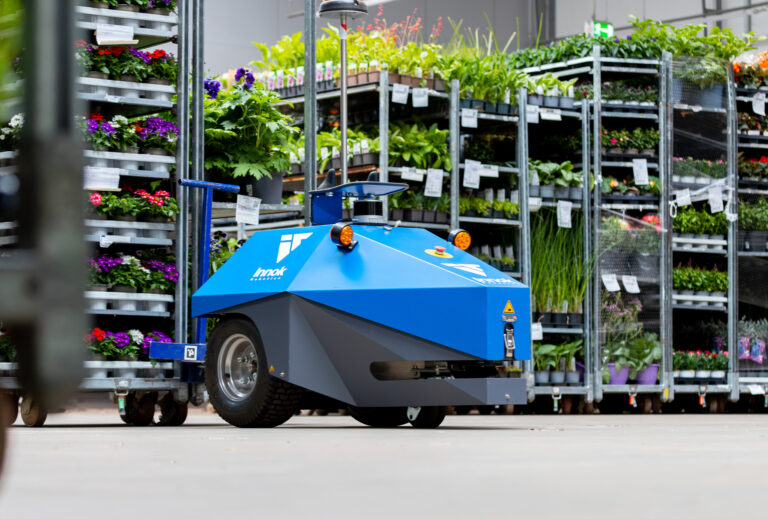
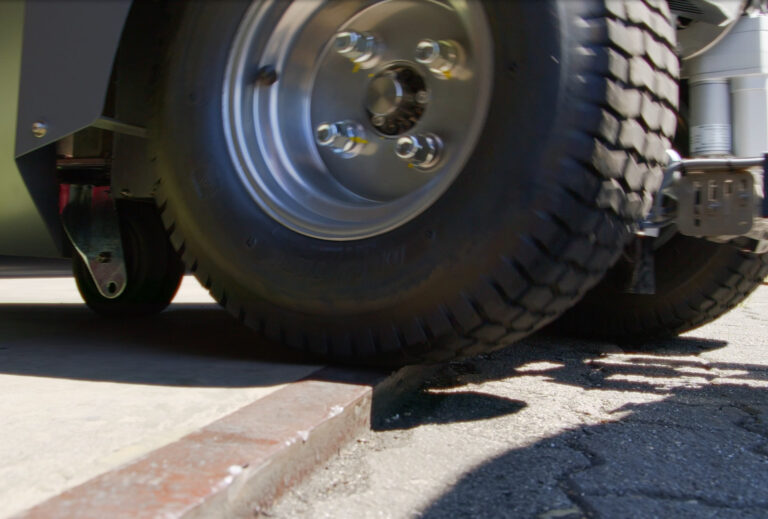
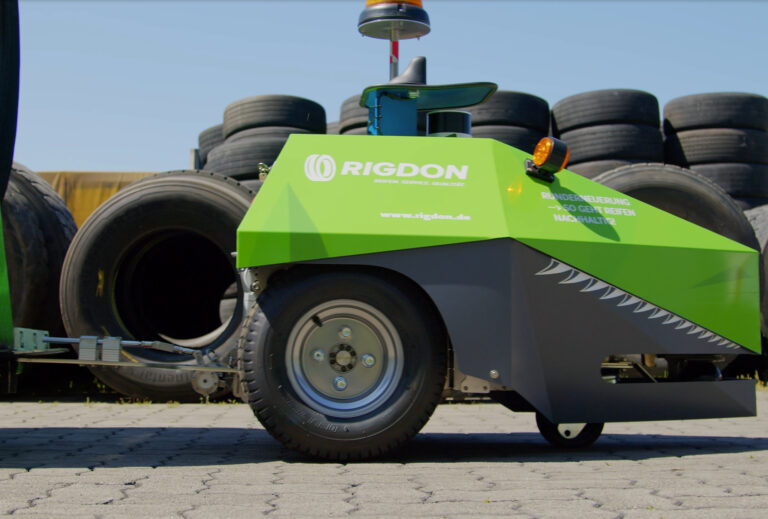
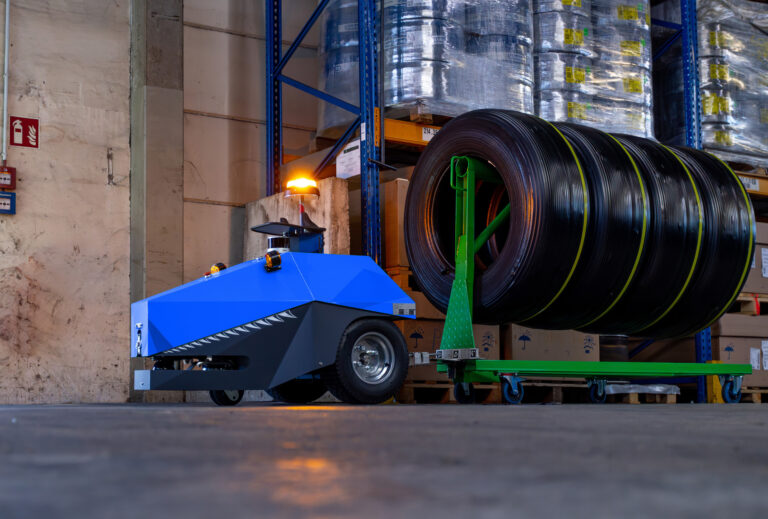
The autonomous mobile transport robot INDUROS is the first solution on the market that is not only used indoors, but also outdoors or in combined missions. The transport robot is characterised by its intelligent hybrid navigation, which ensures that the robot, with the help of its various sensors such as Lidar or GPS, can travel from indoor areas to outdoor areas, for example, without interruptions. The hybrid navigation always selects the optimal navigation method. Additional markings in the terrain or induction loops in the ground are not needed. The INDUROS easily masters bad weather such as snow, uneven ground or even inclines and declines. The compact yet powerful robot pulls loads of up to 700 kg. It autonomously couples and uncouples various trailer types without the need for user interaction.
Since it charges itself autonomously and inductively, the INDUROS can work 24/7. For customers, this results in a fast ROI. The important skilled workers at Innok customers can be re-employed in more value-creating areas than goods transport.
The INDUROS meets the highest safety standards with extra sensors and stops in a fraction of a second, even if an obstacle suddenly appears in front of the robot.
The central innovation is clear: The INDUROS is the first AMR that can also be used outdoors without restrictions in goods transport and logistics. The transport robot is characterised by its intelligent hybrid navigation, which ensures that the robot can travel from indoor areas to outdoor areas without interruptions, for example, thanks to its various sensors such as Lidar or GPS. Extra markings in the terrain, fixed points or induction loops in the ground are not needed. The INDUROS also drives in bad weather such as snow. It easily masters uneven ground or even inclines and declines. Coupling and uncoupling of transport trolleys happens autonomously without human intervention.
Another special feature is the easily accessible and easy-to-understand Graphical User Interface (GUI). Since Innok Robotics also develops robots for target groups that normally have no special robotics or IT experience, the INDUROS also benefits from the intuitive user interface. A modern web browser is all that is needed to access the GUI and operate the robot.
The relevance for the market is enormous. The INDUROS transport robot was developed at Innok in response to the requirements and wishes of many industrial customers, as they saw the possibilities of the autonomous mobile Innok HEROS platform.
This resulted in the INDUROS as the first and only autonomous solution on the market that can be used not only indoors in perfect ground conditions, but also outdoors or in combination – a compact, very mobile, powerful and universally applicable transport robot.
In many industries (for example, metal processing) it is also the best solution indoors, as the INDUROS has no problems even with poor or uneven floors, speed bumps or other obstacles thanks to the Innok hybrid navigation.
The omnipresent shortage of skilled workers has further increased the relevance of the autonomous mobile transport robot.
In 2020, AMR provider Innok Robotics decided to develop its business in two directions: the production of irrigation robots and the INDUROS. The latter is a mobile autonomous transport robot that can move loads both indoors and outdoors. The specialization in outdoor areas came about after the company founder’s studies, when he was working on sensor technology and navigation in unknown terrain. Today, Innok Robotics offers a holistic solution from a single source: development, programming and assembly of the INDUROS, which moves extremely agilely in outdoor terrain. According to the manufacturer, this is the first and so far only solution on the market that can be used both indoors and outdoors.
The reason that has so far prevented manufacturers from building similar mobile robots for outdoor use is that outdoor conditions can be challenging. It’s wet, hot, uneven, visibility can be poor, there are inclines and declines and many other challenges that often affect the reliable functioning of autonomous vehicles. Although many companies are interested in autonomous mobile robots (AMR), they do not always have the smooth floors they need. This is precisely where the INDUROS “Multi-Terra-AMR” shows its strengths.
The INDUROS, which itself weighs around 165 kilograms, can follow predefined routes. The robot’s hybrid navigation (lidar, GPS) seamlessly uses the best form of navigation and sensor technology. It can pull a maximum trailer load of 500 to 700 kilograms. Additional markings in the terrain or induction loops in the ground are not required. To ensure maximum safety, the safety sensor of Sick is blown free by air pressure so that the device can drive even in heavy rain and does not blind.
Users of INDUROS, which was used by the first pilot customer four and a half years ago, include global corporations such as Kubota as well as small and medium-sized companies that want to transport spare parts, pallets or long pipes. The user-friendly Graphical User Interface (GUI) was developed for target groups that have no special robotics or IT experience. A modern web browser is all that is needed to access the GUI and operate the robot.
A truly unique feature of the INDUROS is the autonomous coupling and uncoupling of its trailers without the need for an operator to be present. The energy supply is also fully automatic: the INDUROS drives itself to its base station and charges itself inductively there. It can be purchased or leased as RaaS, and the software can be rented with the purchase model. There are currently “a three-digit number” of these devices in use.
Although the coupling and uncoupling of transport trailers takes place automatically, the feeling can still arise that it is not possible to maintain directional stability with several trailers on the INDUROS (quasi as a tugger train). Overall, the INDUROS is more suitable for a specific market niche. Even if there are uneven floors or floors with thresholds indoors, the INDUROS still offers application scenarios.
The desired basic function, the autonomous transportation of loads with a seamless transition between the outside and inside areas, is given. The pneumatic tyres enable a high tractive force to be achieved on uneven ground with a low vehicle weight. However, there is still potential for development in the implementation: on the one hand, the towing curve is not considered, so that the space requirement may increase when cornering and there is a risk of injury to people in the vicinity of the vehicle. On the other hand, the trailer is not secured against rolling away after uncoupling; further precautions (e.g. limiters in the floor) are necessary, which means that changing the parking space at short notice causes additional work in addition to programming. The implementation of all functionalities appears well thought-out, but in some cases still very prototypical.
There are no comparable solutions on the market. The seamless transition from indoor (navigation with Lidar) to outdoor (navigation with GNNS) is an innovation. Other features to fulfill the function (compressed air for cleaning the sensors) are implemented in a very innovative way.
Previous transports between the outdoor and indoor areas were carried out using conventional manual vehicles or transfer points. The customer benefit is particularly important in shift work.
The maximum trailer load of 750 kg is a relevant limitation. The demand and thus the relevance of autonomous transportation is high, but the market relevance is limited due to the restricted towing capacity. In addition, the vehicle is mainly suitable for static routes with transfer points. The increasing dynamics with changing logistics processes in particular further limit the market relevance here.
The INDUROS is a step towards automating transport between indoor and outdoor areas, but only achieves medium market relevance due to the existing functionalities. There is potential for development above all in terms of safety, for example in the towing curves, as well as an increase in towing load.
| Functionality / type of implementation | Ø |
| Novelty / Innovation | ++ |
| Customer benefits | + |
| Market relevance | + |
| ++ very good / + good / Ø balanced / – less / — not available | |
Finalists undergo the three-stage IFOY Audit as part of the IFOY Audit, which takes place during the TEST CAMP INTRALOGISTICS. This consists of the scientific IFOY Innovation Check, the IFOY Test and the jury test.
In den Statuten sind die Grundwerte und die Standards des IFOY AWARD festgelegt, nach denen die Organisation handelt. Dazu gehören unter anderem Gremien, Wahlomodus, Bewertungskriterien sowie der Code of Conduct.
The International Intralogistics and Forklift Truck of the Year has three bodies: Jury, sponsors, and advisory board.