

IFOY Audit
Finalists undergo the three-stage IFOY Audit as part of the IFOY Audit, which takes place during the TEST CAMP INTRALOGISTICS. This consists of the scientific IFOY Innovation Check, the IFOY Test and the jury test.
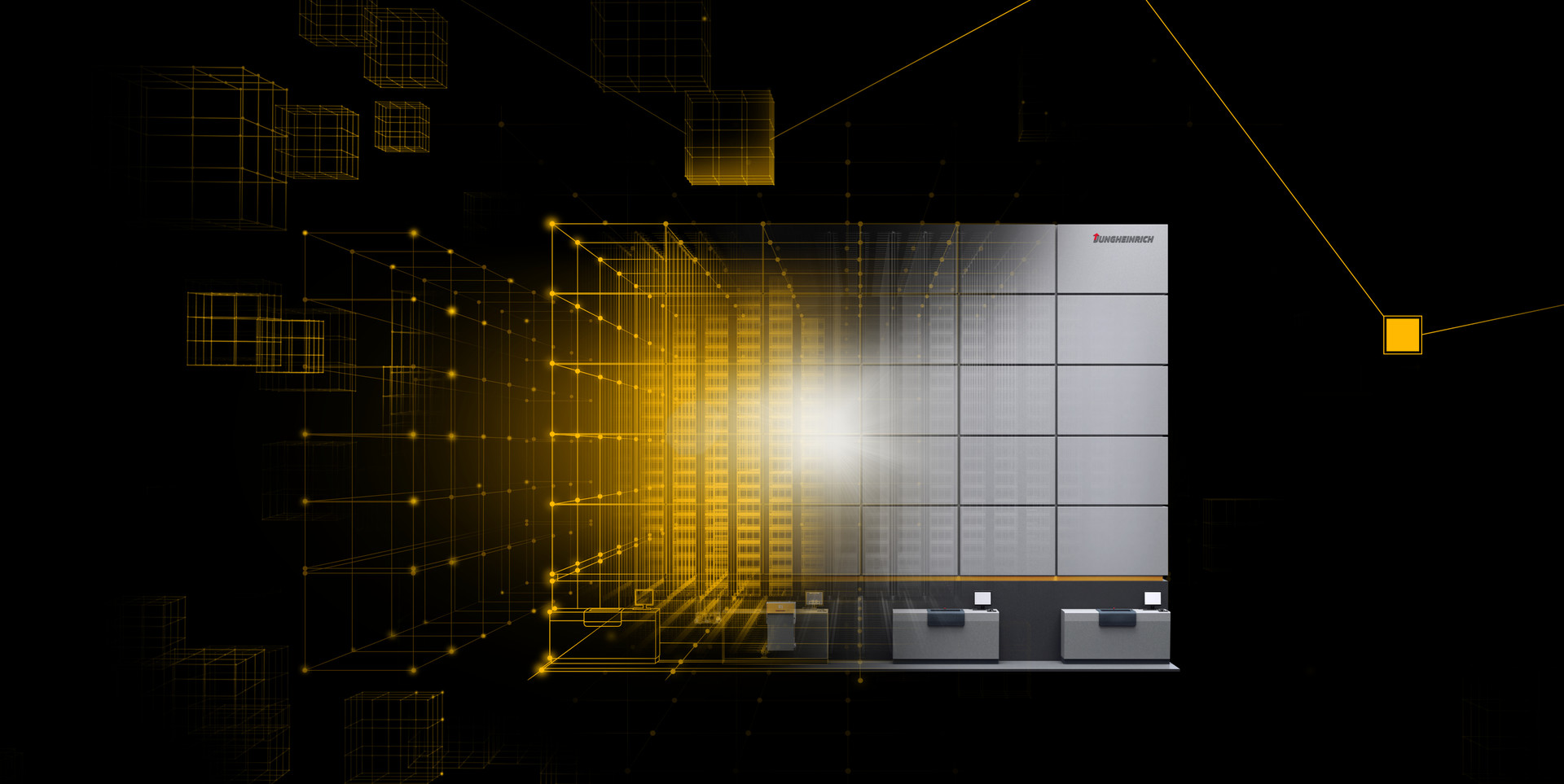
More efficient, faster and extremely flexible – as an automated compact storage system for containers, the Jungheinrich PowerCube sets new standards in warehousing. Through vertical stacking of containers and time-saving storage, retrieval and transfer with high-performance lithium-ion shuttles, the easy-to-integrate warehouse solution ensures efficient processes, impressive space utilisation and a maximum increase in profitability in the era of of e-commerce and just-in-time delivery.

Product name and company
Jungheinrich PowerCube – Jungheinrich AG
Category
Stationary Robot / Robot Warehouse System
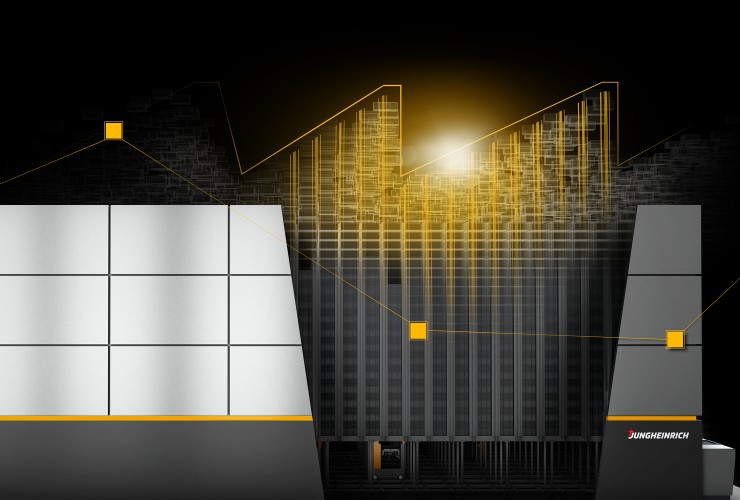
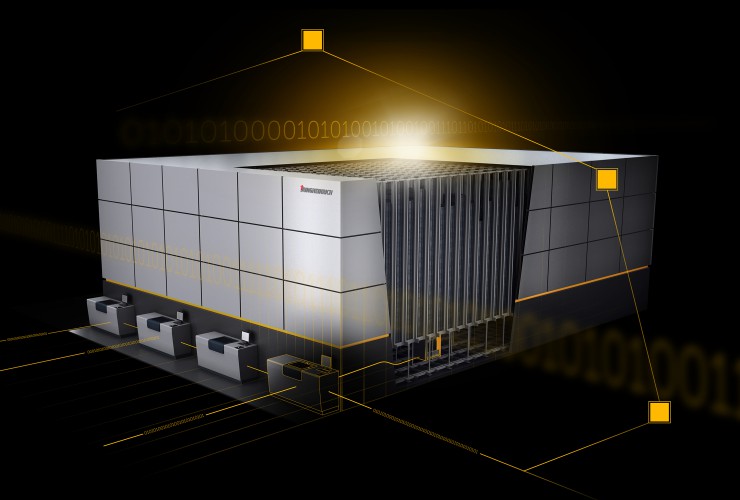
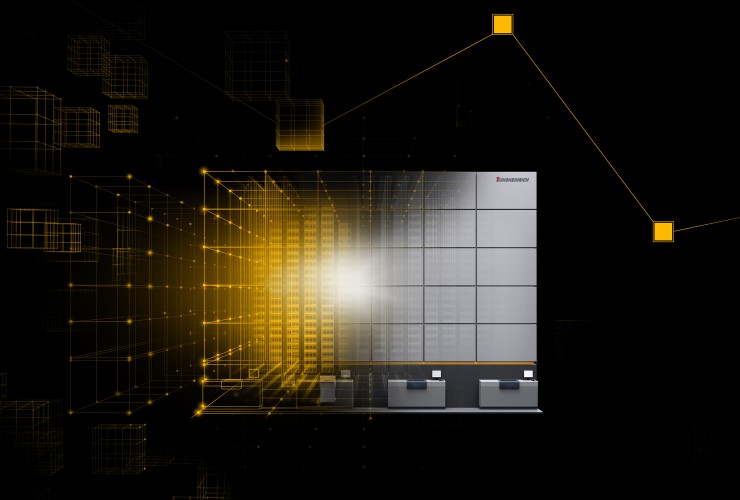
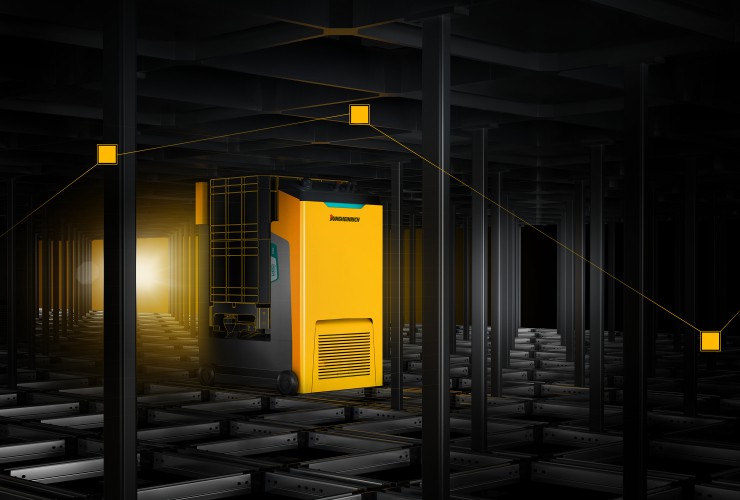
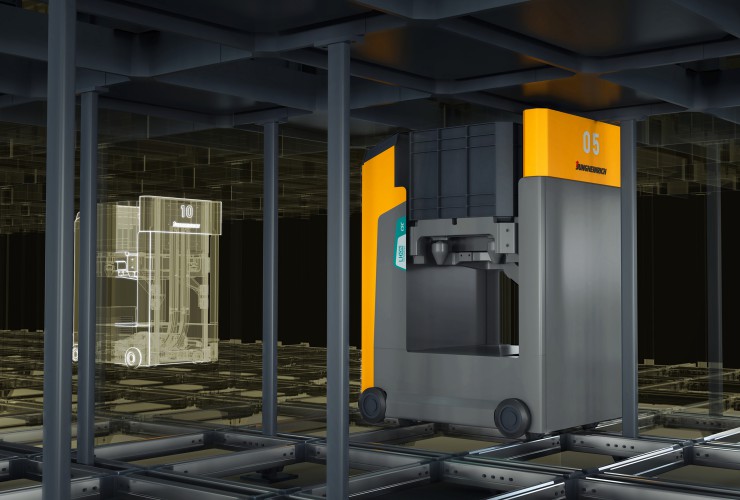
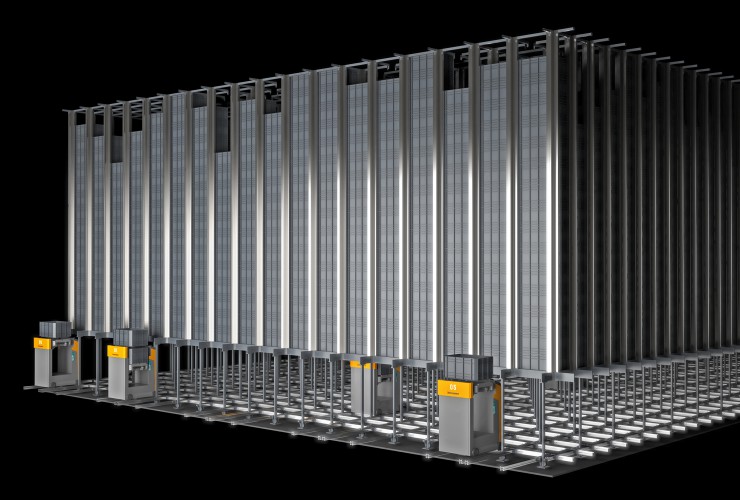
Space and time perfectly utilised: The automated, ultra-compact and scalable Jungheinrich PowerCube impresses with its unique use of space with room heights of up to 12 metres and a four times higher storage density compared to conventional shelving systems. System heights of up to 12 metres provide space for storing numerous containers, with the number of shuttles and containers being flexibly scalable.
The shuttles’ lithium-ion batteries provide practical, timesaving charging on the fly, eliminating downtime and enabling economical 24/7 operation. The simultaneous pickup of two containers and a payload weight of up to 50 kg per container further increase the high throughput.
The PowerCube adapts individually to different roof shapes which is a clear advantage compared to other storage systems available on the market. Whether as stand-alone solution in existing buildings, an addition to wide-aisle warehouses, or as the heart of a complex automated system – the Jungheinrich PowerCube impresses with strong performance, high flexibility and simple integration.
It can be easily connected to existing warehouse management software or ERP systems and as a self-contained logistics solution it offers a wide range of options to increase profitability and competitiveness in the warehouse.
Spatial miracle with high innovative power. The Jungheinrich PowerCube redefines space and time – as an automated compact storage system for containers, it flexibly adapts to spatial requirements and the desired throughput in the warehouse. In the era of e-commerce and just-in-time delivery, the self-contained automation solution builds the perfect basis for compact storage and efficient order picking.
Flexible use of space: By operating the PowerCube from below, there are no limits to upward growth. Even more flexibility is offered by the individual adaptation to different roof shapes and the conversion of possible interfering contours such as beams.
High throughput: Simultaneous handling of two containers guarantees maximum efficiency in transport for every shuttle run, as well as increased throughput and optimum energy efficiency.
Maximum availability: Lithium-ion batteries laid out for high charging currents and the ability for intermediate charging in short time intervals enabling uninterrupted 24-hour operation.
Efficient, reliable and future-oriented: In the era of e-commerce, cost pressure and capacity problems are constantly on the increase. With the Jungheinrich PowerCube, an innovative logistics solution has been created for all those industries that want to push the efficiency and competitiveness of their warehouse forward with the help of an automated small parts warehouse. The PowerCube can be used flexibly by manufacturing companies, wholesalers and retailers. It is a pioneering addition for the still relatively young market of compact storage solutions that sets new standards in terms of efficiency and space utilisation with its many advantages.
The Jungheinrich PowerCube: As the highest compact storage system for containers in its class with system heights of up to 12 metres, the PowerCube offers a wide range of advantages in the daily logistics process:
Since the storage and retrieval units of the PowerCube automatic compact tote storage system do not drive on top of the tote rack but underneath it, the height of the individual tote stacks can be easily adapted to the respective building infrastructure. Accordingly, it is possible to react to obstacles and, for example, adapt sloping roof shapes to the racking system, which can be up to 12 meters high.
Another important feature results from the 2D track system on which the shuttles perform their service. The system can be installed on standard industrial floors in accordance with DIN 18202, and floor unevenness can be leveled with leveling feet according to standards.
The maximum load of a container stack is 750 kilograms. Containers designed for the application are used, which can take a load of up to 50 kilograms. The maximum interior size of the containers is designed to allow the transport of standard KLTs (length x width x height: 600 x 400 x 290 millimeters). Jungheinrich might roll out further container dimensions in the future. The PowerCube system containers are compatible with other automation solutions from the manufacturer and can also be used outside the compact storage system with the help of externally connected conveyor technology. Storage and retrieval stations or picking workstations have been implemented accordingly, but could only be visually inspected during the IFOY TEST DAYS, as could the entire system.
The newly developed shuttles move through the plant at a maximum speed of 4 m/s and an acceleration of up to 2 m/s². The vehicles are designed for the simultaneous transport of two containers. In doing so, the shuttles are able to move automatically at the level below the rack. Since the shuttles operate at floor level, no platform is required to perform maintenance work.
With the help of appropriate relocations, the shuttles reach the containers required to process an order. During the relocations, which are limited due to the storage strategies used, another feature comes into play: The potential energy of the lifted container stacks is used for shuttle recuperation.
Shuttle charging stations are located at the workstations, but can also be installed at other locations within the plant. A fast charging function creates the conditions for 24/7 operation of the warehouse system. A central element of the vehicles, the number of which can be adapted to the throughput requirements of the respective operator due to their scalability, is the lifting platform. This is shaped in such a way that the container is picked up positively and safely. Any positioning tolerances of the shuttle in both directions of transport can be compensated for by means of a compensation mechanism. As a result, reliable container handling is guaranteed at all times.
Perfect use of space and time: This is how Jungheinrich defines the demands placed on the automated, compact and scalable PowerCube system. The pilot application, a retail company from Switzerland, will show whether the expectations are met. In any case, the potential is there.
The market share of compact vertical storage systems has grown steadily over the past 10 years due to their broad applicability in production and retail with low storage space consumption. With the PowerCube, Jungheinrich is addressing a customer segment where storage heights of up to 12 meters with a variable height profile are desired, e.g., due to sloping ceilings. Since this applies to many existing buildings, the market potential of the solution is high. The economic efficiency is said to be given already from approximately 100 square meters storage area. The first pilot systems are currently being implemented.
Due to the larger and more flexible warehouse height compared to market leader AutoStore, the PowerCube solution can achieve even better space utilization. The robots operating underneath the store can transport up to two totes at higher speeds, making them more efficient. They can transfer totes more directly and with shorter access times (approximately 2 to 3 minutes) to output stations or conveyor systems. Maintenance is user-friendly at floor level. The installation time of less than 6 months is good but not exceptional, but extensions can be made almost without interruption during operation. Installation is possible without leveling the floor and different container heights can also be used.
Although the principle of the vertical compact storage system is not new and no serious differences to AutoStore are to be expected in terms of key figures such as compactness, throughput, costs and energy consumption, access from below is an innovation that permits new forms of use such as variable ceiling height and significantly higher storage bays and simplifies maintenance. Technical innovations in detail are the container loading weight of 50 kilograms, an intelligently designed flap mechanism to hold the container stack in the shaft, a mechanical tolerance compensation for the container pick-up, and a quick-charge function for 24/7 operation of the robots without downtime.
PowerCube is a well thought out and high-quality solution with many potentials beyond the capabilities of AutoStore. The bins have been purposefully redesigned for the solution. Due to the operation from below, the maximum container stack weight is limited to 750 kg, though. Energy recovery by the robots takes place during access. However, the system could only be inspected mechanically, not in operation. Use for refrigerated and frozen areas is in the works.
The PowerCube vertical storage system, which has been implemented to a very high standard of quality, impresses with the possibility of flexible use of space thanks to variable heights of up to 12 m and the use of the robots underneath the storage area, which results in easier maintenance and many options for dispensing goods from the system as well as a connection option to conveyor technology. A high throughput is achieved by the simultaneous pick-up of up to 2 totes with a load of 50 kilograms each by one robot and its high speed.
| Functionality / type of implementation | ++ |
| Novelty / Innovation | + |
| Customer benefits | ++ |
| Market relevance | ++ |
| ++ very good / + good / Ø balanced / – less / — not available | |
Image/video credits: Jungheinrich
Finalists undergo the three-stage IFOY Audit as part of the IFOY Audit, which takes place during the TEST CAMP INTRALOGISTICS. This consists of the scientific IFOY Innovation Check, the IFOY Test and the jury test.
In den Statuten sind die Grundwerte und die Standards des IFOY AWARD festgelegt, nach denen die Organisation handelt. Dazu gehören unter anderem Gremien, Wahlomodus, Bewertungskriterien sowie der Code of Conduct.
The International Intralogistics and Forklift Truck of the Year has three bodies: Jury, sponsors, and advisory board.