

IFOY Audit
Finalists undergo the three-stage IFOY Audit as part of the IFOY Audit, which takes place during the TEST CAMP INTRALOGISTICS. This consists of the scientific IFOY Innovation Check, the IFOY Test and the jury test.
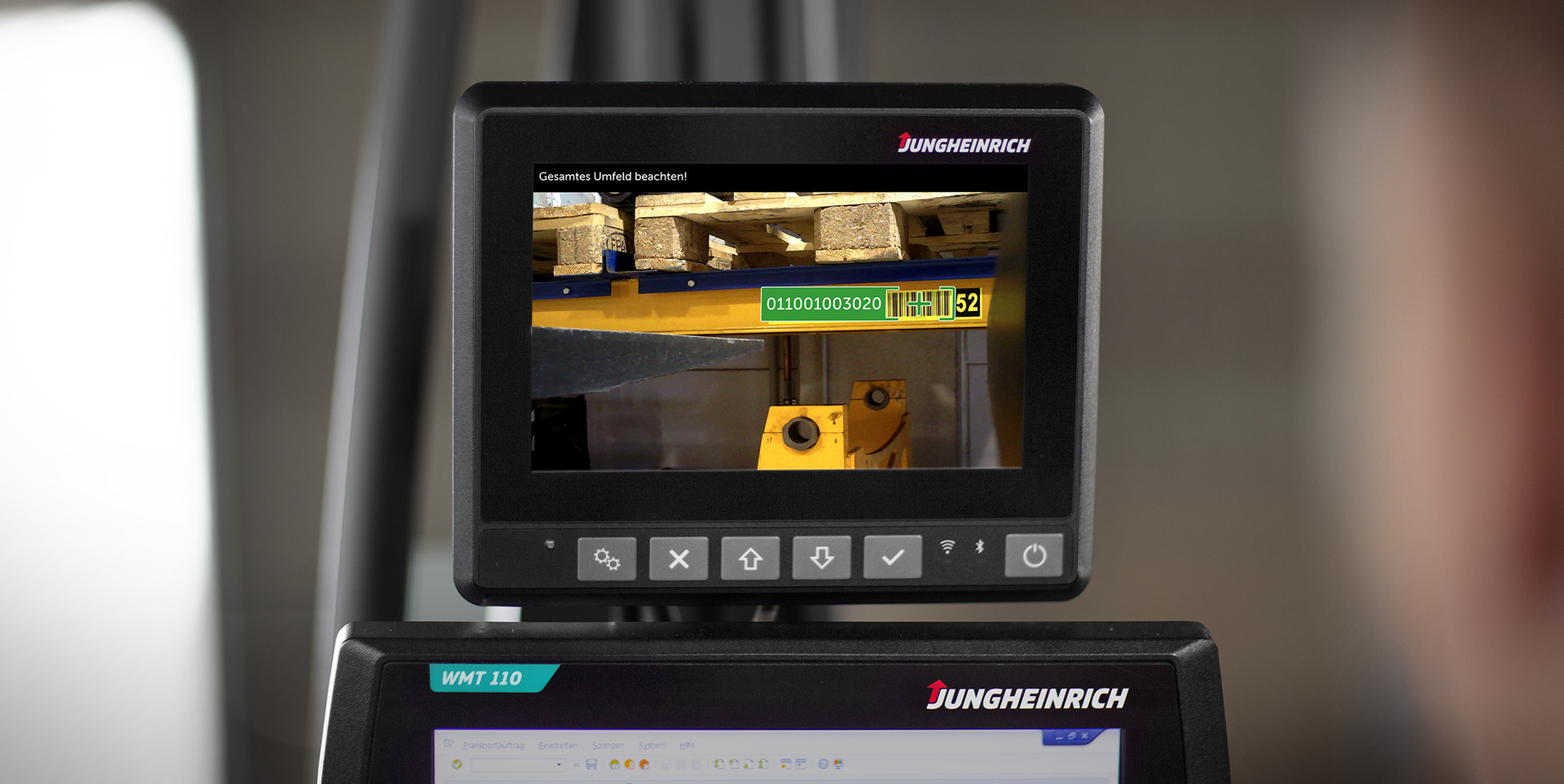
The Jungheinrich addedVIEW fully digital fork camera with barcode scanning reduces storage/retrieval errors in the warehouse. It prevents incorrectly recorded goods or storage locations in the warehouse management system (WMS) and thus unplanned search times, returns or loss of goods.

Product name and company
Jungheinrich addedVIEW fork tine camera with barcode scanning – Jungheinrich AG
Category
Special of the Year
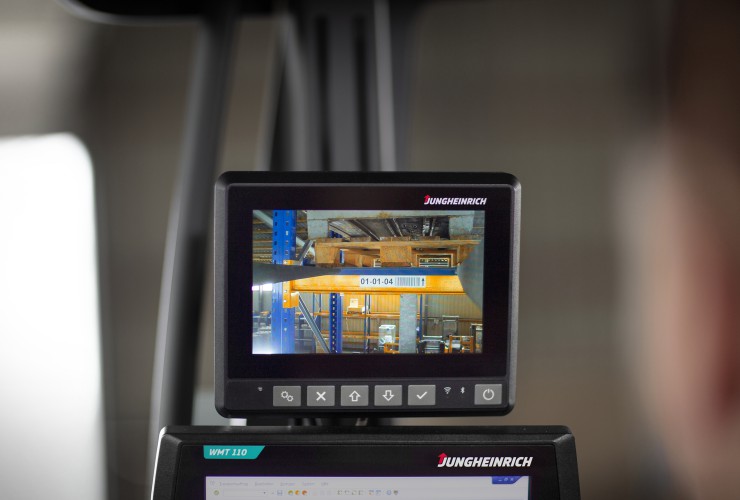
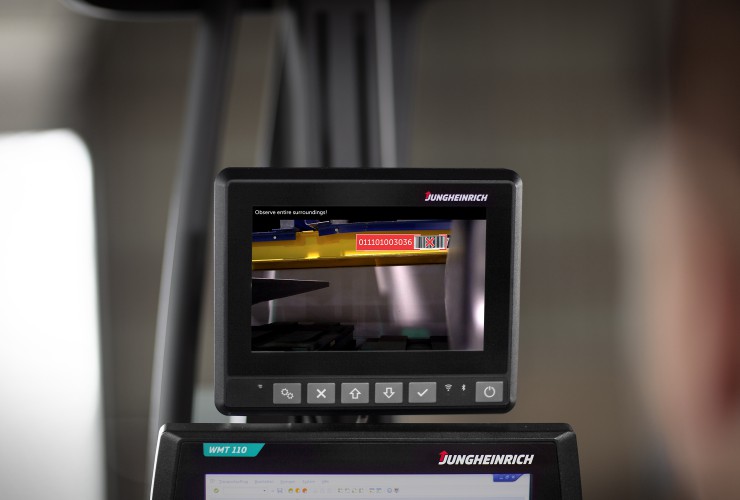
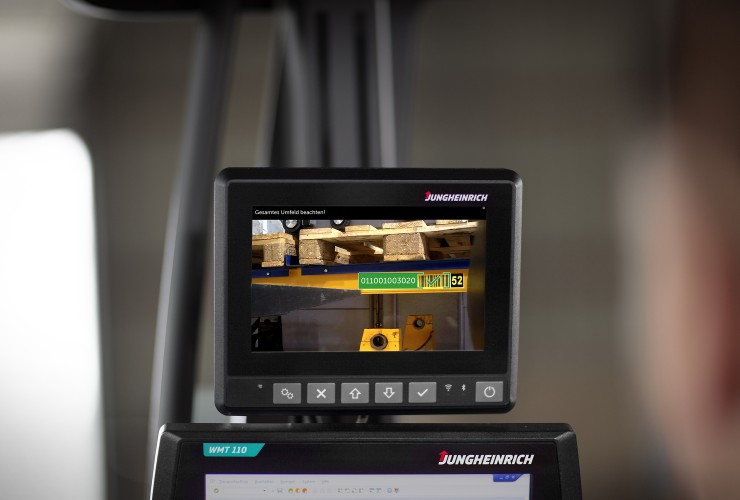
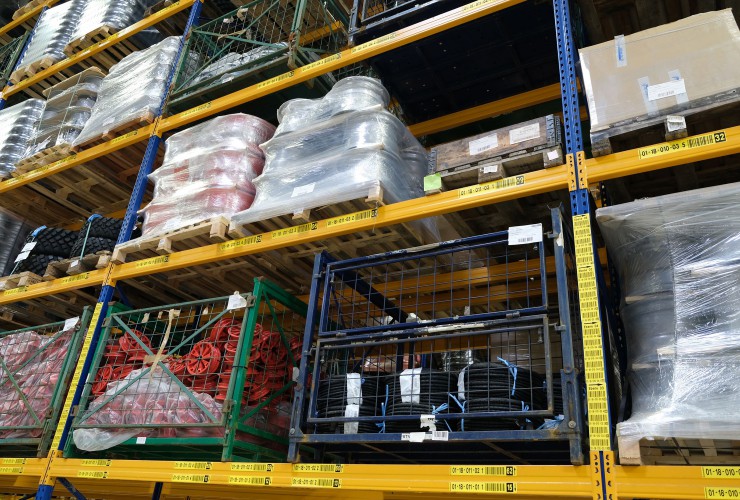
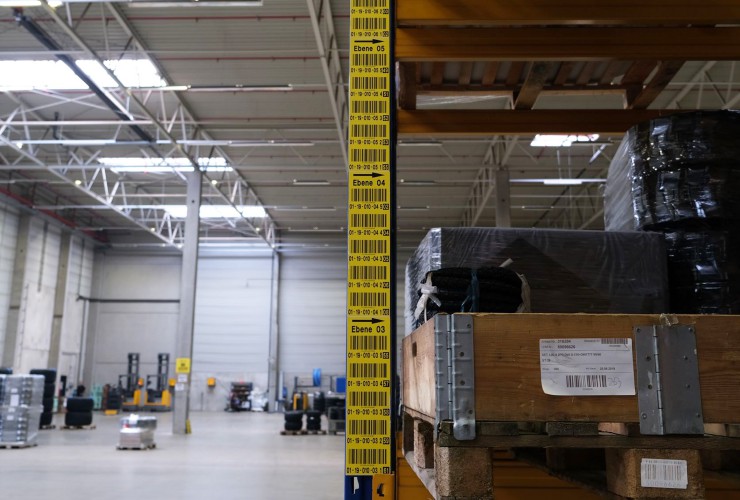
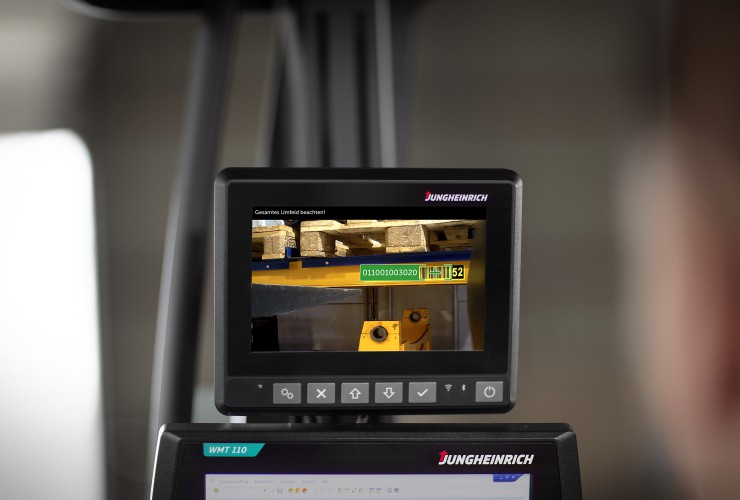
Technically, this is the first fully digital fork camera in series production, with full HD resolution, broadband automotive Ethernet data transmission and software for transferring the results to any WMS. For the Jungheinrich WMS, the product is equipped with additional intelligence, which, by means of coloured overlays in the camera image, makes it possible to recognise whether the correct or incorrect barcode is located in front of the tine as it passes by. In addition, an acknowledgement button is mounted near the steering wheel, so there is no need to handle the hand scanner.
The product is designed to make stacking and retrieval fast and error-free:
Currently, fork cameras and handheld scanners are used. The fork cameras partly use analogue technology and provide much less information. With handheld scanners, codes have to be scanned from barcode lists and posted to the “correct” order in a very error-prone process. Using the latest technologies, the addedVIEW fork camera with scanning integrates both functions. A fully digital camera with full HD resolution and integrated image processing software for barcode recognition distinguishes between the correct and incorrect barcodes. The connected middleware for transferring the information to any WMS or, in the case of the Jungheinrich WMS, with extended communication and image processing functions, indicates whether the correct storage compartment has been reached by means of coloured overlays (red/green) in the camera image, even as the forks pass by.
Scanning with the fork camera means that the location of the goods movement and the location of the scan coincide. In this way, previously undetected storage/retrieval errors can be drastically reduced. For example: incorrect storage, but scanning the “correct” barcode expected by the WMS. Or retrieving the wrong goods, but scanning the “correct” barcode expected by the WMS. The complete chain of camera, data transmission, image processing, forwarding to the WMS (and, in the case of Jungheinrich, even the WMS itself) were newly developed or expanded – to form an integrated series solution that is unique on the market.
The integrated series solution presented is unique on the market, because the addedVIEW fork camera with barcode ccanning gets to the root of a previously unsolvable basic logistics problem and offers a practical and effective solution. Every large warehouse has a WMS that decides where and when goods are taken out of, or put into storage and reordered. It also manages the stock levels that determine the company’s ability to deliver. Feeding incorrect data into the WMS, therefore, has serious consequences. Today’s process of manual scanning from barcode lists or accompanying documents leads to master data errors in the WMS when goods are “incorrectly” stored /retrieved but “correctly” scanned.
The problem affects customers in all sectors, from trade and logistics to the manufacturing industry. It is particularly pronounced with reach trucks, as high-bay warehouses favour confusion due to their large number of uniform storage locations and the low visual clarity of upper rack levels. Depending on the type, 20-40% of reach trucks have tine cameras, are connected to a WMS via a radio data terminal and use hand-held scanners for booking. These customers will benefit considerably from the innovation.
In addition, working with the system is much faster and more ergonomic for every customer because there is no need to handle the hand scanner. Thanks to an acknowledgement button mounted near the steering wheel, the hands can remain on the steering wheel and hydraulic controls throughout.
The fully digital addedVIEW fork camera with barcode scanning brings significant benefits for the warehouse manager and the forklift driver. The warehouse manager benefits from the avoidance of “wrong scans” and the associated improved data quality in his goods management system.
The advantages are:
The driver benefits from significantly increased image quality and the ergonomic acknowledgement function on the steering wheel.
The advantages are:
Overall, hidden costs of searching and errors are eliminated – the new process is faster, more reliable and therefore significantly cheaper per pallet.
In technical terms, the device is the first fully digital fork camera in series production, with full HD resolution, broadband automotive Ethernet data transmission and software for transferring the results to any WMS. For the Jungheinrich WMS, the product is equipped with additional intelligence that, with the help of colored overlays in the camera image, makes it possible to recognize whether the correct or incorrect barcode is located in front of the fork as it passes by. In addition, an acknowledgement button is located near the steering wheel. This keeps the forklift driver’s hands on the controls of the industrial truck. The driver does not have to reach for the scanner, scan and put the mobile device back every time.
Scanning on-site at the storage compartment and/or the goods avoids scanning incorrect barcodes from a list at the rack foot, ensuring the WMS always receives correct data and avoiding incorrect deliveries. The high-resolution, digitally enhanced image allows labels to be read at high altitudes, bypassing the need to unstack incorrect merchandise.
By scanning with the fork-mounted camera, the location of the goods movement and the location of the scan coincide. This drastically reduces putaway/retrieval errors. Examples include putting away wrong goods but scanning the “right” barcode expected by the WMS, or taking out wrong goods but scanning the “right” barcode expected by the WMS. The camera, data transmission, image processing, forwarding to the WMS and, as in the case of Jungheinrich, the WMS itself were all newly developed or expanded – into an integrated series solution.
The integrated series solution is unique on the market, because the addedVIEW fork camera with barcode scanning gets to the root of a previously unsolvable basic problem in logistics and offers a practical and effective solution. The previously described problem of incorrect storage is particularly pronounced in reach trucks, as mix-ups can occur in high-bay warehouses due to the large number of uniform storage locations and the low clarity in the upper rack levels. Depending on the type, 20 to 40 percent of reach trucks have tine cameras, are connected to a WMS via a radio data terminal and use handheld scanners for posting. These industrial truck operators will benefit from the innovation. But forklift drivers will also benefit from the image quality and the ergonomic acknowledgement function on the steering wheel.
The management of goods on pallets or similar in larger warehouses with the help of reach trucks and barcodes concerns a very large area of logistics, which is why the market relevance is considered to be high. The presented digital camera-based system represents an enormous step towards the improvement of such systems, as errors are largely eliminated, positioning is supported and a large time-saving potential is associated with it.
Users of the addedVIEW fork camera benefit in a very direct way from this system, which goes well beyond the camera itself by integrating it into the warehouse management system (WMS). Manual barcode scanning is no longer necessary, as direct identification of the barcodes is made possible by the high resolution of the camera. The comparison with the WMS, implemented in the background, provides direct information about the correctness of the goods or storage location. Thus, faulty storage or retrieval is reduced to a minimum or can be practically excluded. Furthermore, there are no wrong trips or unnecessary times in which incorrectly stored goods have to be searched for. All in all, this can result in a significant increase in the efficiency of the warehouse system for the user.
The integrated solution of a digital camera presented by Jungheinrich combines visual use with the possibility of scanning barcodes and processing them in the WMS for the first time in the field of material handling equipment. Although the individual technologies do not represent a novelty in themselves, the combination in this exemplary implementation is to be regarded as highly innovative. The challenges in the development, which in some respects reside in the details, were systematically solved. One example is the realized data transmission via the automotive Ethernet cable, which was applied to the variable geometry of the mast and which, with a total length of 30 m, nevertheless guarantees a safe and fast transmission.
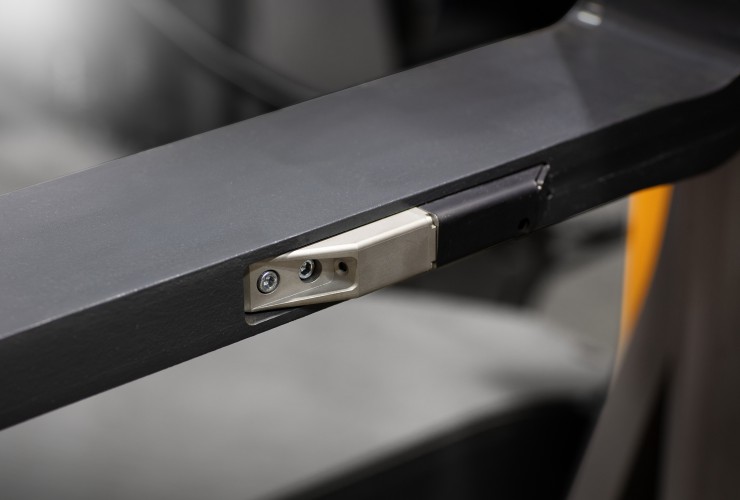
The components of the implemented system appear in a very robust design and thus meet requirements for durability in operation. The camera is mounted on the inside of the fork, which makes damage unlikely. Likewise, the transmission cable appears to be more than able to withstand the constant bending loads due to its specially developed design.
The addedVIEW fork camera is convincing in every respect. Its market lead is clear.
| Functionality / type of implementation | ++ |
| Novelty / Innovation | ++ |
| Customer benefits | ++ |
| Market relevance | + |
| ++ very good / + good / Ø balanced / – less / — not available | |
Image/video credits: Jungheinrich AG
Finalists undergo the three-stage IFOY Audit as part of the IFOY Audit, which takes place during the TEST CAMP INTRALOGISTICS. This consists of the scientific IFOY Innovation Check, the IFOY Test and the jury test.
In den Statuten sind die Grundwerte und die Standards des IFOY AWARD festgelegt, nach denen die Organisation handelt. Dazu gehören unter anderem Gremien, Wahlomodus, Bewertungskriterien sowie der Code of Conduct.
The International Intralogistics and Forklift Truck of the Year has three bodies: Jury, sponsors, and advisory board.