

IFOY Audit
Finalists undergo the three-stage IFOY Audit as part of the IFOY Audit, which takes place during the TEST CAMP INTRALOGISTICS. This consists of the scientific IFOY Innovation Check, the IFOY Test and the jury test.
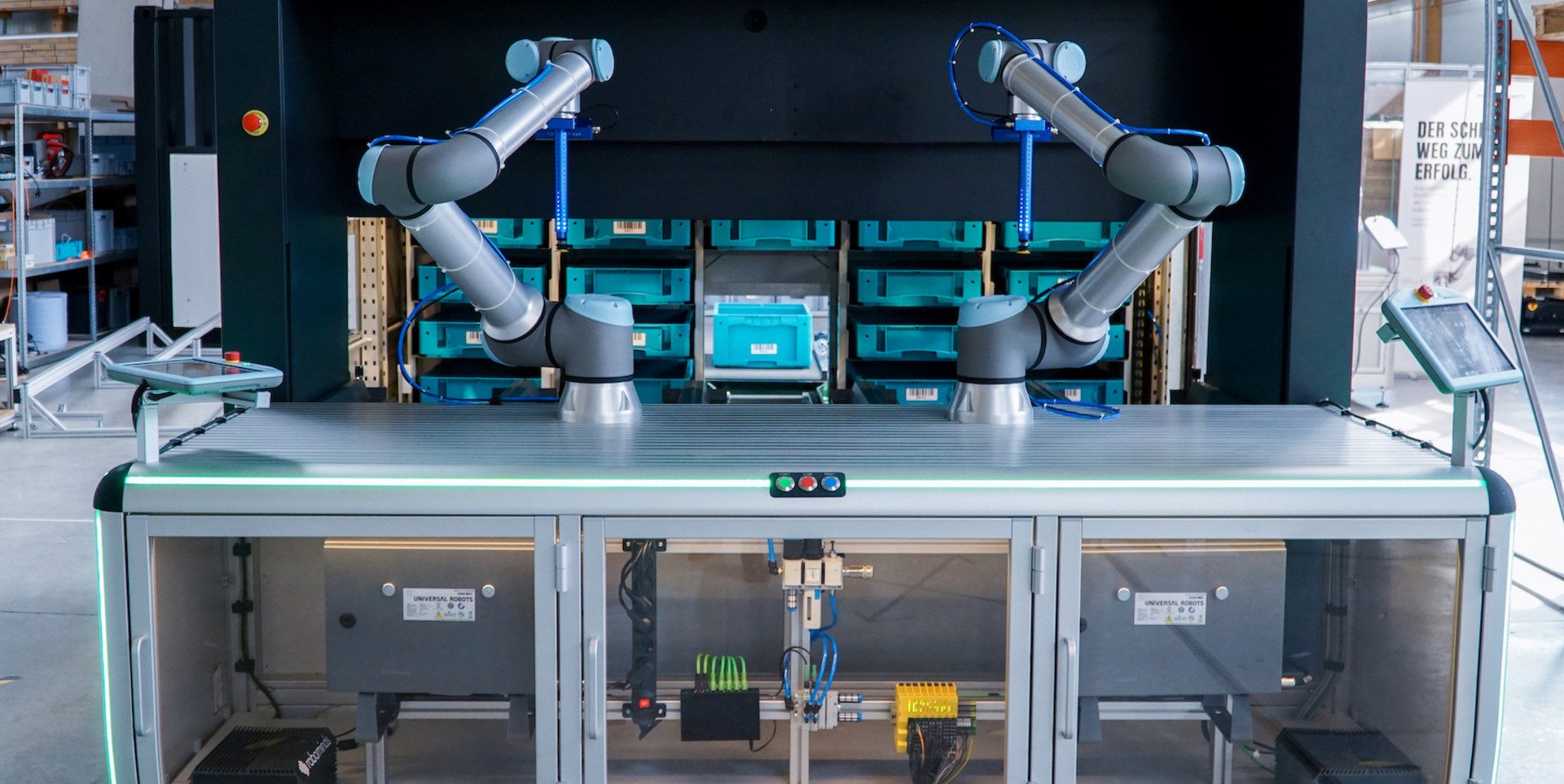
robobrain.NEUROS: running intelligent robotics. The latest coup of the Munich robot company robominds is the neural robot operating system for intelligent robotics and a platform for the next generation of automation.
NEUROS – optimized for robobrain, the industrial PC and as a platform for all robots, grippers and other kinematics – creates an automation environment that is user-centric and easy-to-use: for application scenarios of any industry and company size.


Product name and company
robobrain.NEUROS: The AI-based robotics operating system – robominds
Category
Mobile Robot
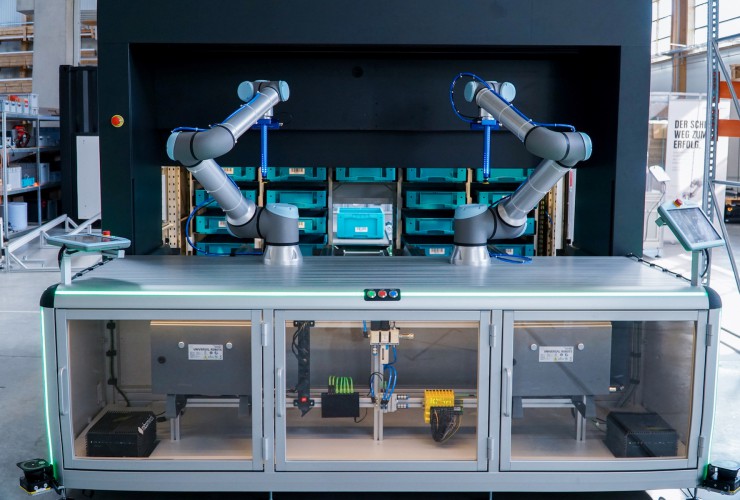
robobrain.NEUROS (= Neural Robotic Operating System) is the industrialized operating system for intelligent robotics. The innovative basic principle is that every feature of the robotic components becomes a skill on the industrialized OS – easily obtainable via the robominds Skill Store, adaptable to individual needs or self-developable thanks to the robominds Skill SDK.
In many ways, robobrain.NEUROS helps its users to improve their economic efficiency and saving in resources. Parameterising and configuring instead of programming: the profitability of this simplified adaptation of own processes and hardware is plain to see. Because the process is at the center and provides the intelligence itself, it remains flexible and scalable to further installations. This ensures investments and allows responses to changed products and production processes.
Those who want to automate their process, either can reach for the existing skill or optimize it to their own requirements. Alternatively, one can develop a skill entirely on its own– thanks to the numerous integrated assistants and wizards based on a framework that already has many functions. When the new or adapted skills are trained, the patented robominds-process impresses once again with its resource savings: Thanks to the unique physics simulation environment, the most complex AI models can be trained within a few hours – without humans or machines having to be involved in the physical learning process.
robobrain.NEUROS transforms into intelligent robotics what is already commonplace on smartphones: a flexible, expandable operating system with high availability, which enables – much more: encourages – acquisition, adaptation and creation of own applications (here: skills). The platform is optionally extendable with many various skills: vision skills such as item picking or bin picking, control skills for easy programming of robots or fleet management of several robot cells or driver skills for various robots, grippers, cameras, etc.
With the accessibility of the system, also for many hardware components, robominds does pioneering work: Until now, operating systems often fail due to one-dimensionality however now robobrain.NEUROS sees not only a robot. A robot cell with two robot arms can run on this OS as well as a mobile kitbot – application scenarios from simple fleet management to complex factory automation occur on robobrain.NEUROS without any problems. For one’s own application development and adaptation, the SDK not only offers a comfortable programming environment within the existing framework, but also impresses with its groundbreaking training possibilities within the patented physics simulation environment.
Shorter product cycles and the production from the quantity of one sets completely new requirements on present production and material flow. In short: flexible processes are becoming increasingly important for all businesses. This puts the process more and more into the spotlight as the process is the essential core of today’s production. robobrain.NEUROS makes valuable process knowledge easier to access; at the same time, data security, data integrity and trusted AI are safeguarded through adherence to European standards – mandatory in the digital world, especially in the production environment.
The conversion into adaptive mechanisms affects almost all processes involved in the production of material or goods flow. Especially in robotics, the potential for flexible applications is used, and thus is becoming ever further diversified and finding its way into different environments and applications. In particular, the new fields of robotics, such as logistics or medical, are growing the fastest – and therefore the market potential for robobrain.NEUROS. The market that can be reached is already several billion euros worth just in the European area and is gaining in importance, as current market studies (or example from IFR) show.
NEUROS is already used by companies in different industries. Especially in the automotive industry, in pharmaceuticals and diagnostics and in intralogistics. The modular approach allows more and more new areas to discover the benefits for their processes. This gives robobrain.NEUROS a massive spreading potential and paves the way for different industries and their processes to learn and to profit from each other. robomind’s goal is to maintain its leadership in the existing areas and to discover and develop new fields.
Flexible systems gain independence of the hardware. This means, that standard components can be used and the process can be adapted over their entire lifetime. In this way, applications can be implemented not only cost-effectively, but also secures investments for the future. Of course, these advantages also apply to the areas of commissioning and usability – uncomplicated, fast and far-reaching thanks to artificial intelligence. In addition, process intelligence is the key element of the platform and key benefit for users.
The user buys process knowhow with the skills. Instead of elaborately own process development, there is a simple purchase process. This significantly shortens the path from the laboratory to the store floor – and with it the customer’s innovation cycle. After all, you don’t “just” buy an application in the Skill Store but tested knowledge in the form of skills. Every skill available for download in the robominds Skill Store is not only tested and proven many times, but also must pass an independent quality control – trusted AI at the highest level.
The networking of all robobrain devices in the robobrain.cloud deepens this process intelligence also on the hardware side. The fact that this is done as efficiently as possible is also due to the distributed skill engine, which carries out the different skills required on the optimal robobrain device – always individually adapted to the current situation and constellation thanks to artificial intelligence. robobrain.NEUROS is technologically optimized for fast execution of AI models and has a proprietary, real-time capable inter-skill communication protocol. This cloud availability also allows complete remote access to the individual process components, even from outside the network.
The Munich-based robotics company robominds, founded in 2016, has reached the IFOY AWARD final with its neural robot operating system “robobrain.NEUROS”. Different skills can be uploaded to the software platform, for example a palletising application for intralogistics.
One platform, many applications, independent of components – this is how robominds comes to Dortmund. Optimised for the industrial PC robobrain and as a platform for all robots, grippers and other kinematics, NEUROS (Neural Robotic Operating System) creates an automation environment that is user-centric and easy to operate – for scenarios of any industry and company size. On the industrialised operating system, every function of the robotic components becomes a skill. The modular principle applies to both the software and the hardware. One skill, for example, is order picking. Several applications can be shown in the test setup: Palletising, box recognition, etc. One does not see oneself as a system integrator, but as a problem solver. So the focus is not on the gripper itself, but always on the application. The skills, in turn, are easy to obtain: via the robominds Skill Store, individually adaptable or to develop yourself thanks to the robominds Skill Software Development Kit (SDK). There are vision skills (such as item picking or bin picking), control skills for the simple programming of robots or the fleet management of several robot cells, or driver skills for various robots, grippers, cameras, etc.
In times of shorter product life cycles and production quantities up to batch size 1, flexible processes place ever new demands on production and material flow for all companies. That’s why the processes are always coming to the fore – the process is actually the core of modern production. And this is where robobrain.NEUROS comes into the game: Valuable process knowledge becomes more easily accessible through the robot operating system. At the same time, data security, data integrity and trusted AI are maintained through adherence to European standards, which is essential in the digital world and especially in the production environment. The transformation towards adaptive processes affects just about all processes in the production of a material or goods flow. In robotics in particular, the potential for flexible applications is being exploited, which are thus becoming increasingly diversified and finding their way into different environments and applications. Especially the new fields of robotics, for example logistics or medicine, are growing the fastest – and so is the market potential for NEUROS. robobrain.NEUROS is already being used by corporations in various industries, especially in the automotive industry, pharmaceuticals and diagnostics, and intralogistics.
Flexible systems independent of hardware: This means that standard components can be used and the process adapted over their lifetime. This means that applications can not only be implemented cost-efficiently, but also that investments can be safeguarded for the future. The same advantages also apply to the areas of commissioning and operational capability – uncomplicated, fast and far-reaching thanks to artificial intelligence (AI).
The robobrain.NEUROS neural robot operating system can serve as a platform for the next generation of automation in logistics. It can be used to (create) an automation environment that is easy to use, economical and can save resources.
The manufacturer-neutral neural robot operating system for intelligent robotics NEUROS aims to provide flexible robot processes for material flow and manufacturing as an answer to ever shorter product cycles and small series production. In this context, NEUROS addresses not only a wide variety of logistical processes in the areas of warehousing, pharmaceuticals and food, but also in production intralogistics through to assembly skills. The very high market relevance results from the breadth of applications and supported robot systems and the self-image as a technology supplier for system integrators.
The user benefits from the process knowledge encapsulated in reusable robot skills, which are purchased instead of developed for individual automation systems in the Skill Store, as well as parameterised and configured instead of programmed. This enables new processes to be set up quickly and existing hardware to be used flexibly for a wide range of tasks in the long term. Due to its manufacturer-independent applicability, the Skill-Store also offers developers an ecosystem for marketing new capabilities.
Open robot operating systems with a skill library have been realised in part before (e.g. ROS), but not consistently with the technical quality standards as with NEUROS. The profound support of AI methods should be emphasised as an innovation. Thanks to a physics simulation, new robot skills can be developed and trained in a few hours without real data. At the same time, the operation always remains clear and controllable. Another special feature is the quality assurance of software contributions from external developers and the assurance of Trusted AI according to European standards.
The test robots reliably demonstrated a wide variety of logistical tasks such as model-free product separation, palletising of packages or sorting of test tubes. The special focus on stability, function and safety of the overall system is also reflected in the use of the specially developed AI industrial PC robobrain. In addition, NEUROS implements the specifics of AI-based solutions in an expedient, market-oriented and application-oriented manner, including simulation-based training methods, useful software tools, generic basic functions and the inclusion of hardware design. The system is modular and open to new technologies.
The market relevance of a manufacturer-neutral and reliable robotics operating system with native support for AI-based processes can be classified as very high. Reusable robot skills, the possibility of using data and experience across manufacturer boundaries, and Trusted AI from Germany offer customers innovative added value. Even if not all ideas are entirely new, their high-quality implementation in NEUROS represents a new quality.
| Functionality / type of implementation | ++ |
| Novelty / Innovation | + |
| Customer benefits | ++ |
| Market relevance | ++ |
| ++ very good / + good / Ø balanced / – less / — not available | |
Image/video credits: robominds
Finalists undergo the three-stage IFOY Audit as part of the IFOY Audit, which takes place during the TEST CAMP INTRALOGISTICS. This consists of the scientific IFOY Innovation Check, the IFOY Test and the jury test.
In den Statuten sind die Grundwerte und die Standards des IFOY AWARD festgelegt, nach denen die Organisation handelt. Dazu gehören unter anderem Gremien, Wahlomodus, Bewertungskriterien sowie der Code of Conduct.
The International Intralogistics and Forklift Truck of the Year has three bodies: Jury, sponsors, and advisory board.