

IFOY Audit
Finalists undergo the three-stage IFOY Audit as part of the IFOY Audit, which takes place during the TEST CAMP INTRALOGISTICS. This consists of the scientific IFOY Innovation Check, the IFOY Test and the jury test.
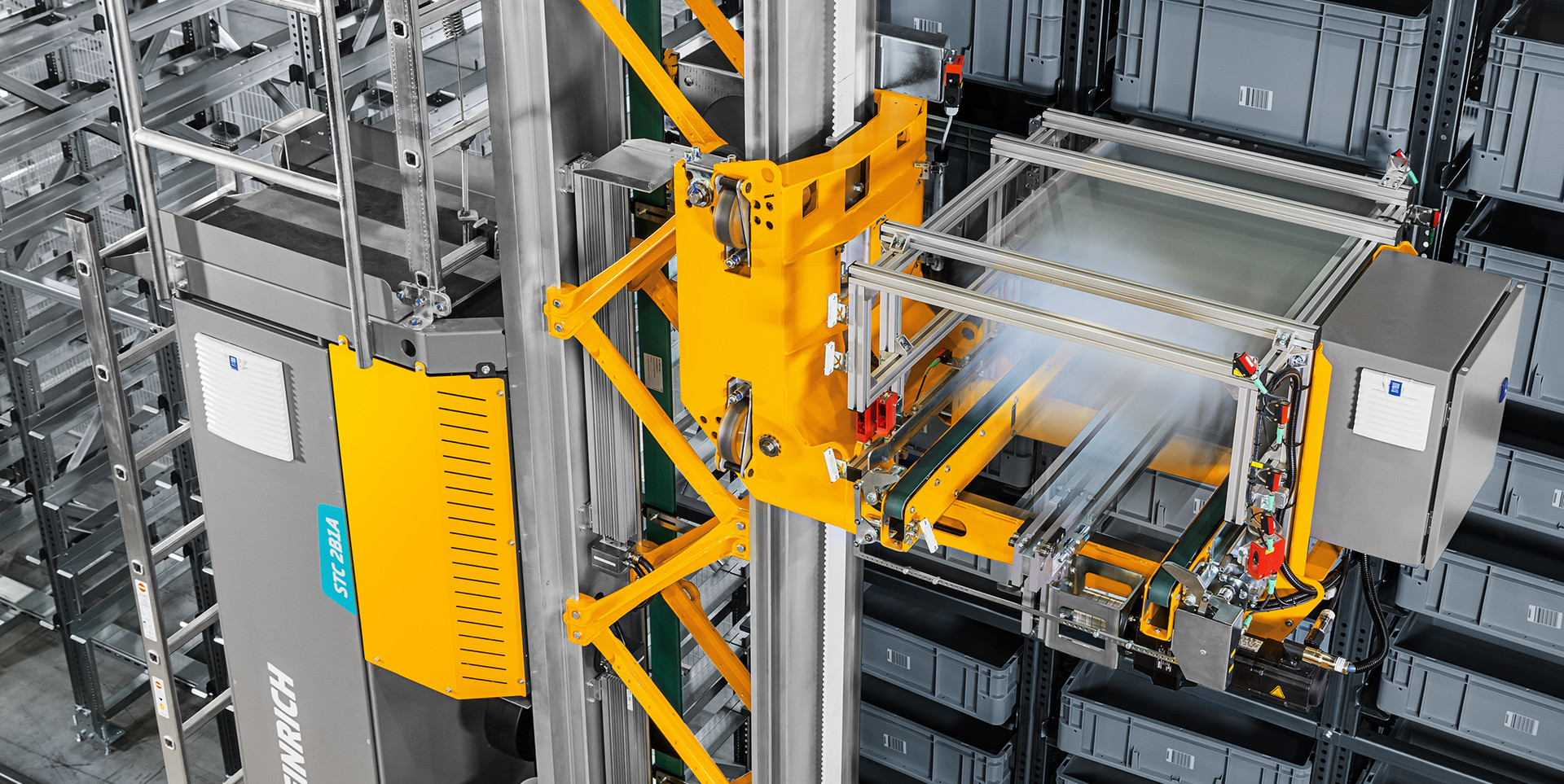
The Jungheinrich STC is the world’s most powerful Miniload of its class and impresses not only with its outstanding performance data but also with its ingenious design, which offers significant advantages over conventional stacker cranes for small parts. The innovative construction and integrated energy storage combine to enable highly efficient and space-saving storage of small parts in containers, trays or cartons.

Product name and company
Storage and retrieval machine for small parts (STC) – Jungheinrich
Category
Special of the Year

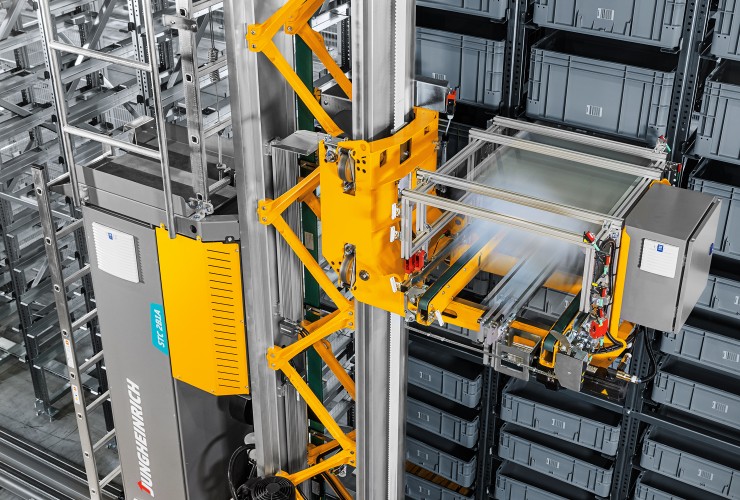
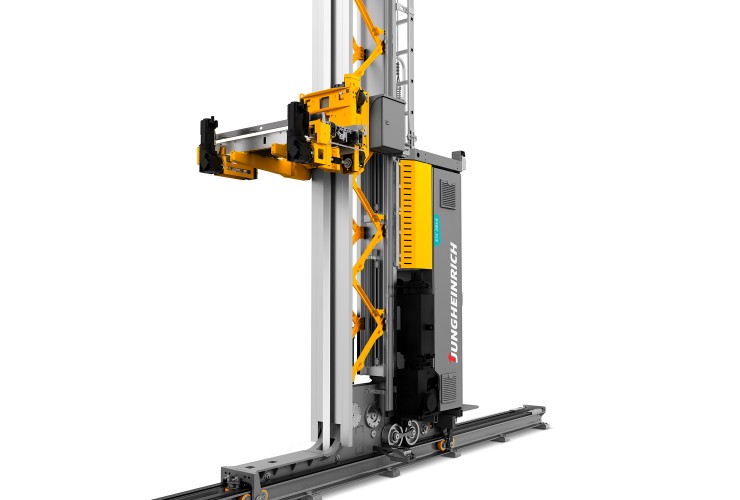
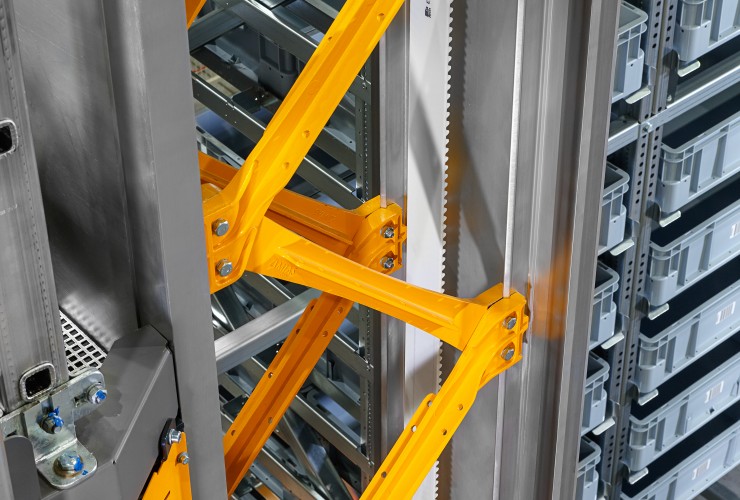
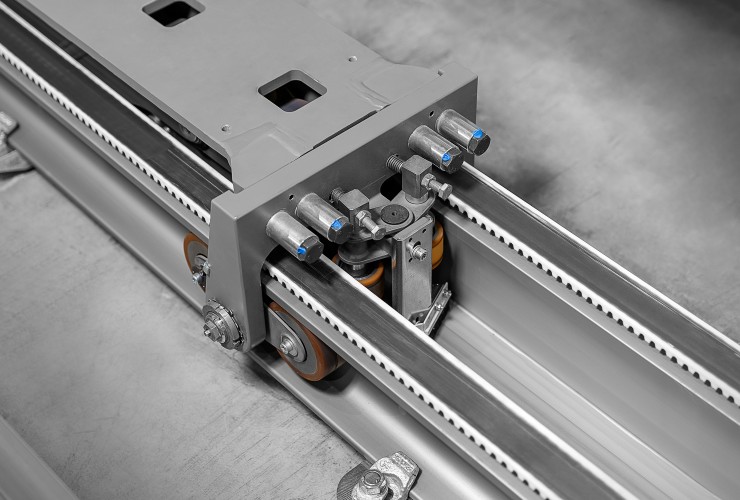
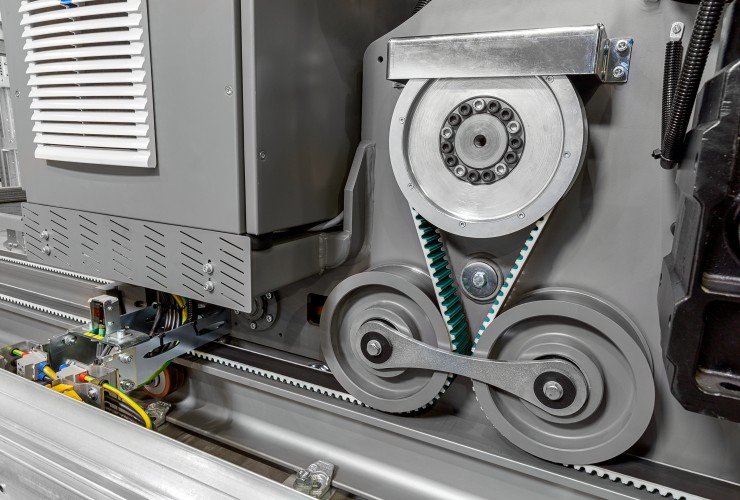
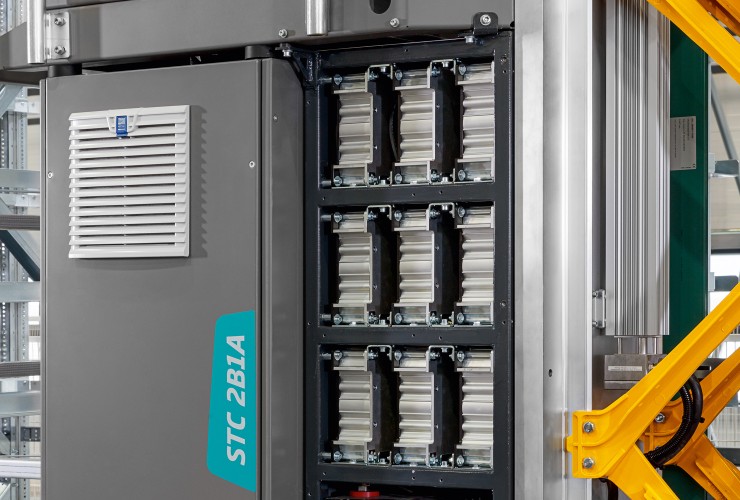
The STC is the first in-house development from Jungheinrich in the area of stacker cranes for automated miniload warehouses. The device consists of a lightweight and scalable aluminium mast with lattice structure, in which the drive system has been integrated for maximum space savings. In conjunction with a new travel rail concept, which allows the truck to travel very close to ground level, the STC offers optimum approach dimensions and enables highly space-saving storage of small parts in containers, trays and cartons.
Thanks to the extremely lightweight construction, the STC combines maximum travel dynamics with market-leading performance data. In this regard, the new Jungheinrich STC reduces the gap between a classic stacker crane and a highly dynamic shuttle solution. As part of the drive configuration, the integrated energy storage in the form of SuperCaps reduces energy requirements and the associated costs in combination with an intelligent energy management system.
This high-performance machine can be used in ambient temperatures ranging from +2°C to +40°C, while cold store application will also be possible with a later expansion stage. The STC is suitable for all logistics sectors and markets.
The STC high-performance stacker crane was designed to set new standards on the market in terms of storage density, performance and energy efficiency:
The extremely lightweight construction of the mast, which consists of just two aluminium parts, and its lattice structure ensure maximum stability and scalability up to a height of 25 m.
The Omega drive system is integrated in the mast base, which massively reduces the overall length of the truck. This enables a front and rear approach dimension of 4500 mm (without compressing the buffers), which represents a new benchmark.
The STC does not use a conventional steel rail, but instead travels just above ground level in a completely new aluminium profile. This enables a lower approach dimension of 460 mm – another market-leading value in its class.
The lightweight construction and split Omega belt drive make the STC the most powerful Miniload in its class. A travel speed of more than 6 m/s and maximum acceleration in excess of 5.3 m/s2 deliver a significant boost to goods throughput rates.
During development, particular attention was paid to the system’s energy efficiency. Thanks to intelligent energy management and highly dynamic energy storage, the braking energy is used for later acceleration processes, resulting in a significant reduction in energy consumption and operating costs (25%). The connected load can be lowered to less than 50%.
The Jungheinrich STC is designed to be non-industry-specific, meaning that the target group and thus the potential market are very heterogeneous. The stacker crane is used, for example, in the vehicle construction, automotive, retail and e-commerce sectors as well as in the food industry, metalworking sector and by logistics service providers.
The market size extends to a three-figure quantity range, with the device configuration allowing Jungheinrich to service the entire market spectrum: from systems with low performance requirements up to installations requiring the highest performance levels
Highest performance data in its class: The STC is the world’s most powerful Miniload of its class. Maximum acceleration of 5.3 m/s² and travel speeds of over 6 m/s enable a significant increase in warehouse stacking and retrieval operations.
Optimum energy efficiency: As part of the drive configuration, SuperCaps allow for particularly intelligent and cost-effective energy management. The energy requirements and associated provisioning costs can thus be reduced by up to 25 %, which in turn lowers the connected load by at least 50%.
Maximising warehouse volume: Thanks to the innovative travel rail concept and the Omega drive system integrated in the mast base, the STC offers the lowest approach dimensions in its class. This enables maximisation of the warehouse volume.
Minimising operating costs: The use of SuperCaps delivers significant cost savings when it comes to the supply and consumption of energy. Moreover, strict adherence to the principle of identical parts within the Miniload family reduces operating costs for replacement and wear parts.
High scalability: The innovative design and extremely lightweight construction of the mast ensure a low total weight of the Miniload along with flexible mast scalability. A mast height of up to 25 m can thus be reached as part of the Miniload family.
With the completely self-designed and produced miniload STC, Jungheinrich is now also bringing this system solution in-house. It is Jungheinrich’s first solution in that area that is not intended for moving pallets.
Jungheinrich states that the STC is the most powerful miniload in its class worldwide and therefore allows maximum throughput. The acceleration and lifting speeds are indeed very fast, as the data of the IFOY test team shows. The driving speed of 6 m/s specified by the manufacturer with a maximum acceleration of more than 5.3 m/s² are realistic figures. This is shown by the measurement of a standard task that the test team had performed multiple times by the fast miniload.
During development special attention was paid to energy efficiency. For example, the braking energy is returned to SuperCaps for less energy consumption at the next accelerations. According to Jungheinrich, this can reduce energy consumption and operating costs by up to 25 percent. The savings are available from the very first use, because the connection value of the system is lower. Also, the generated energy is not fed back into the grid as peak load, but is stored internally temporarily and used immediately, if possible.
In addition, intelligent energy management and innovative construction keep energy consumption at an unprecedented low level. Jungheinrich uses a scalable, lightweight aluminium mast, which consists of only two parts and in which the drive is integrated. This approach makes the structure approximately 14 percent lighter and offers the possibility to choose different load handling devices. The system is suitable for the highly efficient and space-saving storage of small parts in containers, trays or boxes.
With the new rail concept, Jungheinrich also uses an aluminium profile, which allows the crane to drives just above ground level. This enables a lower approach size (of only 460 instead of 530 millimeters) and with this Jungheinrich sets a new standard in this class.
Despite its light weight, high stability is guaranteed, even at the maximum scalable height of 25 metres. Jungheinrich estimates the ideal system length of an installation at approximately 110 metres. Thanks to the equally unique version with double drive belts, the crane is always moved straight and evenly over the rails.
The powerful miniload can be used in ambient temperatures from +2 °C to +40 °C. A variant that can also be used in a frozen environment is expected at a later stage. With this fully in-house developed and manufactured system solution, Jungheinrich is less dependent on external providers and can provide better and faster service.
The Jungheinrich STC sets new standards when it comes to performance, storage density and energy efficiency. It is according to the manufacturer the world’s most powerful miniload in its class. With a maximum acceleration of 5.3 m/s² and a travel speed of 6 m/s, warehouse performance is significantly increased. The SuperCaps as part of the total drive system enable particularly intelligent and economical energy management.
In recent years, the shuttle or satellite has increasingly established itself as a suitable technology alternative for automatic container storage. However, the miniload is still used to a great extent for high performance and required dynamics. The Jungheinrich Miniload STC is designed precisely for these high dynamics and creates values that exceed those of existing products.
The Jungheinrich Miniload STC has a highly modular design and, due to some special design ideas, is designed for maximum efficiency in the use of space through very small approach dimensions. Up to the drive and rail construction, all components were specially designed to achieve this goal. On the drive side, too, this goal of high efficiency with high dynamics was successfully pursued using intelligent control processes and optimized component design.
The smart mechanical design ensures the properties described above. By using supercaps, the rarely occurring peak loads (e.g. at maximum acceleration) on the power supply can be bypassed and the connected loads can be significantly reduced. This procedure was already introduced in a similar way by Dambach four years ago for pallet cranes, but can certainly be classified as an innovation for miniload machines. It is above all the combination of the properties and designs presented that make up the degree of novelty and innovative leap.
The device, which despite its high dynamic values runs extremely quietly and uniformly, shows a very successful integration of various product components – from the control, to the supercaps, to the very rigid mechanical construction of the device, which together make up the quality of the device.
| Functionality / type of implementation | ++ |
| Novelty / Innovation | + |
| Customer benefits | + |
| Market relevance | ++ |
| ++ very good / + good / Ø balanced / – less / — not available | |
Image/video credits: Jungheinrich AG
Finalists undergo the three-stage IFOY Audit as part of the IFOY Audit, which takes place during the TEST CAMP INTRALOGISTICS. This consists of the scientific IFOY Innovation Check, the IFOY Test and the jury test.
In den Statuten sind die Grundwerte und die Standards des IFOY AWARD festgelegt, nach denen die Organisation handelt. Dazu gehören unter anderem Gremien, Wahlomodus, Bewertungskriterien sowie der Code of Conduct.
The International Intralogistics and Forklift Truck of the Year has three bodies: Jury, sponsors, and advisory board.