

IFOY Audit
Finalists undergo the three-stage IFOY Audit as part of the IFOY Audit, which takes place during the TEST CAMP INTRALOGISTICS. This consists of the scientific IFOY Innovation Check, the IFOY Test and the jury test.
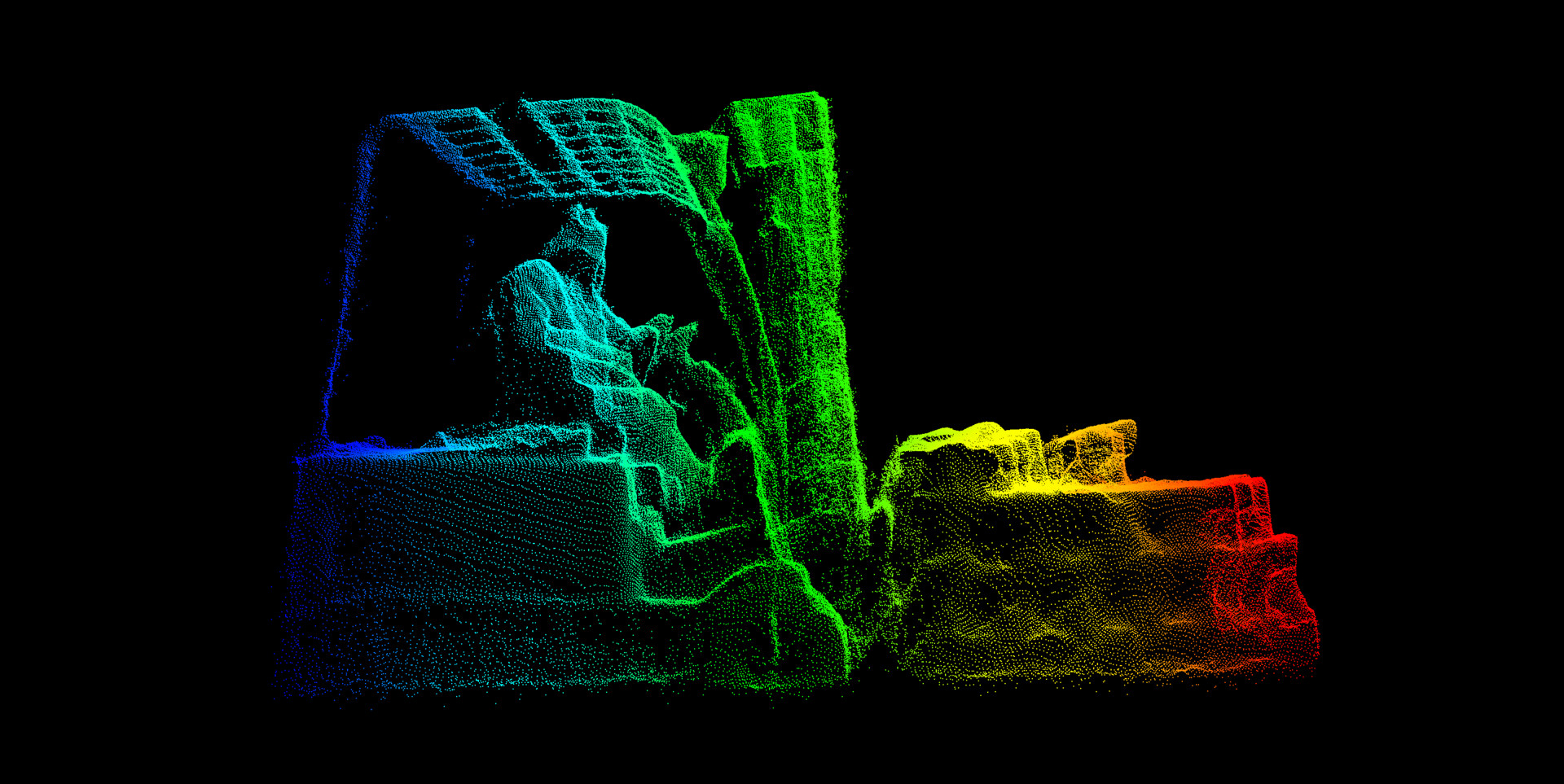
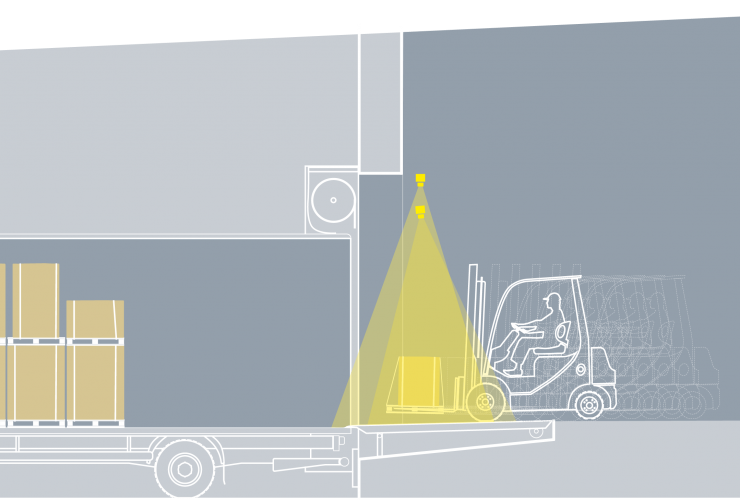
CARGOMETER offers “on-the-fly” freight dimensioning for moving forklift trucks: Package dimensions, weight, and barcode (2D code) are recorded in real time as the truck moves through the loading gate, and are immediately transmitted in digital form to the customer system. This has the advantage that workflows continue uninterrupted, by contrast with stationary or manual measurement. With the innovative freight dimensioning system, cargo space can be billed correctly and fleet utilisation can be optimised.

Product name and company
CARGOMETER – On-the-fly freight measurement – CARGOMETER GmbH
Category
Intralogistics Software
Empirical studies have shown that more than 15% of all pallets transported in less-than-truckload logistics are billed at rates that are too low. As a result, European cargo carriers are missing out on EUR 2.4 billon each year. The basic problem is that cargo carriers rarely measure dimensions and weight of their freight because of the artificial bottlenecks that current measuring systems create in transshipment terminals. As a consequence, the entire sector relies on guesswork when billing its most valuable resource – cargo space.
Cargometer develops fully-automatic systems for freight dimensioning without disrupting established intralogistic processes. The company’s main innovations consist of “on-the-fly“ metering and weighing on the forklift truck while it is moving and the location of the measurements: the loading gates of the transshipment terminal where each pallet needs to pass through. With this method, CARGOMETER guarantees that the intralogistic processes remain unaffected and that cargo space will be billed correctly.
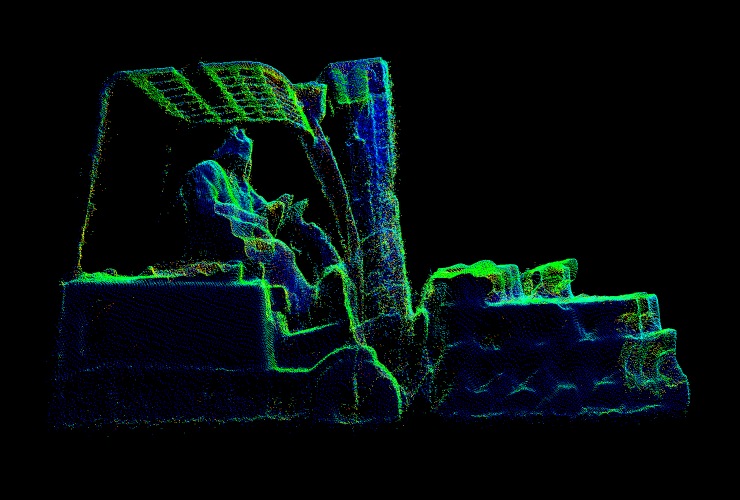
Cargometer’s powerful software processes individual low-resolution images collected by an inexpensive 3D image sensor, creating a high-resolution 3D model for every measurement run:
Dimension-in-Motion records the dimensions (length, width and height) and volume of each package up to a speed of 10 km/h
Weigh-in-Motion uses forklift scales to weigh the freight during travel
Scan-in-motion replaces manual scanning of two-dimensional barcodes (e.g. QR codes) with fully-automatic recognition
Cargometer is based on low-cost hardware. This means that sensors can be installed on every loading gate and forklift truck at the transshipment terminal. The measurement process does not affect the workflow in the terminal (no extra time required, no diversions), does not require space for approach pathways and measurement units, and does not need any additional staff to operate it.
This contrasts with the technical approaches typically used at present, which are based on expensive laser scanners and require the objects either to be free-standing and at rest, or moving steadily on a conveyor belt. Neither of these options is suited to rapid cargo handling as they create an artificial bottleneck in the transshipment terminal.
Why are Cargometer’s software solutions innovative? Firstly, due to a combined measurement of load and vehicle, which is then separated algorithmically. Secondly, because of the ability to handle moving components by spatially and temporally combining sequential 3D images from each measurement run to create a high-resolution 3D model. Furthermore, the measurement structure is designed so that as the object moves through the measurement area, the sensors view the object from various different angles. Finally, the Scan-in-Motion algorithm facilitates fully-automatic recognition of a two-dimensional barcode, allowing the tracking number of the package to be associated with the volume and weight measurement.
With Cargometer, what used to be seen as a problem for measurement – motion – is transformed into a real advantage for measurement and process.
In the 28 EU countries, 540 million tonnes of less-than-truckload cargo are moved every year between around 4,000 operational locations, boasting a total of some 80,000 loading gates. Experts from Fraunhofer SCS estimate that Europe has a less-than-truckload turnover of around EUR 47.5 billion. Empirical studies in less-than-truckload logistics have shown that more than 15% of all pallets transported are classified into tariff groups that are too low. This results in an overall loss in turnover of around 5% – or the potential to increase profits by EUR 2.4 billion. Given the typical margins in the industry of 3 to 5%, this represents a doubling in profit.
The data from the Cargometer system is not just useful for correct billing: it furthermore represents an essential foundation for digitalisation and “big data” analyses – that is, for Logistics 4.0. Precise digital freight data can be used to determine truck loading, optimise the transport network and increase fleet utilisation… all resulting in cost reductions for fleet, fuel, and workforce. Freight digitalisation means that, for the first time, transparent transport processes can be established, with effective control options and fewer delivery delays… which means: higher quality, increased customer satisfaction, and a lighter environmental footprint.
Beyond the less-than-truckload market, “on-the-fly” freight dimensioning has also been identified as relevant to markets for warehouse logistics, contract logistics, air freight, and monitoring container loading to optimise utilisation.
Cargometer is an innovative, cost-effective freight dimensioning solution for measuring cargo “on-the-fly” on moving forklift trucks. Cargometer has clear logistical advantages in comparison to the stationary measurements that are currently common practice, or any kind of manual measurement:
Cargometer identifies pallets that have not been allocated to the correct tariff, meaning unprofitable shipments can be adjusted appropriately.
Package dimensions, volume and weight are captured as it moves by, and are available instantly in the customer system. Images, videos, and a complete PDF report can be accessed directly.
Automatic recognition of 2D barcodes (e.g. QR codes) – no need for manual inbound and outbound scans.
The workflow can continue without interruption. Terminal processes do not have to be modified.
Warehouse space is optimised – no more need for approach pathways and measurement stations.
Complete digitalisation of all shipments creates a foundation for supply chain optimisation and “big data” analyses: Logistics 4.0.
By making accurate, real-time volume and weight information available, it is, for the first time, possible to optimise utilisation in the Europe-wide less-than-truckload networks using real data. The result: massive cost savings and significant reduction in environmental footprint.
Cargometer is the world’s first measuring system that measures and weighs the load directly on the forklift truck while driving. Dimensions, weight and 2D codes are registered immediately after passing through the loading door and recorded in digital form. Compared to a stationary or manual measurement, this means enormous time savings.
At a speed of 10 km/h, the loads to be loaded and unloaded are identified and weighed. Technically, the system can also process loads passing at a higher speed, but it remains to be seen whether this is desirable or necessary in practice.
Two time-of-flight IR cameras are used for the measurement. This is sufficient because the load is measured on-the-fly. If this were not the case, 3 cameras would have to be used. The cameras record 30 low-resolution images per second. These are then combined and converted with the powerful software into a high-resolution 3D model of the load. The system is very accurate; the deviation in volume determination is +/- 3 cm.
Since the time-of-flight cameras are mounted high up, the system is insensitive to dust and damage. A slightly larger distance between the load and the ground is required to achieve an accurate measurement. In the case of the IFOY setup, this distance is approx. 20 cm.
The weighing unit on the forklift – on the IFOY test setup ist was a RAVAS system – is optimised so that the load does not have to stand still to achieve accurate weighing. The deviation of the weight is +/- 5 kg.
During the IFOY Test Days the system was shown for the first time in combination with 2D codes. Barcodes cannot be scanned. The system requires approx. one minute processing time per measurement. The various measurements are separated by the Cargometer system via the empty runs into and out of the imaginary truck/container.
All measured and weighed values can be viewed in the cargo cockpit. For each session it can be seen whether the pallets are mixed or uniform. Photos and videos are also available of every load that has passed through the measuring gate.
The information collected can be used for many purposes, such as training and customer information. It is also possible to create a PDF with all the desired information.
The system is suitable for loads measuring 1.50 x 1.50 x 2.00 metres. A special XL variant can measure loads up to 1.80 x 2.00 x 2.40 metres. In this case the deviation is slightly greater. A powerful server is sufficient to process data from up to five dock doors.
IFOY test verdict:
The cargo meter measures and weighs the goods “on-the-fly”, at a location through which every pallet must pass anyway: the gates of the warehouse or the distribution centre. Valuable information is available quickly and easily, and correct invoicing and guarantees are guaranteed. The solution offers advantages for numerous applications.
Market Relevance
CARGOMETER is a solution for 3D object measurement which can measure the load on the truck’s load handling device “on the fly” and convert this image data into measurement results. The measurement is carried out with two cameras, which can be attached to a warehouse gate or a separate portal, for example. Weight detection in the forks completes the spectrum. With an additional camera, the pallet ID can be recorded so that the measurement data can be seamlessly processed digitally. CARGOMETER offers already well-organized companies the possibility to increase their revenue through correct calculation of rates as well as the improvement of their processes. The decisive factor is that CARGOMETER does not limit the achievable throughput in loading and unloading. The solution has good market relevance.
Customer Benefit
The product’s benefits are immediately obvious when the losses of 5 percent of the freight rates charged today due to incorrect rate selection are taken as a basis. With these additional revenues the costs for CARGOMETER can be overcompensated. In addition, the online recording of load dimensions creates the preconditions for better utilisation of the loading space if a higher load density on the truck can be achieved through the planned combination and sequencing of measured loads. In addition, this data can also be used for process optimisation during loading and transhipment to optimise the parking space in the warehouse.
Novelty
Technologically, time-of-flight cameras for image acquisition and subsequent measured value determination are known from other industries as well as from logistics applications, e.g. the 3D measurement of moving objects on continuous conveyors in sorting places. However, a solution for the measurement of loads on a moving industrial truck is new and innovative in the market for industrial trucks, especially if the large detection area in the format of a loading gate or comparable portals as well as the permissible transit speed of up to 10 km/h are taken into consideration.
Functionality / Type of Implementation
In the test, the solution proved to work well. Also the passing at higher speeds than the guaranteed 10 km/h is possible with the recording and evaluation software. The camera bodies are stable and suitable for industrial use. The presentation of the results and the operability of the software were convincing in the test.
| Functionality / type of implementation | + |
| Novelty / Innovation | ++ |
| Customer benefits | ++ |
| Market relevance | + |
| ++ very good / + good / Ø balanced / – less / — not available | |
Image/video credits: CARGOMETER GmbH
Finalists undergo the three-stage IFOY Audit as part of the IFOY Audit, which takes place during the TEST CAMP INTRALOGISTICS. This consists of the scientific IFOY Innovation Check, the IFOY Test and the jury test.
In den Statuten sind die Grundwerte und die Standards des IFOY AWARD festgelegt, nach denen die Organisation handelt. Dazu gehören unter anderem Gremien, Wahlomodus, Bewertungskriterien sowie der Code of Conduct.
The International Intralogistics and Forklift Truck of the Year has three bodies: Jury, sponsors, and advisory board.