

IFOY Audit
Finalists undergo the three-stage IFOY Audit as part of the IFOY Audit, which takes place during the TEST CAMP INTRALOGISTICS. This consists of the scientific IFOY Innovation Check, the IFOY Test and the jury test.
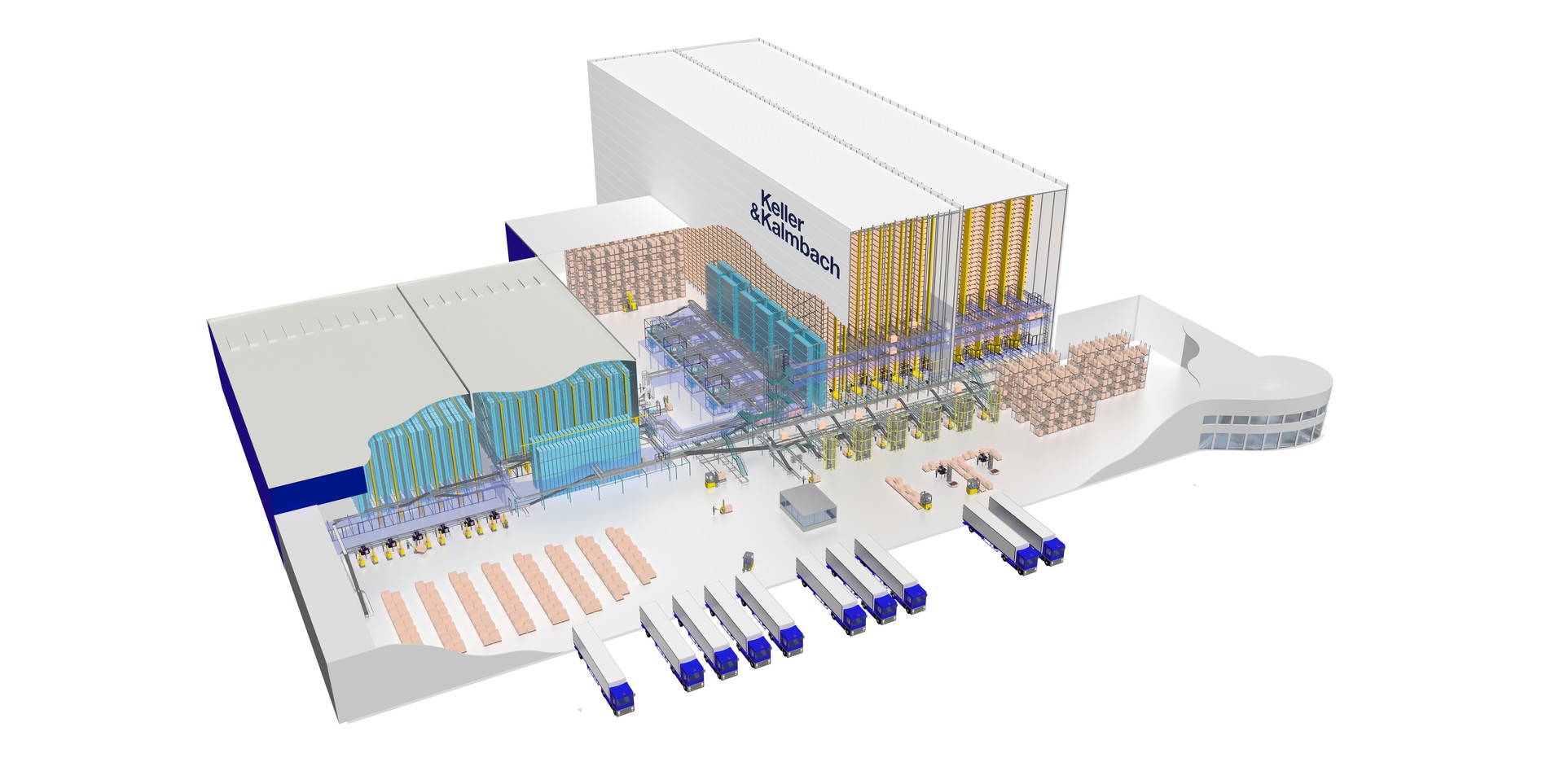
As general contractor for the implementation of the technical solution, Jungheinrich was responsible for the extension of Keller & Kalmbach’s central warehouse, which was built in 2008. Keller & Kalmbach is one of the leading C-parts management suppliers. As a result, the company’s storage capacity as well as the entire system performance was doubled. The biggest challenge was to seamlessly implement the new equipment into the existing system, without disrupting on-going operations.

Product name and company
Live central warehouse expansion at Keller & Kalmbach – Jungheinrich
Category
Integrated Customer Solution
Customer
Implementation period
From:
Until:
10/05/2016
Investment volume
€
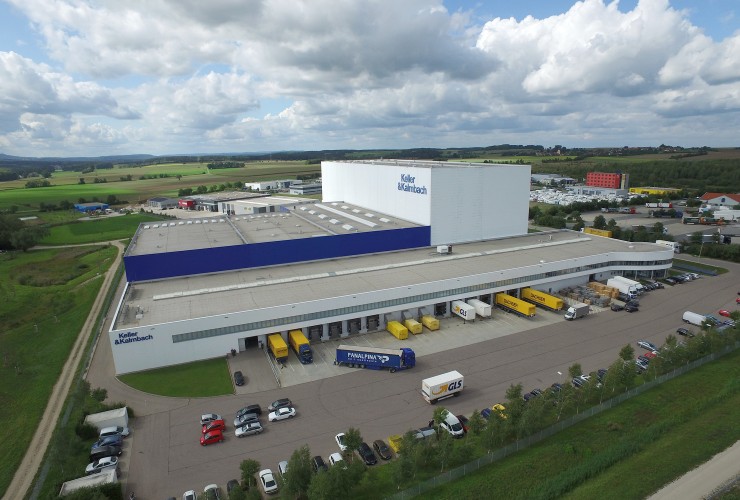
Keller & Kalmbach was founded in Munich in 1878 as a wholesaler for screws and blacksmithing supplies and today belongs to the leading wholesalers for connection and fastening technology. With about 800 employees, Keller & Kalmbach generated €270 million in sales in 2016. That is almost twice as much as in 2009, when the first construction phase of the new central warehouse in Hilpoltstein was built under Jungheinrich project management.
Keller & Kalmbach’s strong focus on C-parts management for industrial customers posed special demands on the intralogistics processes within the warehouse for goods to be delivered to customers at the right time, to the right place and in the right quantity. This resulted in larger storage volumes and an increased diversity of items, which meant that storage space became increasingly scarce. Consequently, in 2008, the management decided to build a new central warehouse and – following continued growth – to extend it in 2014. As general contractor, intralogistics expert Jungheinrich was responsible for planning, project configuration and implementation of both construction phases of the intralogistics system. In October 2016, the extension was finalised and handed over to the customer.
As future growth and, thus, the possibility for a storage extension had already been considered in the initial planning of the project, it was possible to implement the extension during on-going operation. Nevertheless, the extension of conveyors while operations were in progress was very complex, in terms of both planning and assembly. New conveyor systems and two pallet lifts had to be installed in the confined space of the existing warehouse. The construction and test phase required very precise coordination. On the one hand, any negative impact on any operations had to be avoided at any time and, on the other hand, it was absolutely necessary to meet all deadlines. Despite all this, early commissioning of individual, already finished parts of the new warehouse was possible. At the same time, the extension was designed to accommodate flexible scaling of the system in terms of storage space as well as logistics processes, by setting up, for example, a preparation for another order-picking robot.
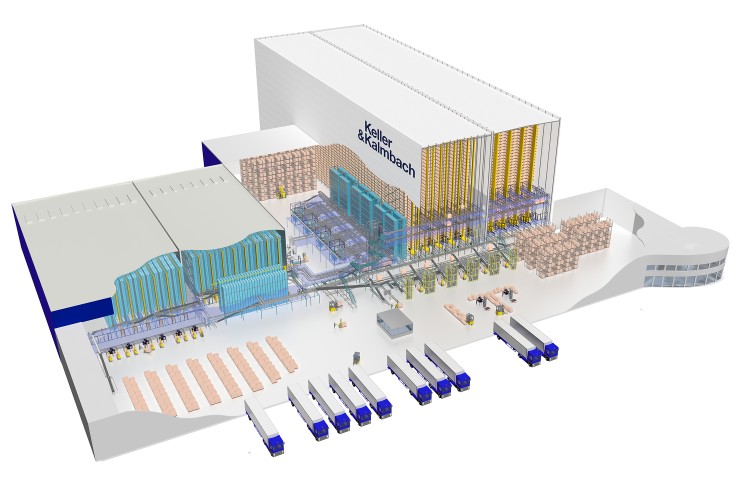
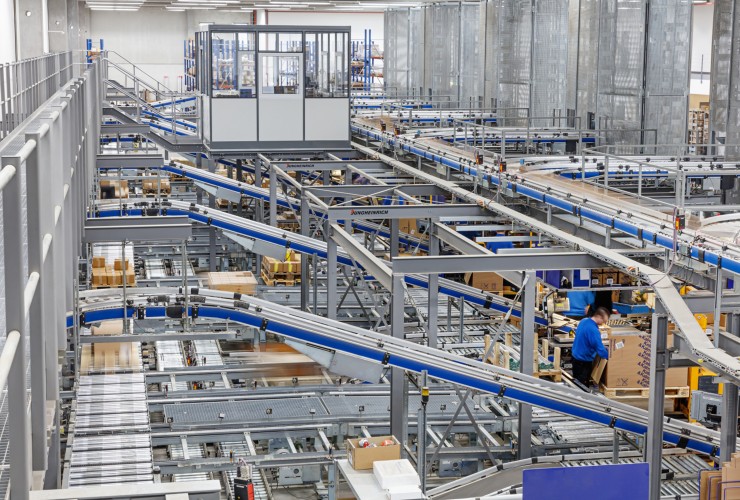
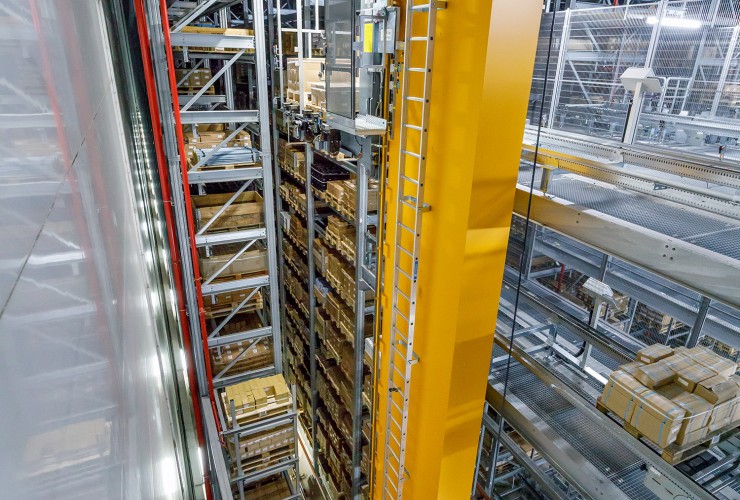
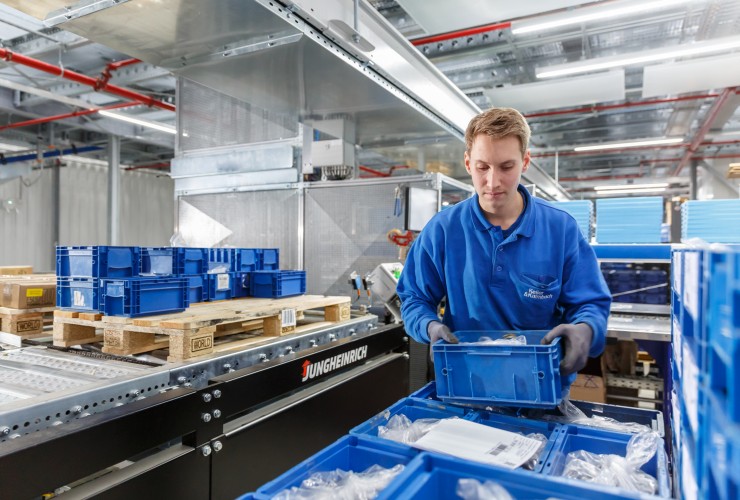
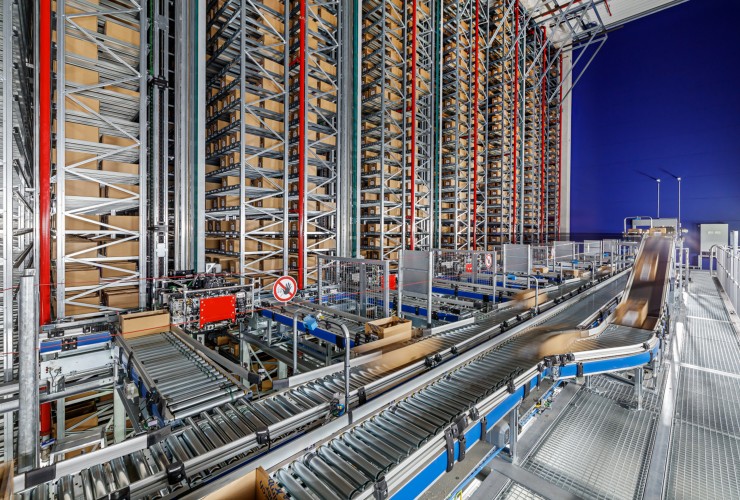
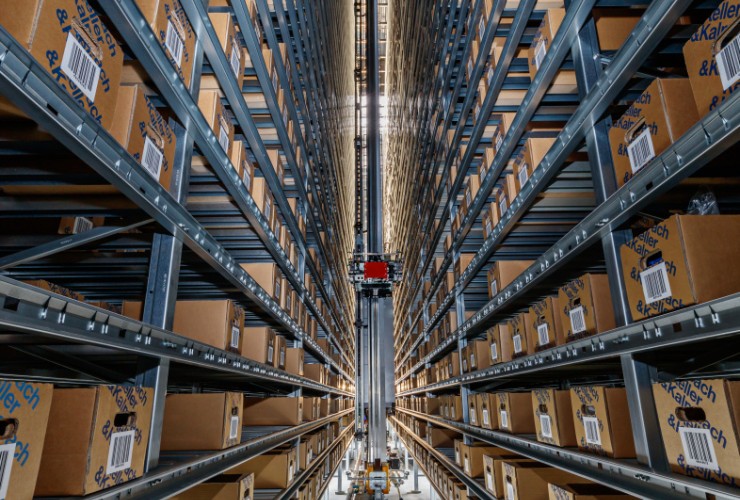
In the first phase of construction, the central warehouse was divided into four areas. These were a high-bay warehouse (HBW) with more than 35,000 pallet spaces and five aisles, a mini-load warehouse (mini-load) for more than 155,000 cartons in eight aisles as well as a mini-load for 8,000 trays and a warehouse for bulky goods. The total area amounted to approx. 10,000 m2. The warehouse layout was designed in such a way that it would be possible to respond to future developments with extensions. The Jungheinrich Warehouse Management System (WMS) controls these areas as well as the complex order-picking processes. One special feature was the order-picking system, which works according to the ‘goods to operator’ principle using ergonomically designed, combined workstations for picking trays, cartons and pallets. Here, the corresponding conveyor system runs from the HBW and the two mini-loads on several levels. Thus, a high degree of flexibility is achieved by goods and containers being supplied automatically. Using the item weight recorded in the master data, the Jungheinrich WMS recognises the total weight of the order and automatically requests the provision of appropriate dispatch units, be it cartons or pallets. As a result, order-picking performance increased to 160 picks per hour and workstation.
In the second phase of construction, the HBW was extended by a total of five aisles, adding another 37,450 pallet spaces. In early 2016 followed the expansion of the mini-loads for cartons by an additional six aisles for another 133,770 cartons as well as the construction of a new tray warehouse for 15,000 customer-specific trays. Simultaneously, the entire conveyor technology was extended to increase capacity and, thus, order-picking output was doubled. The development work opened up the opportunity utilise further optimisation potential by implementing innovative, intelligent technologies for automated palletisation in the form of a palletising robot. The result consists of eight ergonomic workstations connected via conveyor systems with the small parts warehouse and also via several levels of structural steel platforms with the HBW. Items ordered by customers via EDI (Electronic Data Interchange) are counted off from storage cartons here and packaged directly into the customer totes. Once the delivery unit is full, it is labelled, placed on a tray and buffered in an order-picking unit until order picking for all the units of that customer order is complete. Then, palletising software calculates the layer formation for the palletising robot, transferring to the Jungheinrich WMS the order in which the totes have to be retrieved from the order-picking unit onto a buffer track. Thanks to its innovative, flexible load-handling attachment, the palletising robot is able to grip, lift and stack different types of totes. It achieves an output of 500 totes/units per hour.
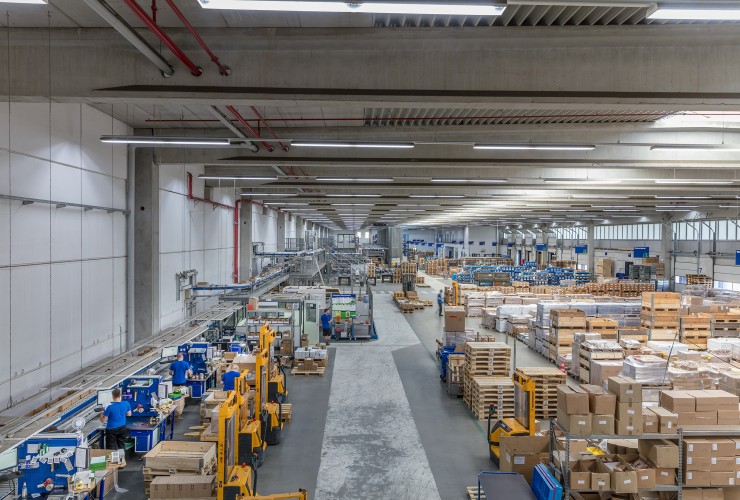
Owing to the, order picking has become much more flexible because operators no longer have to pick in the same order in which goods are placed on the pallet. So even large orders that come in unexpectedly can be order-picked at several workstations in parallel with the workload evenly distributed to the stations. In this manner, approximately 150 tons of goods with about 10,000 pick positions in cartons, totes or open-fronted storage boxes pass through shipping each day on their way to the customers of Keller & Kalmbach. There is also a new area in the hall for repacking, sorting and forming sets as well as a washing system and a rack system for empty containers. By outsourcing stacking operations of heavy goods weighing up to 20 kg, there was a significant improvement of the employees’ work conditions, as they were relieved of the physically strenuous work. This also resulted in an increase of the warehouse’s total throughput.
A further highlight is the direct handling of cartons: Up to 240 tons of goods enter the incoming goods area every day and are processed at 12 workstations, being repacked in cartons and Kanban containers or placed on carrier pallets. This is necessary, as most load carriers from suppliers do not meet the qualitative requirements of an automated system, such as container goods. Repackaging also facilitates quality and quantity management. In case of a fire, these cartons do not burn but melt, thus reducing the fire load and increasing operating safety in the warehouse.
One of the key advantages of the central warehouse extension successfully planned and implemented by Jungheinrich is that construction occurred during on-going operation without interfering with day-to-day business. This means, at no point in time was it necessary to close down the facility due to construction. Furthermore, 40 percent of the pallet capacity achieved by the extension were fully available to the customer after only 6 months, meaning completely integrated in day-to-day business.
In addition to the sheer scale, the complexity of the overall system with computing and database processes in the background is impressive. Controlling of individual functions, the interface to the ERP system and controlling of logistics processes by the Jungheinrich WMS all work flawlessly.
As indicated above, the extension of the central warehouse resulted not only in a significant increase of storage space from 10,000 m2 to about 18,500 m2. It also enabled the doubling of the entire system’s performance.
Image/video credits: Jungheinrich AG
Finalists undergo the three-stage IFOY Audit as part of the IFOY Audit, which takes place during the TEST CAMP INTRALOGISTICS. This consists of the scientific IFOY Innovation Check, the IFOY Test and the jury test.
In den Statuten sind die Grundwerte und die Standards des IFOY AWARD festgelegt, nach denen die Organisation handelt. Dazu gehören unter anderem Gremien, Wahlomodus, Bewertungskriterien sowie der Code of Conduct.
The International Intralogistics and Forklift Truck of the Year has three bodies: Jury, sponsors, and advisory board.