

IFOY Audit
Finalists undergo the three-stage IFOY Audit as part of the IFOY Audit, which takes place during the TEST CAMP INTRALOGISTICS. This consists of the scientific IFOY Innovation Check, the IFOY Test and the jury test.

Product name and company
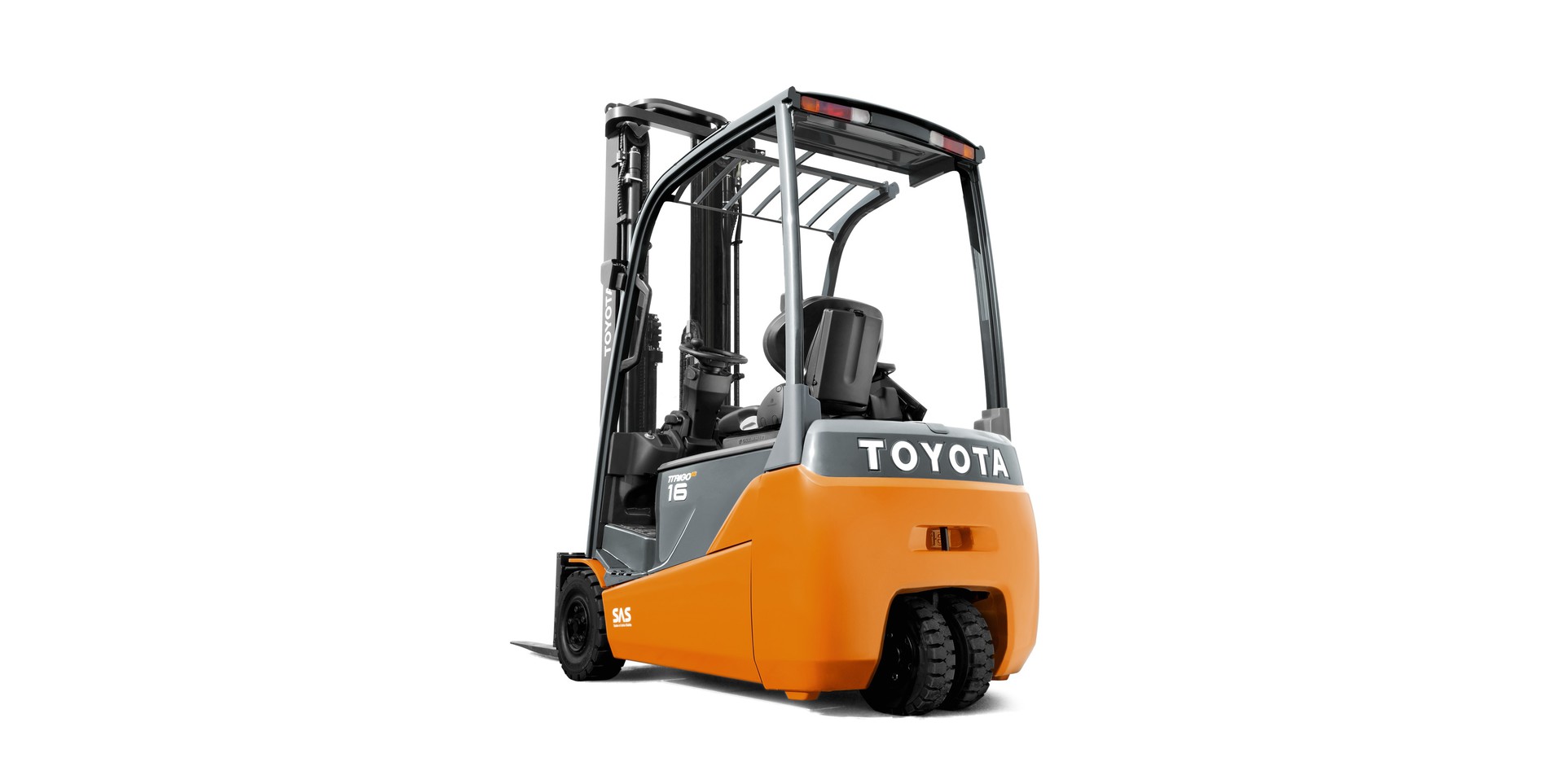
Traigo 48 Lithium-Ion – Toyota Material Handling
Category
Counter Balanced Truck
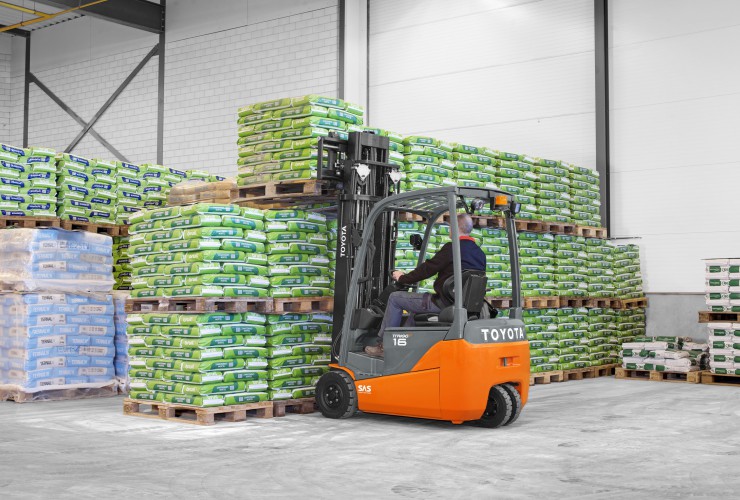
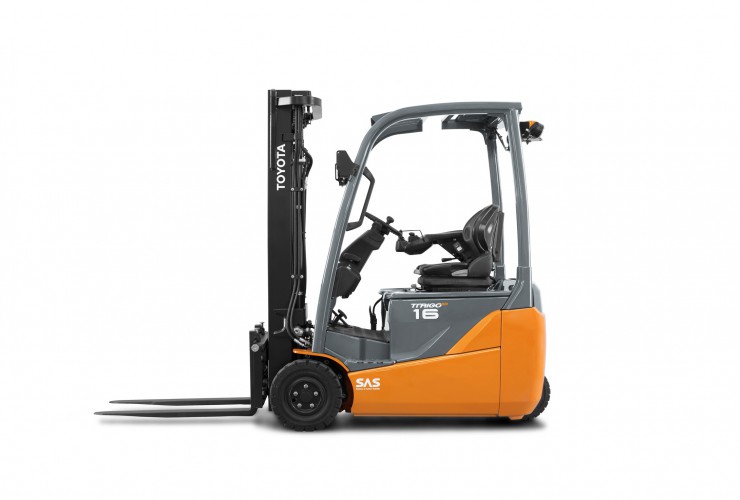
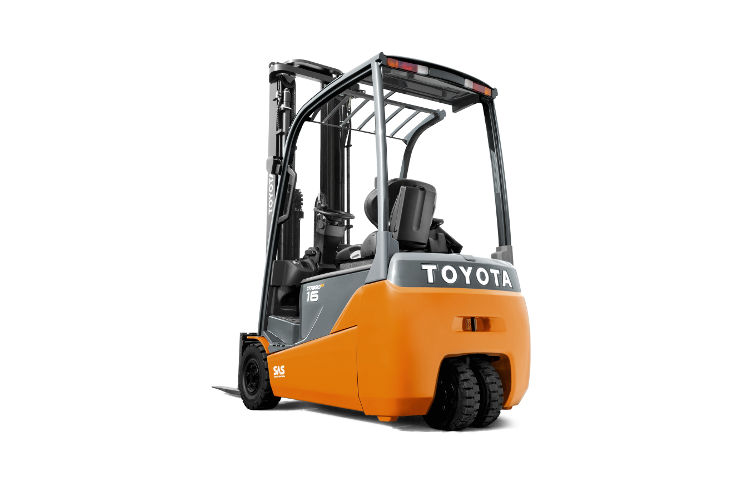
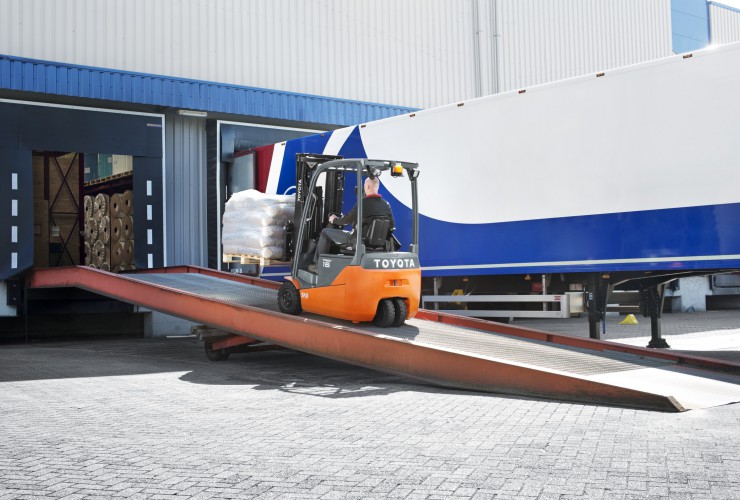
As the first lithium ion 48-volt electric counterbalanced truck available on the market, the Toyota Traigo 48 Li-ion is both highly productive in intensive operations while being class-leading in energy efficiency.
In comparison to lead-acid batteries, the Li-ion battery technology saves up to 30% of energy on every charge. Lithium Ion batteries also allow for opportunity and fast charging, and therefore do not require battery change during multi-shift operations, increasing flexibility and efficiency.
The 8FBEK16T is compact but can easily lift 1.6 tonnes and reach heights up to 7.5 m. With the introduction of the electric power steering this 3-wheel model is highly manoeuvrable for easy navigation in tight areas with a turning radius of just 1542 mm.
All Toyota counterbalanced trucks are equipped as standard with the Unique Toyota System of Active Stability (SAS). SAS offers
SAS actively attributes not only to the safety of the driver, but also to avoiding damage to the truck and the goods, which leads to lower costs and higher productivity.
The Toyota Traigo 48 Li-ion is the first 48-volt counterbalanced truck which can be equipped with a Li-Ion battery. The truck offers the customer class-leading productivity, as well as excellent energy efficiency. The strength of the new Traigo 48 lies at the core of the truck.
The Traigo 48 with Lithium Ion battery technology, an energy-efficient innovation that brings many benefits to the processes of material handling. Li-ion batteries are smaller but have a large energy density and can be used for opportunity charging, so no battery change is required. This avoids extra space and labour that is lost working with extra batteries when taking turns charging, eventually reducing TCO (total cost of ownership).
Its new electric power steering allows for effortless steering at low speed and lowers energy consumption, which contributes to making this truck market-leading in efficiency and productivity. Force feedback steering guarantees accurate control at all driving speeds.
The drive unit utilises the latest technologies, which includes an automatic parking brake improving control on ramp and overall manoeuvrability. The Toyota drive motors offer enhanced productivity as well as strong and adjustable acceleration and deceleration. The motor controllers guarantee accurate control of truck positioning with and without load, which allows for precise material handling.
The new Toyota Traigo 48 Li-ion is developed to reach the highest productivity levels whilst minimising the energy consumption. With a load capacity of up to 1.6 tonnes and lift height up to 7.5 m, the truck is ideal for working inside within pallet racking as well as working outside in the yard or in a loading bay.
High productivity goes hand in hand with manoeuvrability, which is key to the design of the Traigo 48. With the help of the agile 3-wheel chassis and advanced steering technologies, like electric power steering and force feedback, the truck is easy to use and control even in the tightest situations and at all speeds. The unique Toyota SAS features ensure that the truck remains stable and give the driver the confidence to operate.
With its Li-ion battery the new Traigo 48 takes a sustainable approach to delivering class-leading productivity and unmatched energy efficiency. Toyota also keeps the environment in mind, as Li-ion has an extended lifecycle which can be up to three times longer than traditional lead-acid, as well as reduces the need for multiple batteries and maintenance.
On top of the previously mentioned energy efficiency, increased productivity and manoeuvrability improvements, Toyota has maintained its focus on the driver.
Meaning that operators of the Toyota Traigo 48 Li-ion are offered a high level of driver comfort: they benefit from a fully adjustable Operator Restraint System (ORS) with side-wings and lumbar support, as well as an adjustable steering column that offers maximum legroom. The multifunction display, easy to see and reach, gives key information at a glance. The parameter settings can be adjusted to suit the needs of the driver or application.
By operating the Traigo 48 Li-ion, customers are also able to cut down on damage costs, as the SAS features and enhanced control guarantee constant stability when handling loads. This prevents the goods from falling down or the truck to tip over.
Investing in Li-ion batteries also pays off, as the batteries provide consistent energy until completely empty with no loss in performance. Opportunity charging of the batteries also removes the requirement for battery change as well as the cost for additional batteries, and the associated extra space and manpower for battery change.
| This is a | Vollständig neues Modell |
| Date of market launch | 10/19/2015 |
| Competitive products | Jungheinrich EFG 216K Linden E16 Still RX 20-16 |
| Special equipment IFOY test device | Mast: FSV H=4700 |
| Drive type | Elektro |
| Lifting weight max. | 1600 kg |
| Truck weight | 3002 kg |
| Driving speed without load | km/h |
| Lifting speed without load | m/s |
| Lifting height max. | 4700 mm |
In 2015, Toyota Material Handling presented a new version of the Traigo 48 three-wheel electric truck, which is also available in a lithium-ion version. This was the machine that underwent the IFOY test. The lithium-ion battery supplies more power while also using less energy thanks to the integrated lithium-ion package. According to Toyota, this results in an average 40 percent lower energy consumption during travel and battery loading compared to the predecessor model with lead-acid battery. This means that, depending on deployment conditions, a smaller battery might also be sufficient.
The lithium-ion truck makes a robust impression. All the materials are extremely durable, of high quality and optimally matched. The drive control system is now more effectively protected in order to minimise the effects of vibrations, dust and moisture. In addition, Toyota has weighted the axles, and the truck is equipped with maintenance-free wet brakes.
The height of 420 mm makes for convenient entering and exiting of the Traigo 48. The space for the driver’s work boot and the anti-slip floor panel are generously dimensioned. The inclined foot plate is almost flat and is big enough to accommodate larger shoe sizes. The steering column is extremely robust for a modern forklift but is still steplessly adjustable and can be reset to any preset position thanks to a memory function.
The IFOY test truck was fitted with the optional safety and productivity package, which includes an additional horn in the armrest, integrated scales in the fork, a tilt angle indicator in degrees, and automatic speed reduction at higher lifting heights. The Traigo 48 is equipped as standard with the “System for Active Stability”. SAS controls and monitors speed and cornering stability, and reduces the forward – and now also the reverse – tilting speed at high lifting heights. A steering wheel synchronisation feature additionally ensures that the steering wheel is always in the same position when driving straight ahead. Moreover, the driver can press the toggle lever to horizontally position the fork in such a way that it slides smoothly beneath the load.
Toyota has offered drivers a selection of different drive modes for several years now. There are now four fixed settings – S, P, H and the optimum SPH setting – that are conveniently selected via push switch. The test team tested the Traigo 48 in P (Economy), H (High Power) and SPH, using almost the same motor brake setting in all modes. The main differences between P and H are the lower acceleration and the slightly slower mast functions. The top speed is almost negligibly lower in the “P” setting.
According to the manufacturer, the new electrical control system boosts energy efficiency by over 20 percent. Steering is easier thanks to the electric powered steering, and the unique “forced feedback system” automatically adjusts the power steering characteristics to the speed of the forklift. This makes manoeuvring in tight spaces far easier. The machine is robust and feels secure. The precision setting of the motor brake renders driver braking almost unnecessary. Moreover, during the test the motor brake supplied regenerative energy accounting for up to 15 percent of average consumption. The truck is fitted with an electric parking brake for parking, above all on uphill gradients.
The IFOY test shows that the Traigo 48 is competitive in “H” mode, with energy consumption well below the average. Customers who choose the Toyota-developed optimum setting can still achieve average productivity while saving significant amounts of energy. With its 448-Ah battery, the forklift can easily manage a full shift with one battery charge. The test showed that the Traigo 48 is extremely smooth and intuitive. The mast functions are conveniently operated via mini-levers in the fully adjustable armrest, for example. The display is informative and also indicates the tilt angle of the mast.
IFOY test verdict
Toyota is known for flexible electrically powered forklifts equipped with intelligent technology. With the electrical steering, the new software, and the Li-Ion technology, the company has now also made major progress in terms of energy efficiency. Customers who want to do a full-day shift with a single battery charge while enjoying the benefits of lithium-ion technology will find that the Traigo 48 Li-Ion is a serious candidate.
| Hard facts | Test Truck IFOY Test | Average other trucks | Value 1 to 10 | |
| Productivity Max mode | 375 | 376 | Pallets p. 8 hrs | 7 |
| Productivity Eco mode | 351 | 350 | Pallets p. 8 hrs | 7 |
| Energy level Max mode | 8,66 (55V) / 7,56 (48V) | 10.93 | kWh 100 plts | 9 |
| Energy level Eco mode | 7,56 (55V) / 6,60 (48V) | 10.14 | kWh 100 plts | 9 |
| Driving speed with load | 15.65 | 15.32 | km/hr | |
| Lifting speed with load | 47.47 | 44.31 | cm/sec | |
| Acceleration speed | 7.9 | 8.54 | time for 27,2 meters | |
| Averages soft facts | ||||
| First impression | 7.80 | |||
| Load Safety | 8.00 | |||
| Entry to truck | 7.57 | |||
| Seat & Sit position | 6.67 | |||
| Legg Space | 7.00 | |||
| Activate truck | 8.00 | |||
| Hydraulics | 8.00 | |||
| Steering | 7.71 | |||
| Sight | 8.00 | |||
| Driving acceleration | 8.20 | |||
| Driving braking | 8.00 | |||
| Driving & Turning | 8.00 | |||
| Parking truck | 6.71 | |||
| Safety elements | 8.63 | |||
| General after test | 7.75 | |||
| Sustainability | 8.00 | |||
| Totals | ||||
| Total average soft facts | 7.75 | |||
| Total productivity | 7.00 | |||
| Total Energy consumption | 9.00 |
Market Relevance
The trucks in the Toyota Traigo 48 forklift series are electrically powered, have a load capacity of 1.6 t (model range up to 2.0 t) and a lifting height up to 7.5 m. In times of increasingly stringent emission regulations, electrical drive concepts are playing an ever greater role; indeed, only forklift trucks of this type may be used indoors. This makes the Traigo 48 series an attractive proposition for a growing number of customers, and the high satisfaction levels of many customers underline the success of the significant technical improvements.
The most important innovation in the Toyota Traigo 48 forklift is the conventional lithium-ion battery, which is designed to allow more flexible operation and ensure an improved machine utilisation factor. The relevance of this development can be described as very high, as the innovation offers benefits for all customers.
Customer Benefit
Lithium-ion batteries have numerous advantages over lead batteries and increase flexibility for the customer. The absence of a “memory effect” together with fast charging capability allows the operator to charge these stackers during breaks without any serious wear effects on the battery. This obviates the need for extra batteries in the battery pool, particularly in shift operations, while reducing the amount of space required for the charging station. The battery can be more completely discharged and charged far more efficiently. Moreover, the energy generated during braking is taken up more effectively by the battery. This generally translates into lower energy consumption and therefore reduced operating costs.
The manufacturer gives an 8-year warranty on the battery (corresponding to the depreciation period of the forklift), although the actual service life may be longer. This means the service life of the lithium-ion batteries is considerably longer than that of conventional lead batteries, rendering subsequent purchase of a replacement battery unnecessary. On the whole, the battery can be expected to pay for itself within just a few years depending on deployment conditions.
Degree of Novelty
Lithium-ion batteries are used in the automotive and consumer electronic sectors, where they are state of the art. Their use in counterbalanced trucks represents an innovation, even though this battery type has already been used for a number of years now in smaller materials handling machines in the logistics sector.
Functionality / Type of Implementation
The Toyota Traigo 48 is a systematic further development of the existing series and is optionally available with a conventional lead battery. Retrofitting is nevertheless possible and entails only a minor workload and a new charger. This concept also offers increased decision-making flexibility for more conservative customers.
| Functionality / type of implementation | + |
| Novelty / Innovation | + |
| Customer benefits | ++ |
| Market relevance | ++ |
| ++ very good / + good / Ø balanced / – less / — not available | |
Image/video credits: Toyota Material Handling Europe
Finalists undergo the three-stage IFOY Audit as part of the IFOY Audit, which takes place during the TEST CAMP INTRALOGISTICS. This consists of the scientific IFOY Innovation Check, the IFOY Test and the jury test.
The bylaws set forth the core values and standards of the IFOY AWARD, which guide the organization’s actions. These include, among other things, governing bodies, the election process, evaluation criteria, and the Code of Conduct.
The International Intralogistics and Forklift Truck of the Year has three bodies: Jury, sponsors, and advisory board.