Description
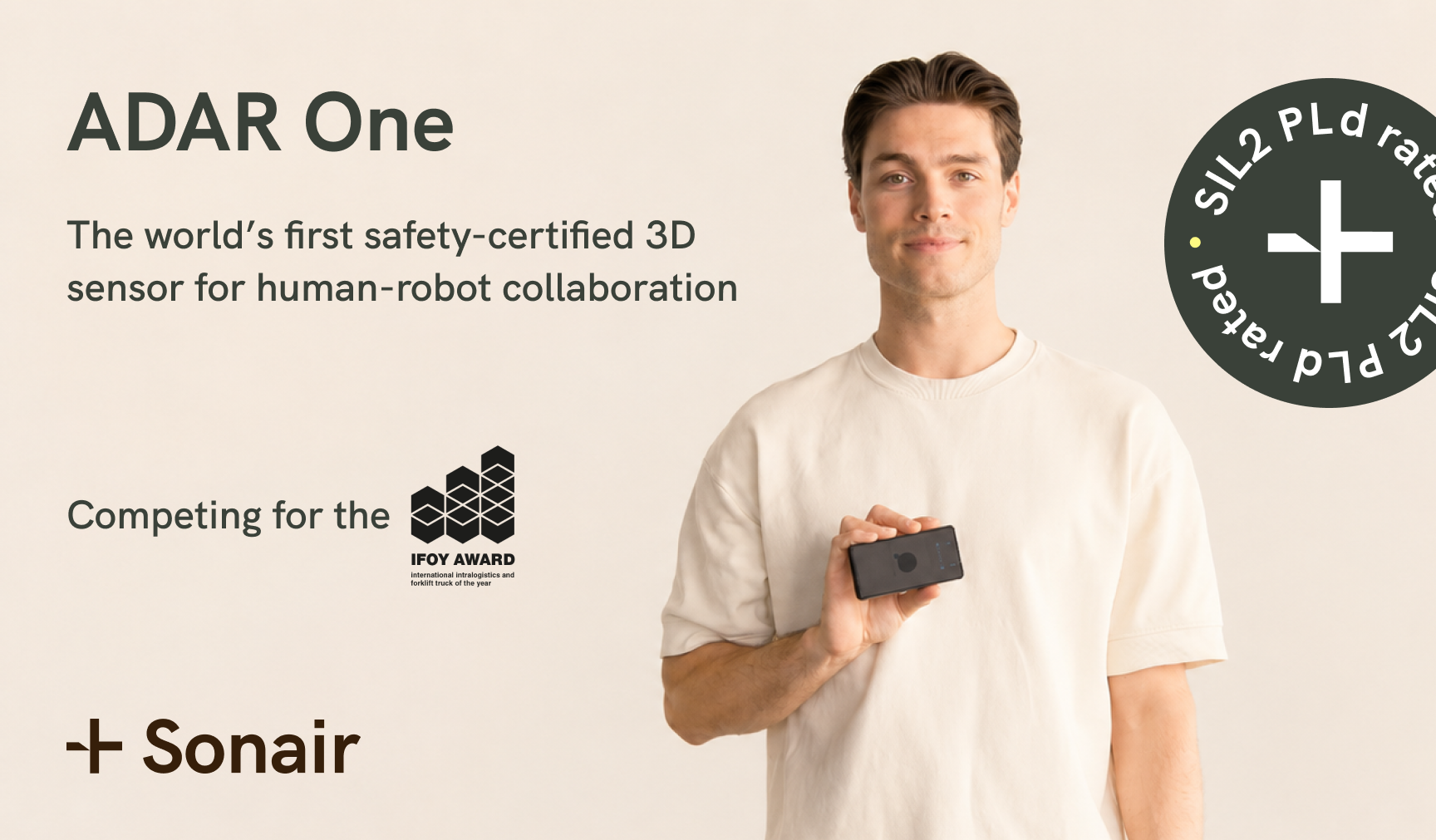
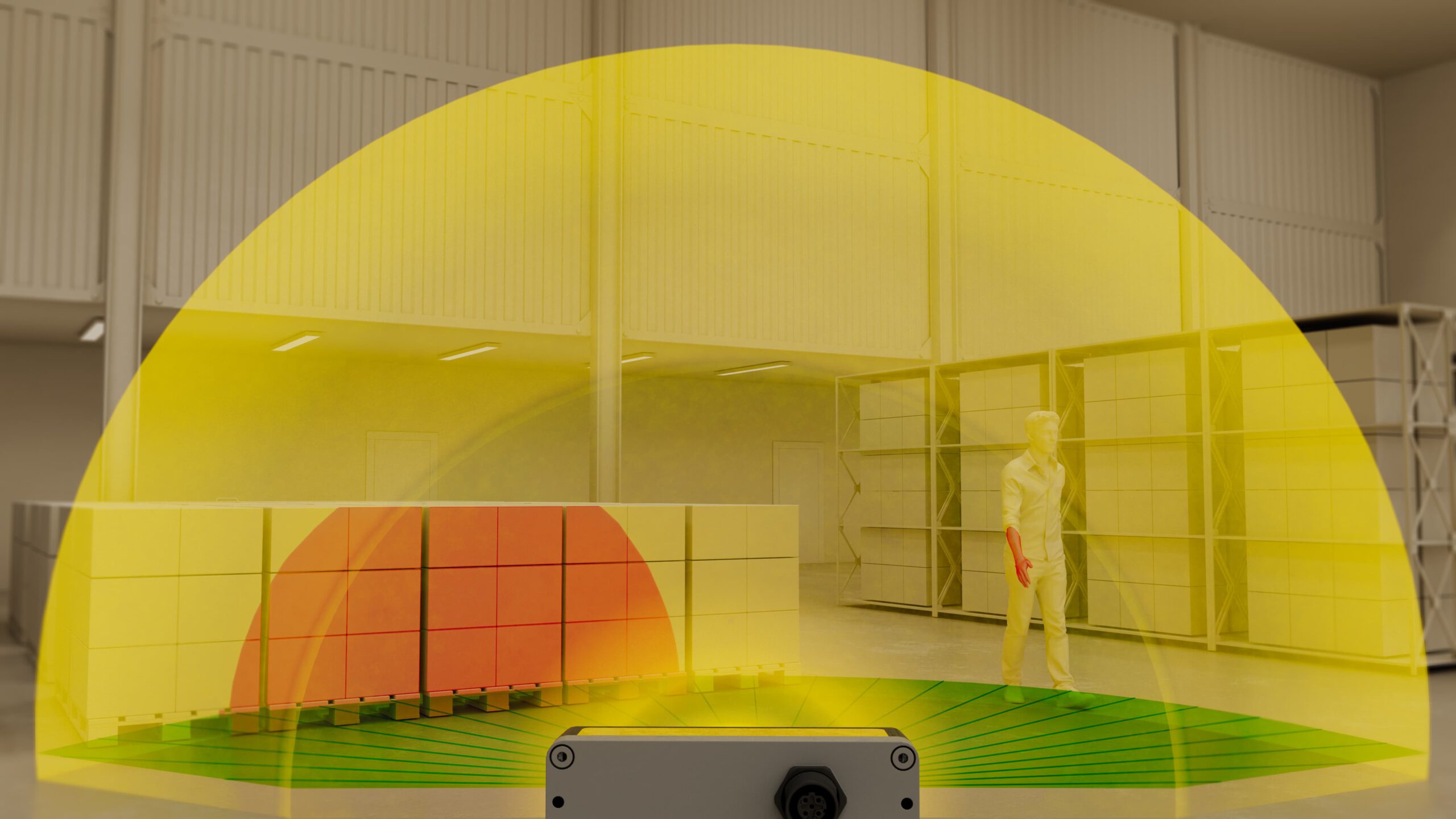
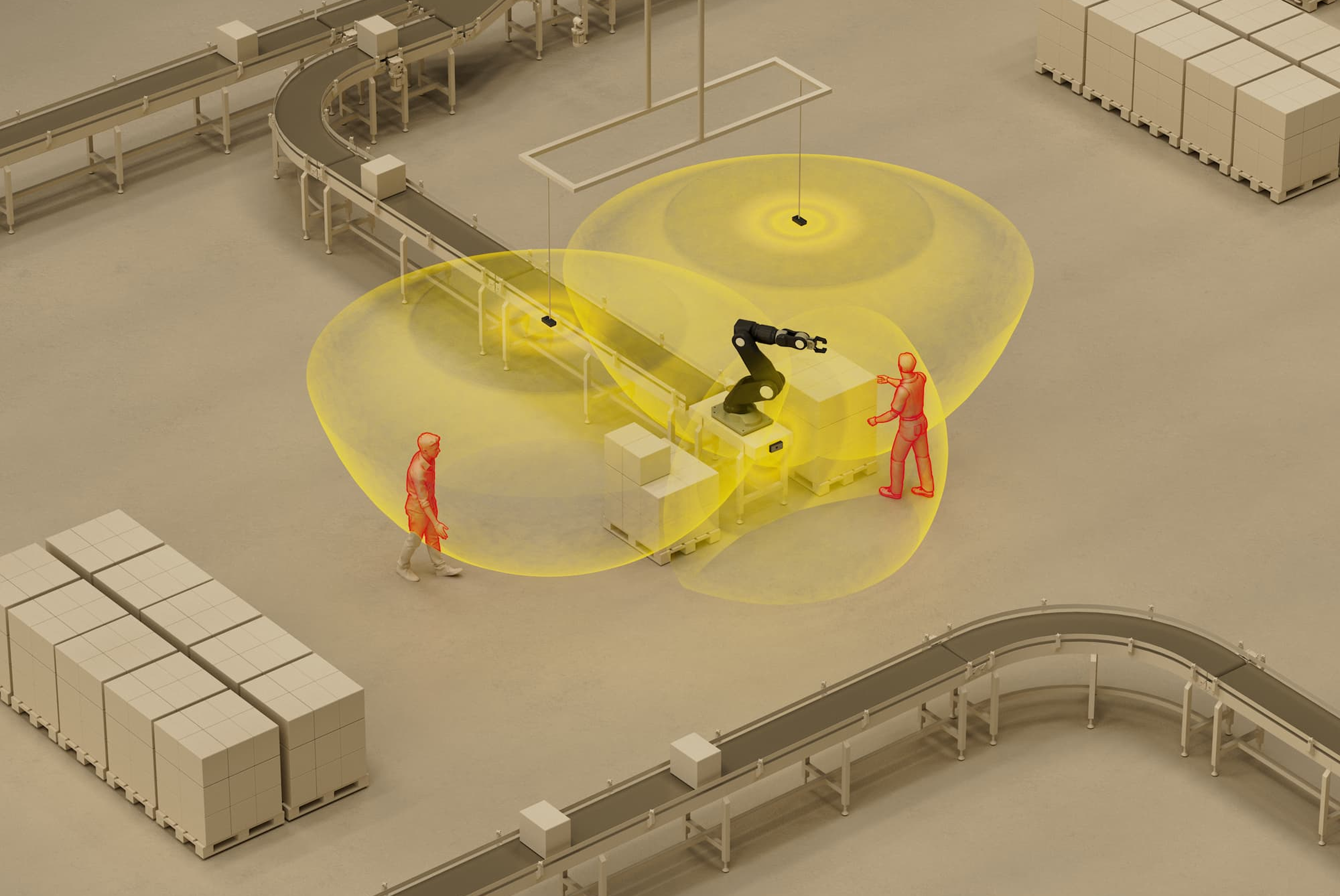
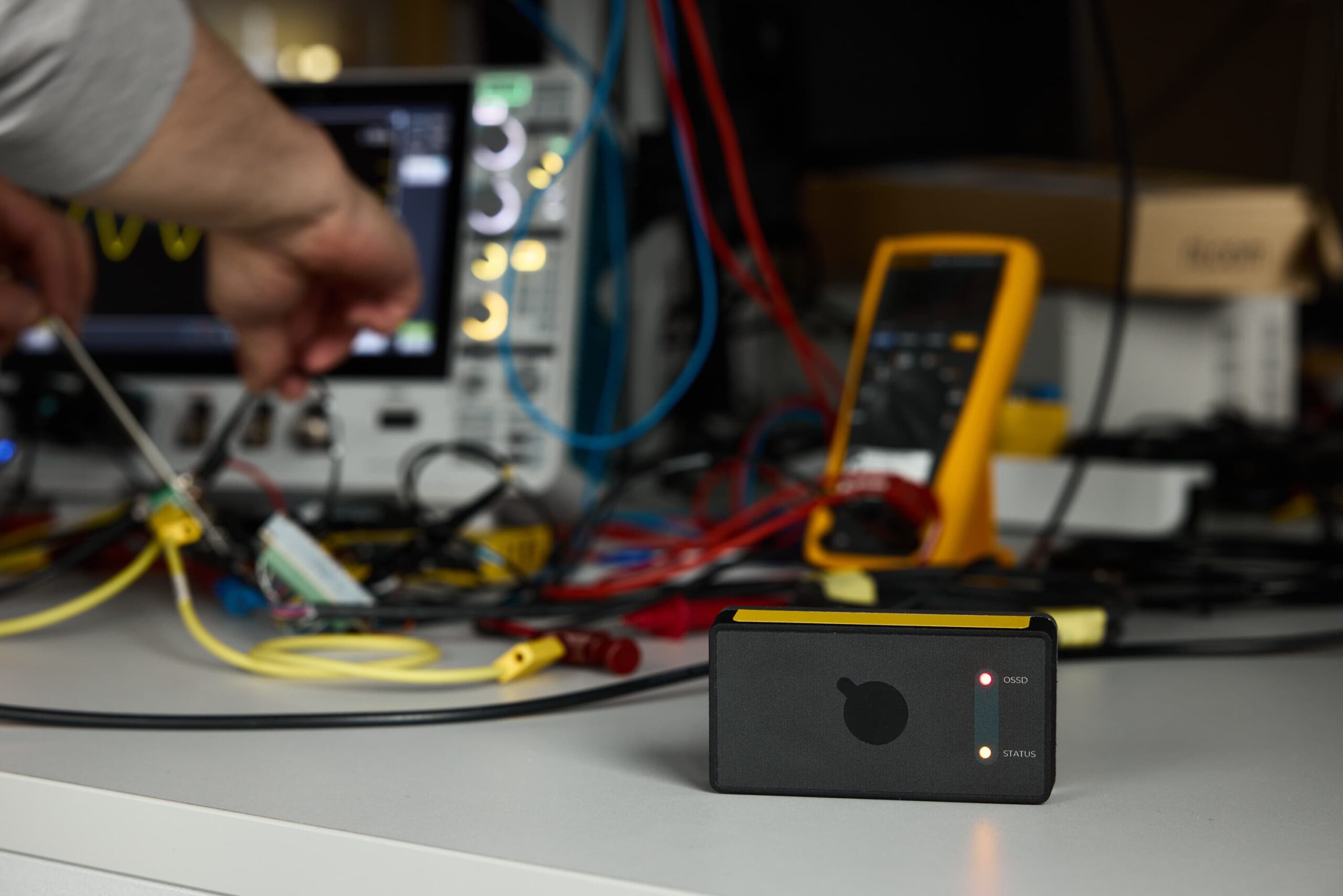
ADAR One gives autonomous mobile robots, cobots and humanoids and machine safety applications a certified 180°×180° shield of spatial awareness, detecting people and objects at any height. Where today’s safety sensors scan a flat plane, ADAR One sees the volume around a robot or work site: an outreached arm, a tool on the floor, a load swung overhead.
Because ADAR One uses sound instead of light, it detects surfaces that routinely defeat cameras and LiDAR, like glass and dark or reflective materials. Nothing about the surface’s color or transparency changes what the sensor hears. It is also unaffected by dust, glare, or darkness. In comparison, optical sensors degrade in direct sunlight, fog, or low light, and dust can blind them outright.
The sensor uses arrays of ultrasonic transducers doing real-time 3D beamforming, a signal-processing technique used in medical ultrasound and underwater sonar, adapted to run in air on a low-power embedded device. It weighs under 250 g, and is small enough to embed flush into any robot form factor.
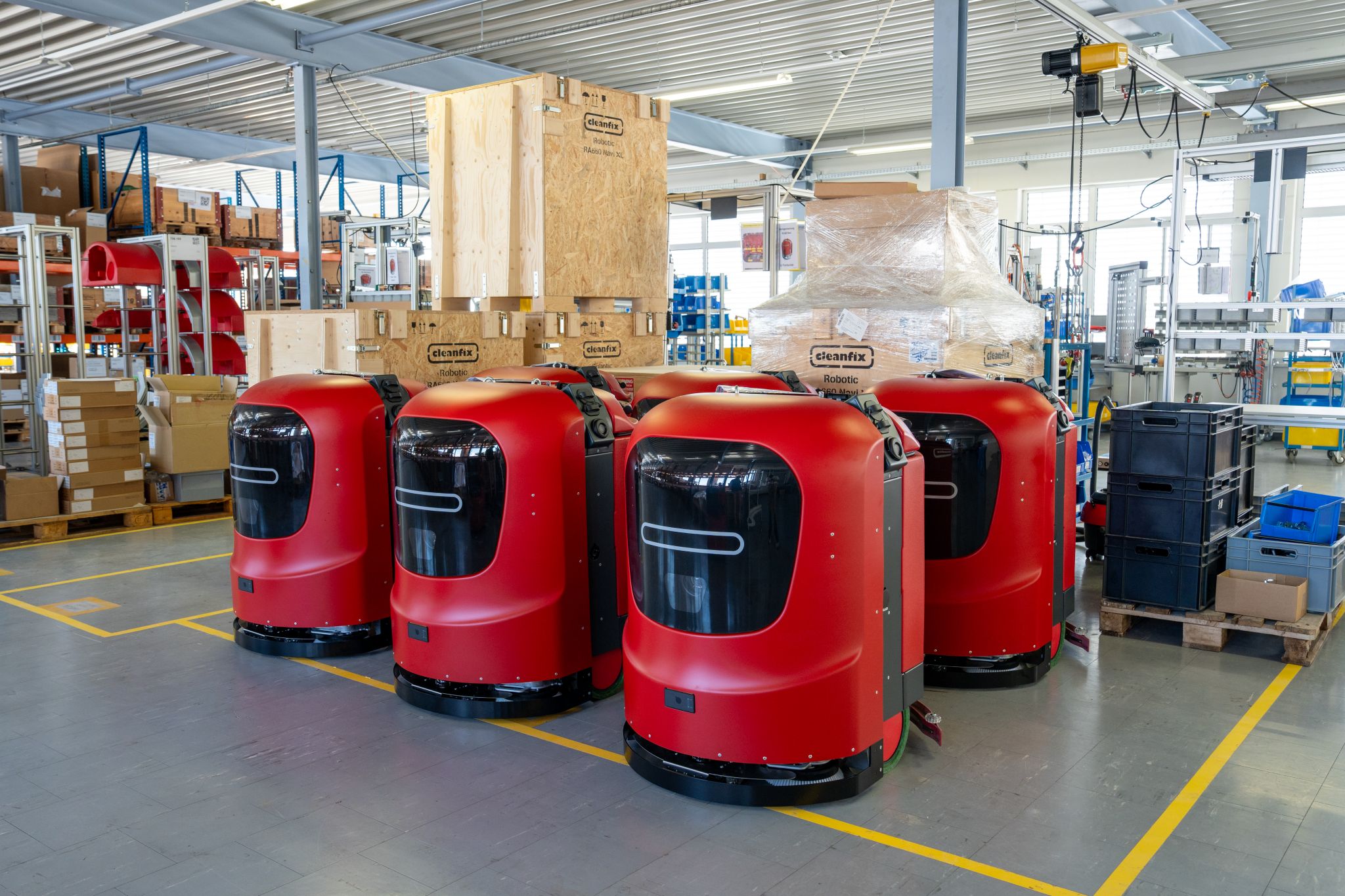
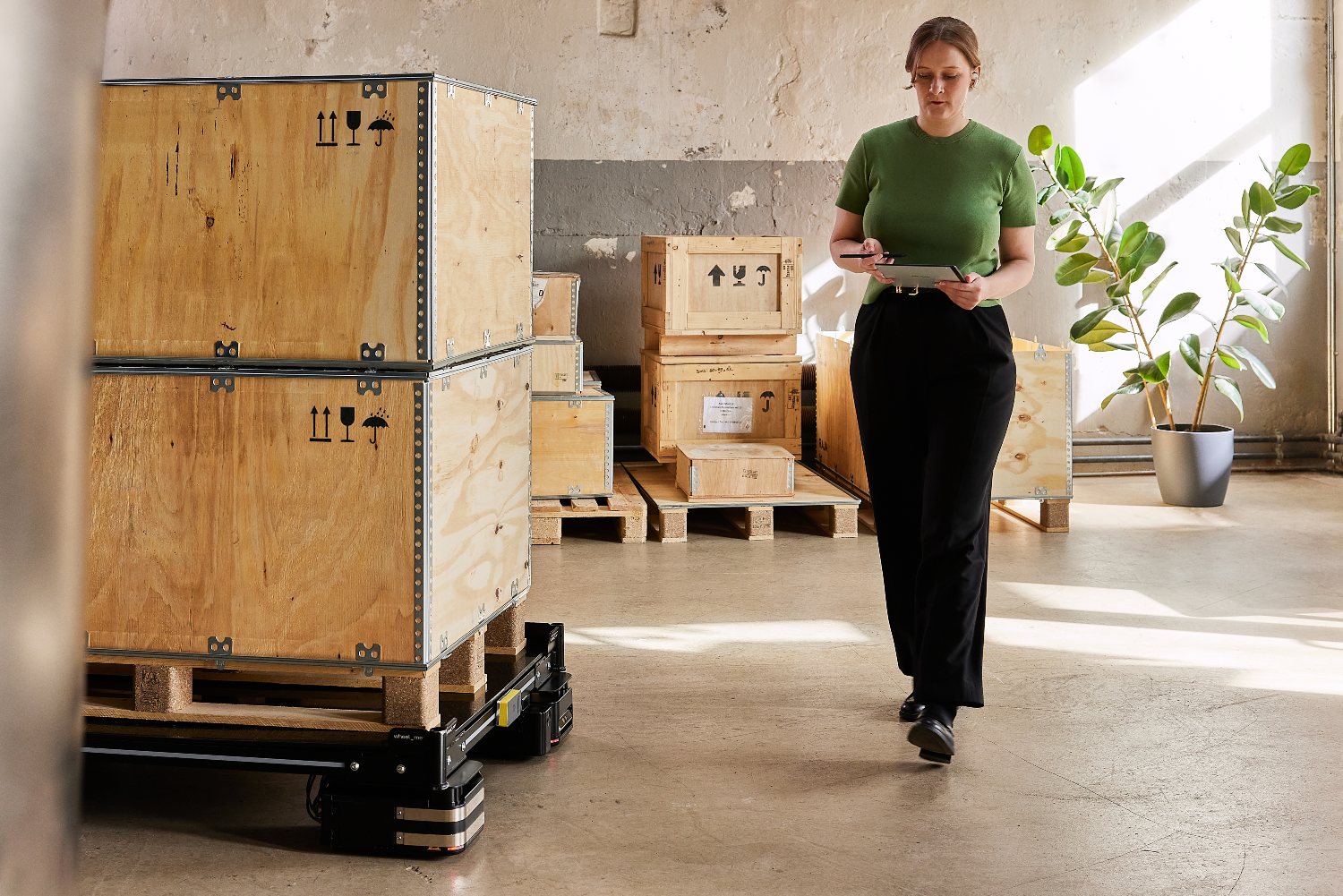
ADAR One is already in series production and shipping on industrial robots, including palletizing specialist beRobox and with industrial cleaning robot manufacturer Cleanfix.
Innovations
Sonair’s innovation is twofold.
First, 3D ultrasonic sensing in air requires transducer elements spaced under 2 mm apart, far below what manufacturing could deliver until SINTEF’s 20 years research on silicon-based transducers matching bulk transducer performance at a fraction of the size (SINTEF is a leading European research institute). Sonair combined this with beamforming expertise drawn from ultrasound imaging and offshore acoustic array research (University of Oslo, DTU, SINTEF), rewriting the algorithms to run in real time on embedded hardware instead of a hospital-grade workstation. No comparable product exists today. 2D LiDAR and camera-plus-AI stacks are the incumbents, and neither offers a certified, full-volume 3D field.
Second, the certification. Bringing a new sensing modality to SIL 2 / PL d, under IEC 61496, IEC 61508 and ISO 13849, with EC type-examination from exida, is a multi-year undertaking very few products have been through. ADAR One is also the first safety-certified embedded system built in the programming language Rust, chosen for memory safety guarantees that reduce certification risk.
Together, this means robot builders get certified 3D perception and a deterministic safety layer working with camera/AI perception stacks.
Market relevance
The economic potential of automation in logistics is enormous, and already well realized in high-bay warehouses and production lines built on greenfield sites. The next wave, enabled by Physical AI, pushes into spaces that need flexibility and closer collaboration with people, but only if safety works out of the box, without customer- or application-specific engineering.
Per Interact Analysis’s 2026 robotics forecast, mobile robots (AMRs, AGVs, and mobile manipulators) will be the second-largest robot segment by volume by 2030, and the largest category where certified 3D sensing is a functional requirement rather than an option. An arm reaching into shared space is the hardest safety case in the industry.
Our target customers span two segments:
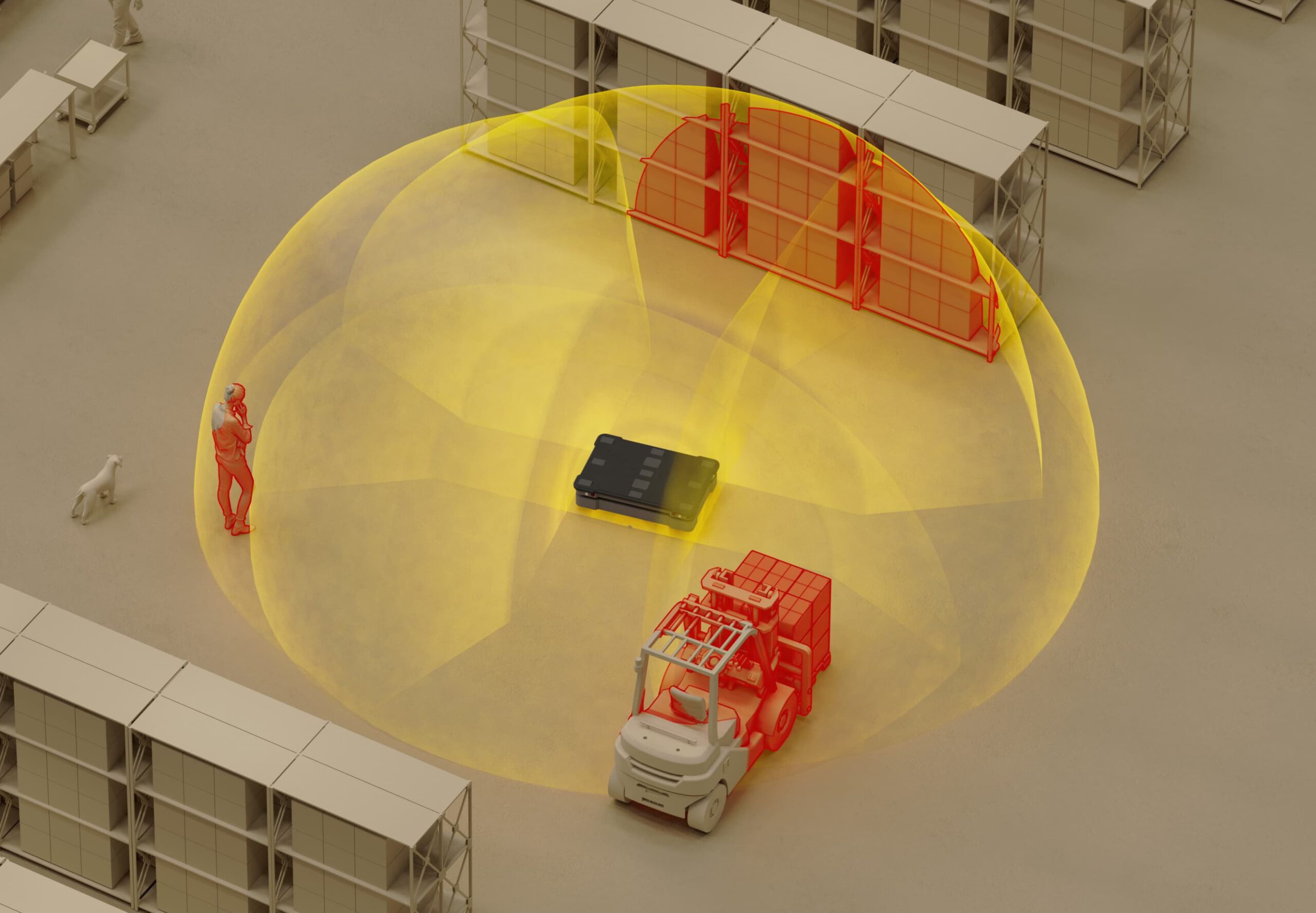
The first is autonomous mobile robot and AGV OEMs building machines that move through warehouses, factories, hospitals, and other spaces shared with people. Detecting people and obstacles in full 3D, rather than the single flat scan plane traditional sensors rely on, lets these robots operate safely without slowing down.
The second is the broader machine safety market: manufacturers and integrators of industrial robots, cobots and automated cells, who need to protect a full working volume rather than a single entry point, with safety zones that match real machine movement and workspace geometry.
Total robot market revenue is forecast at roughly USD 36bn by 2030, with mobile and cobot segments growing at 18–20% CAGR.
Customer benefits
A certified 3D safety layer changes what a robot builder can do, not just what it can detect.
For OEMs and integrators: ADAR One replaces a patchwork of 2D scanners and exemption requests with a single certified sensor, cutting integration time and closing the compliance gap. Because recertifying a machine after a safety-component swap is slow and costly, a certified-in design also protects the OEM’s own product roadmap.
For fleet operators: reduced separation distances, higher speeds, and less fencing, because a certified full-volume field, not a flat plane, is what finds a raised arm or an overhead load. That means more usable floor space and higher throughput without added risk.
For everyone building or deploying robots: liability protection. In a recent industry survey by QNX, 69% of robotics developers cited legal exposure from robot failures as a concern, while only 29% were confident AI perception alone could make safe, predictable decisions.
Ultimately, it’s a question of guessing or knowing. AI perception makes its best guess about what’s safe. ADAR One doesn’t guess. If a person enters the danger zone, it responds within a fixed, physically verified time limit.