Case Study
Project Overview
Liebherr has built a new central spare parts warehouse at its headquarters in Ehingen, which has been handling global spare parts supply since April 2025. The goal is to ensure the worldwide availability of Liebherr cranes – around the clock and with maximum efficiency. The site stores around 90,000 different items – from small seals to large crane components. This diversity requires precise and flexible warehouse management combined with powerful and efficient automation.
The Jungheinrich WMS manages, among other things, two automated areas at Liebherr:
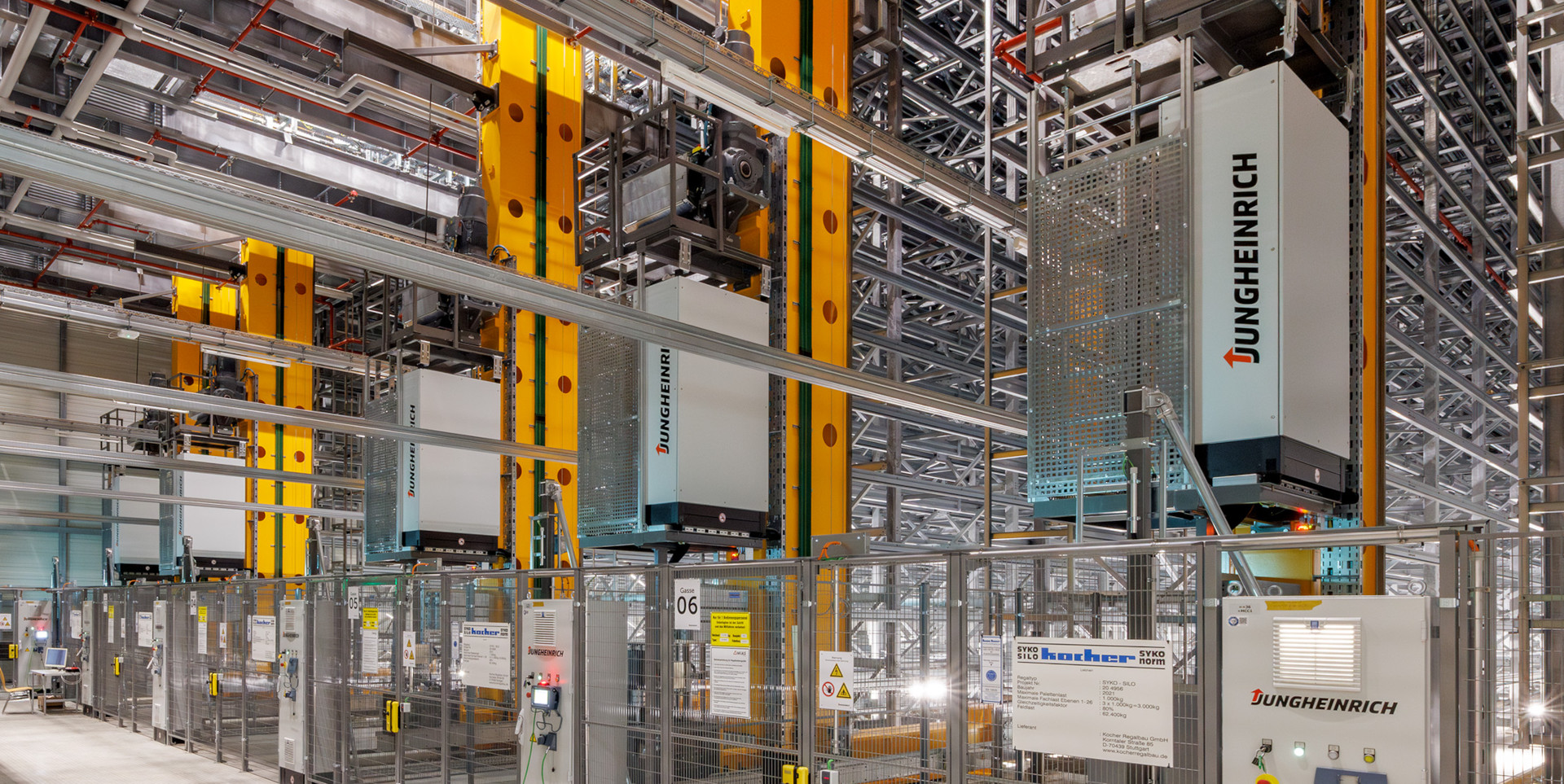
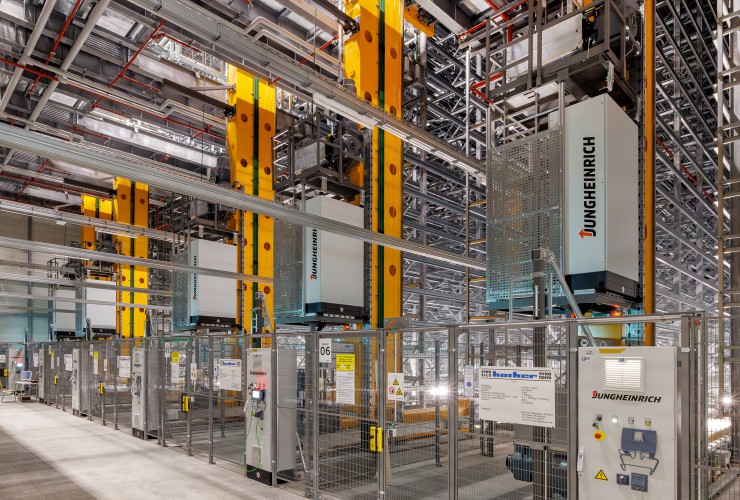
- Pallet high-bay area with six aisles and 18,000 storage locations
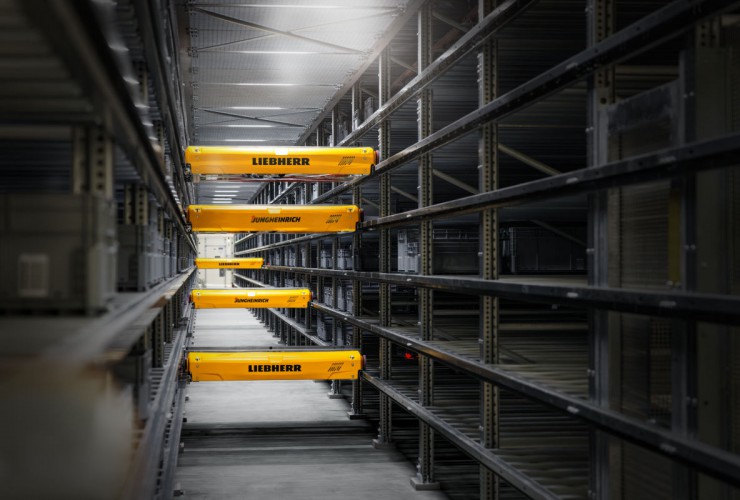
- Small-parts shuttle area with two aisles, triple-deep storage and 40,000 container locations
- as well as nine additional manual areas across two floors.
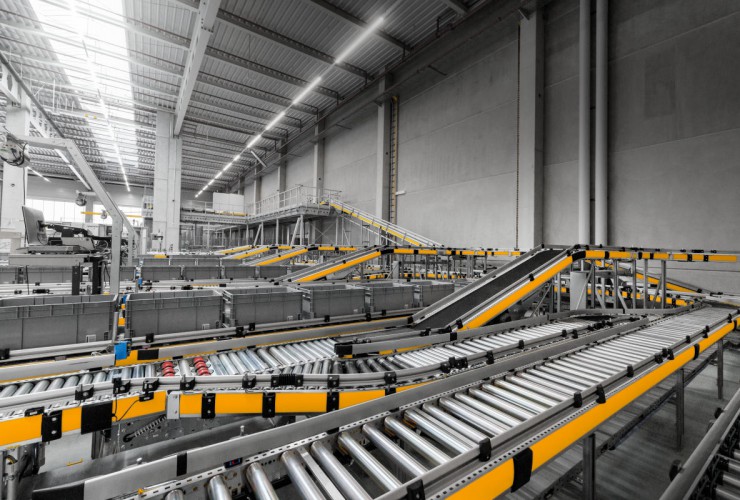
The storage areas are connected via conveyor technology and lifts to picking and packing stations. Smaller orders are made ready for dispatch directly at the picking stations, while larger orders are picked onto pallets and temporarily stored again until final dispatch.
Synchronising outbound processes while considering the cut-off times of shipping service providers poses a key challenge. Cut-off times define the latest point at which an order must be handed over to a parcel service provider so that the goods can still be transported or delivered on the same day. They are therefore a critical timing factor for a central spare parts warehouse. In such complex intralogistics systems with multiple shipping providers and varying cut-off times, precise coordination of outbound processes is becoming increasingly important. The Jungheinrich WMS must be able to dynamically take these time constraints into account and control operational processes accordingly to ensure on-time handover of goods. This challenge is met particularly well by the Jungheinrich WMS thanks to its advanced use of AI.
The Data Center Module in Use at Liebherr
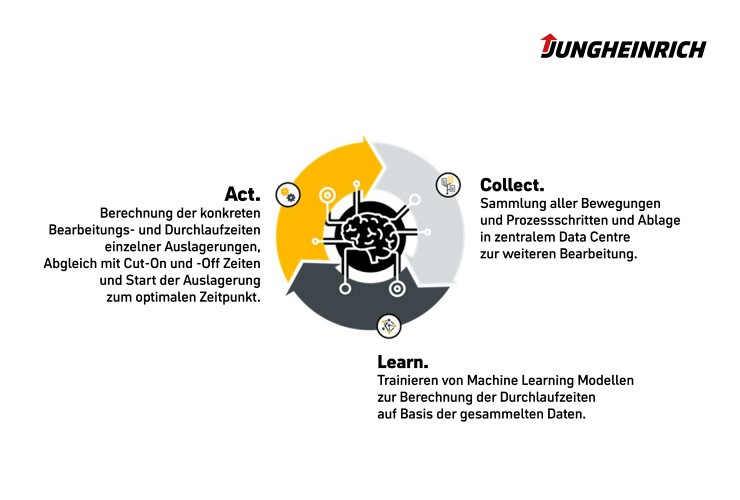
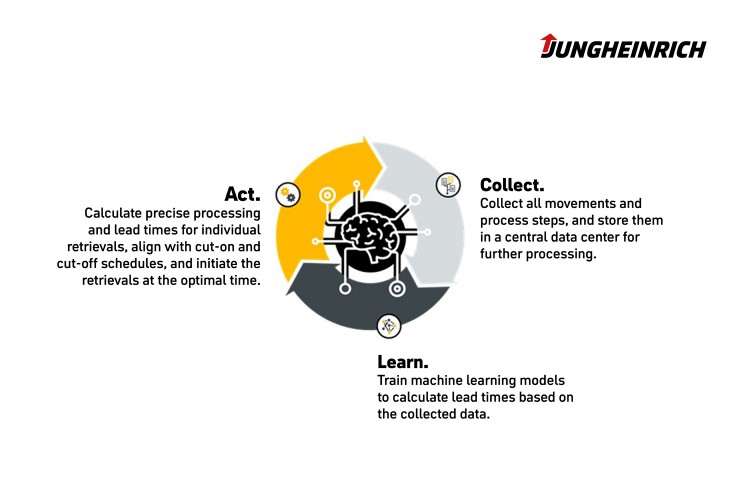
The Jungheinrich WMS Data Center module is the key component for AI-supported determination of picking lead times with automatic picking start. The AI integrated into the WMS Data Center continuously analyses historical and current lead times for picking – including picking duration at the workstation, transport times between storage areas and buffer times until provision for dispatch. At Liebherr, the various picking methods are also taken into account depending on the order type.
Based on this data, the expected lead time in the different storage areas is predicted for each order, and an ideal start time for picking is calculated. This start time should be as early as necessary but as late as possible to save buffer time and storage space. Once the ideal start time is reached, the picking process is triggered automatically – regardless of whether the goods are in the shuttle warehouse, the high-bay warehouse, one of the nine manual storage areas or distributed across them.
After picking is completed, large orders are temporarily re-stored. The AI of the Data Center module continuously monitors the remaining time until the planned shipping time and automatically initiates the final retrieval for provision as soon as the optimal time is reached.
This interplay of intelligent analysis, automated control and flexible prioritisation ensures precise, resource-efficient and on-time picking – a milestone for digital transformation in intralogistics.
Facts and Figures
Over a two-month observation period, the AI made just over 97,000 decisions based on more than 830,000 predictions. Despite the high complexity of synchronising the different storage areas and processes, the customer was able, with the help of AI in the Jungheinrich WMS, to pick over 96% of monthly orders within the specified time and meet cut-off times in the warehouse just a few months after go-live. This is significantly higher than in comparable, manually operated systems. Liebherr also confirms this, noting a significant improvement through the use of the Jungheinrich WMS, as the previous system relied on static and manual starting and prioritisation, which often resulted in critical orders not being dispatched on time.
As the Data Center and integrated AI are self-learning, the model’s predictions are continuously improved with each retrieval and constantly adapted to current conditions. Even when workflows change, a consistently high prediction quality is ensured.
Conclusion
By using the Data Center module, the entire outbound process at Liebherr is not only automated but also intelligently controlled. The benefits are manifold: reduction of manual interventions (more than 80% fewer interventions compared to a manual order release process), relief for the warehouse control centre, greater planning reliability and assurance of global delivery performance. At the same time, the system remains flexible enough to dynamically respond to short-term changes – such as shipping windows or order priorities.
Liebherr thus stands as a flagship project for the use of artificial intelligence in intralogistics and exemplifies how data-driven assistance systems based on the Jungheinrich WMS enable highly automated, dynamically controlled and punctual handling of complex outbound processes.